 EN

2026 Global Trends in Smart Workshop Tool Storage
In 2026, workshop tool storage is moving beyond the familiar question of how many drawers a cabinet has. The more useful question is whether the storage system supports the way tools move through a job: who needs access, what must be accounted for, where tools return, and how the layout changes when the work mix changes. From a metal storage design advisor’s view, that workflow comes before the cabinet style.
That shift is visible in both industrial workshops and serious maintenance areas. Teams still need durable drawers, cabinets, carts, and benches, but they are increasingly pairing them with controlled access, clearer location logic, and configurable interiors. A smart setup does not have to mean every cabinet is electronic. It means the storage choice matches the value, movement, and accountability requirements of the tools inside it.
Why workshop tool storage is becoming a workflow decision
Many workshops have already addressed the obvious clutter problem. The harder issue is access flow. A technician may lose time not because a tool is missing from the room, but because it is in the wrong zone, returned to an unmarked drawer, or available to too many people without a handover process. In a busy environment, those small interruptions can accumulate across shifts.
That is why current workshop tool storage planning often starts with a map of tool movement rather than a cabinet catalog. First separate frequently used hand tools, controlled instruments, shared power tools, consumables, and seldom-used maintenance items. Then decide which groups need open visibility, which need drawer-level organization, and which need restricted access. A fixed cabinet layout can remain practical when the tool mix is stable; a modular arrangement becomes more useful when teams, tasks, or tool kits change often.
Search results still lean heavily toward general garage ideas, labeled bins, and vertical storage. Those basics remain relevant, but industrial buyers increasingly need a second layer: accountability without making daily work cumbersome.
Trend 1: Controlled access is becoming more selective
An RFID lock cabinet is one option in the broader move toward selective access. It can be appropriate when tools are shared across shifts, when particular assets require traceable issue and return records, or when a workshop needs to limit access without creating a staffed tool crib. RFID-based systems may combine tagged tools, reader infrastructure, controlled storage, and software so inventory checks and transactions can be recorded within a defined enclosure.
The important distinction is between identifying items and simply controlling entry. An electronic lock may record who opened a door. Item-level RFID can add a record of what moved, provided the tags, reader coverage, configuration, and operating process are suitable. A workshop should not assume that one feature delivers the other.
- Use access control when the main concern is who may enter a cabinet.
- Consider item-level tracking when a defined group of tools must be reconciled at issue and return.
- Keep ordinary drawers for common, low-risk tools where a tracking layer would add more effort than value.
Before specifying an RFID lock cabinet, ask how it handles exceptions: a damaged tag, a tool returned to the wrong compartment, a power interruption, or reads from nearby storage. These details matter more than a dashboard demonstration because they determine whether the process is workable on an ordinary shift.
Trend 2: Hybrid storage layouts are replacing one-size-fits-all cabinets
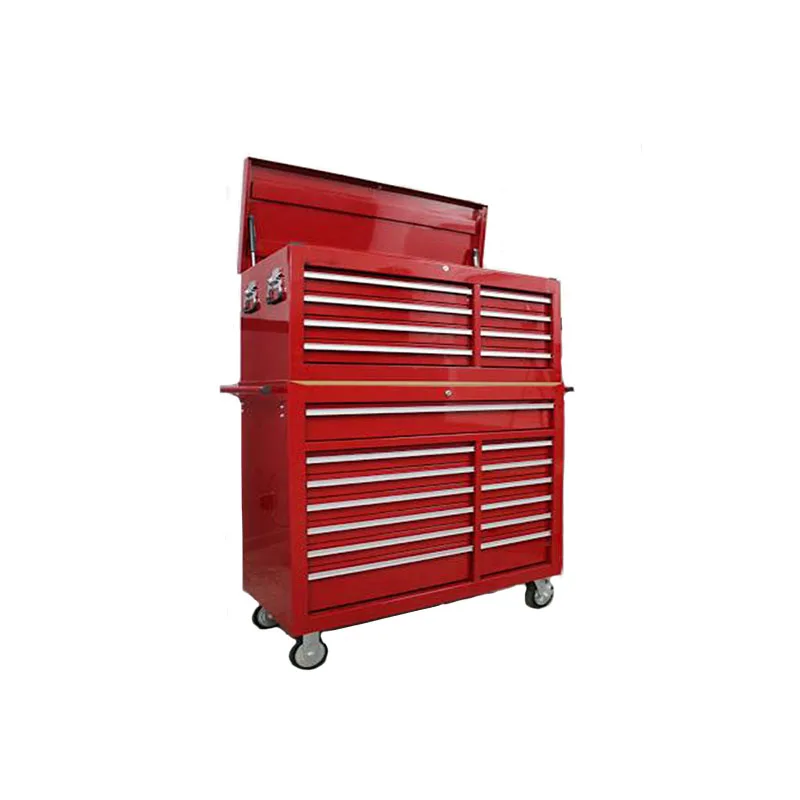
Smart workshop tool storage is rarely a single enclosure. A practical layout may combine a secure cabinet for calibrated or controlled items, shallow drawers for frequently selected hand tools, a mobile cart for point-of-use work, and open visual storage for equipment that benefits from quick recognition. The goal is not to make every tool equally visible or equally restricted. It is to give each tool group a sensible home.
Start with the task sequence. If technicians collect tools at the beginning of a job and return them at the end, a central issue-and-return zone can be logical. If they repeatedly switch between a bench and a machine, mobile storage or a nearby drawer bank may reduce unnecessary walking. That sounds straightforward, but the next decision is usually whether the same module must serve different teams. If it does, adjustable dividers, labeled drawer fronts, and repeatable interior positions become more valuable than a highly tailored fixed insert.
Trend 3: Custom sheet metal supports smarter physical access design
Digital controls only work well when the cabinet itself supports the intended process. This is where custom sheet metal matters. A standard enclosure can be suitable for a simple, stable application, while a tailored design can accommodate reader locations, cable routes, access panels, mounting patterns, divider systems, and an interior sized around actual tool groups.
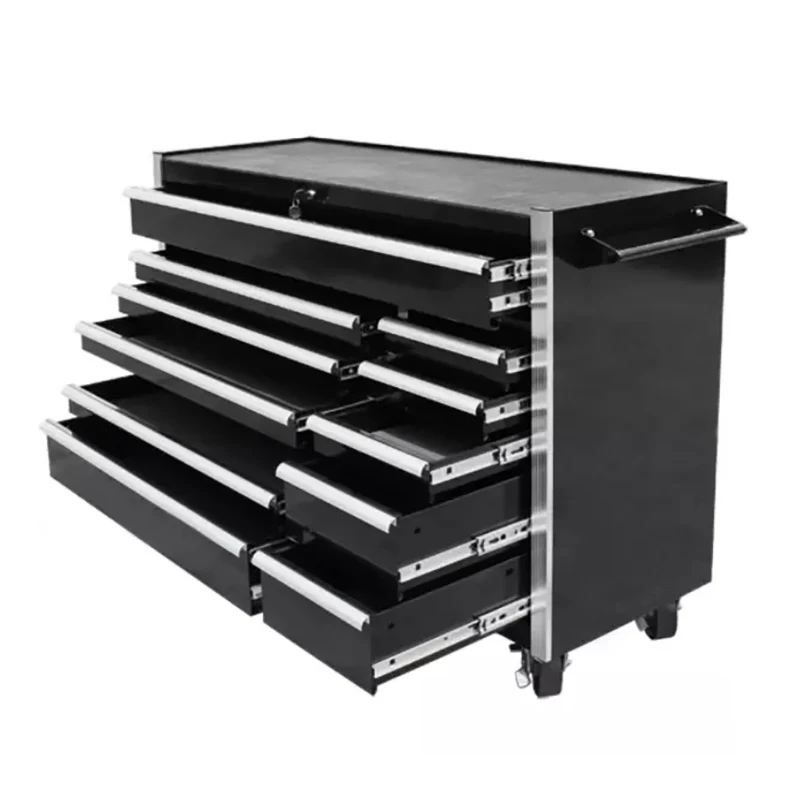
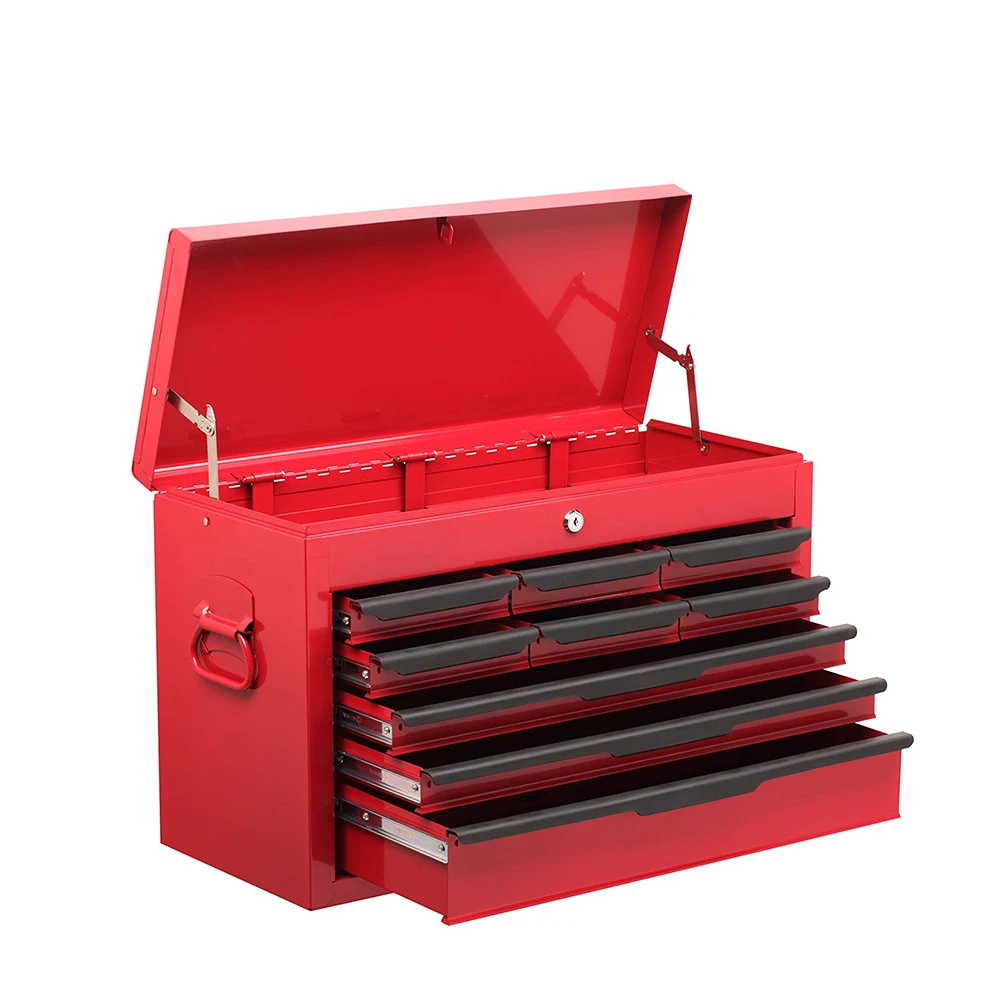
Custom sheet metal should begin with an operating brief, not a decorative sketch. Clarify the tool dimensions, expected load paths, opening frequency, work environment, service access, and future changes before locking in a cabinet footprint. For example, a deep drawer may hold more items but make small tools harder to see; several shallow drawers may improve selection accuracy but require more front clearance. Neither choice is universally better.
For OEM and project teams, a useful design review includes:
- the tool categories and largest item envelopes;
- the desired access method and the location of any readers or controls;
- drawer, door, and service-clearance requirements;
- the mounting and mobility needs of the workshop; and
- how labels, identifiers, and replacement parts will be maintained over time.
That review links the digital concept to a cabinet that can actually be fabricated, installed, serviced, and adapted.
Trend 4: Better data starts with better storage discipline
There is a temptation to treat data as the main outcome of connected workshop tool storage. In practice, data quality depends on the physical routine. If tools are not assigned to a defined location, if return behavior is inconsistent, or if users bypass the cabinet during rush periods, the records will not tell a reliable story. The more realistic aim is a clear, low-friction process that people can follow.
Begin with a small controlled group rather than tagging every object at once. High-value, calibrated, safety-sensitive, or frequently shared tools are often sensible candidates. Review the return process, exceptions, and actual user behavior after a trial period. Then expand only where the added visibility supports a decision: replenishment, maintenance scheduling, accountability, or layout adjustment.
Trend 5: Buyers are asking for upgrade paths, not just current features
Workshop layouts evolve. New equipment, new shifts, and changing product lines can alter the tool mix quickly. A 2026 purchasing conversation therefore needs to cover upgrade paths: whether a cabinet can accept new drawer configurations, whether controlled-access hardware can be serviced, and whether the physical design leaves room for future wiring or identification components.
A modular approach is helpful when change is likely, but it should still be evaluated against day-to-day simplicity. If the workflow is stable, a straightforward cabinet with well-planned drawer organization may be the clearer choice. If change is frequent, configurable modules and custom sheet metal details can reduce the disruption of later revisions.
A practical 2026 evaluation checklist
- Map the flow: Identify where tools are issued, used, returned, and checked.
- Segment the inventory: Separate common-use items from controlled, shared, or high-consequence tools.
- Match the technology: Decide whether open organization, electronic access, or RFID tracking is justified for each group.
- Review the enclosure: Confirm that drawer depths, clearances, access panels, and interior layout support real tools and real users.
- Plan exceptions: Define what happens when a tag is unreadable, a tool is misplaced, or the system is temporarily unavailable.
- Leave room to adapt: Check which modules, dividers, doors, and custom sheet metal details can change with the workshop.
Putting the trend into practice
The 2026 direction is not simply “more technology.” It is more deliberate workshop tool storage: storage that reflects access patterns, tool value, and the need to adapt. An RFID lock cabinet can be useful for the right controlled group. A well-organized drawer cabinet can remain the right answer for routine hand tools. Custom sheet metal can make the physical design fit the process instead of forcing the process around an off-the-shelf enclosure.
Start with the workflow, define the level of control each tool group needs, and then choose the cabinet, layout, and technology that make that routine easier to maintain. That sequence produces a storage system that is easier to understand today and more practical to revise tomorrow.
 Hot News
