 EN
EN

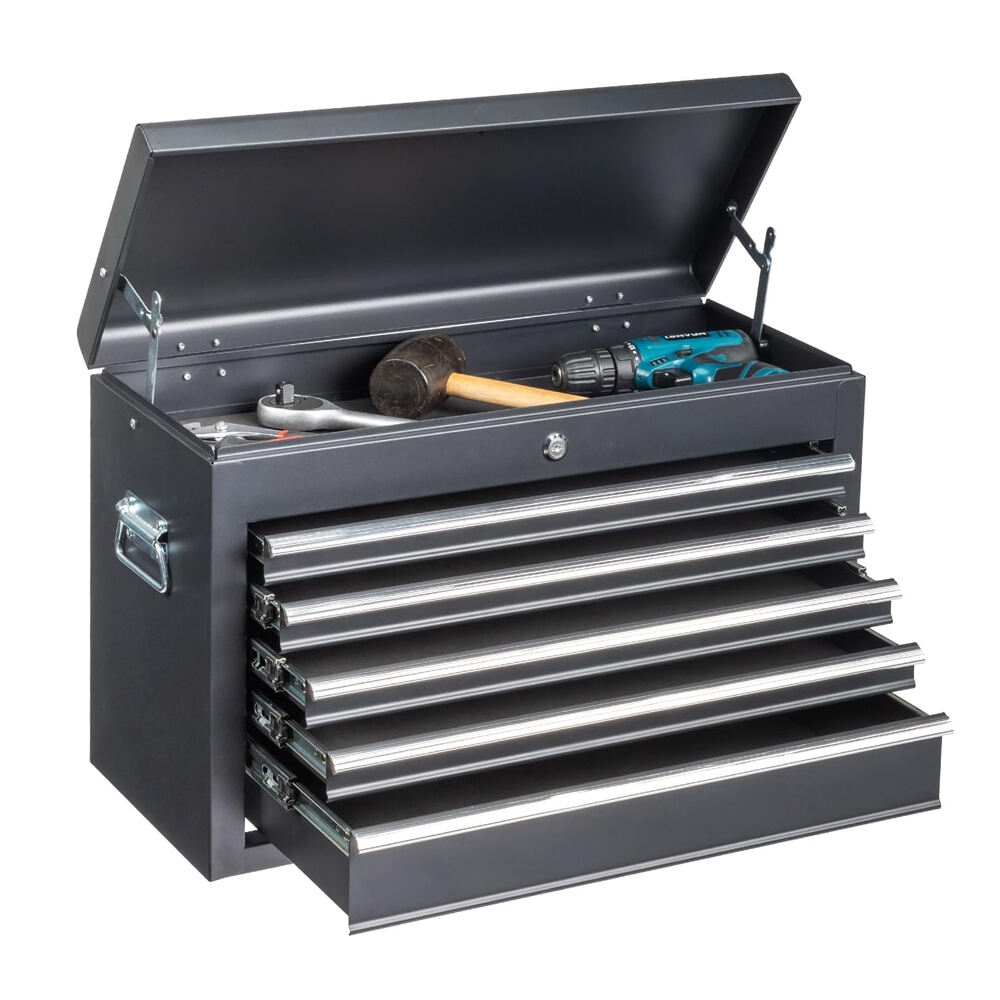
Core Design Principles of Industrial-Grade Tool Boxes
Engineering for Durability and Long-Term Reliability
Tool boxes made for industrial use can handle pretty rough treatment thanks to things like reinforced corners, walls built with two layers instead of one, and strong steel alloys. They need to stand up to constant bumps, shakes from machinery, and weights sometimes going over 2000 pounds while still passing the ASTM F2803-22 tests. Take a look at those boxes with 14 gauge steel frames. Even after opening and closing them 50 thousand times, they keep about 98% of what they were originally rated for. That matters a lot on factory floors where someone grabs tools maybe 12 to 15 times every single hour. All this careful engineering isn't just about looking tough either. According to Ponemon's research from last year, good quality tool storage actually saves companies around seven hundred forty thousand dollars each year that would otherwise be lost when equipment breaks down unexpectedly.
The Rise of Industrial-Grade Tool Storage in Professional Workshops
More and more professional workshops are turning to heavy duty storage solutions that actually last longer than the machines themselves. The numbers back this up too - around two thirds of auto repair garages made the switch last year alone. What did they get for their investment? Shops reported losing about 40% fewer tools and finding what they needed roughly 30% faster. Regular old shelves just don't cut it anymore. These new systems fit right into how work gets done on the floor. Big deep drawers hold all those bulky power tools without getting jammed, and special trays with little compartments keep tiny parts from disappearing between jobs.
Modular and Scalable Designs: Meeting Evolving Workshop Demands
Workshops these days are getting smarter with their storage solutions thanks to modular systems from Stupid Simple Tools according to their 2024 report. One particular aerospace workshop with three bays managed to triple its storage space simply by stacking units together and using those standardized latches everywhere. What really stands out? The drawers can be swapped around in less than two minutes flat when needed. Shelves adjust vertically so even weird shaped tools find a home somewhere. And there are special ports built right into the system for connecting those fancy IoT devices that track what's stored where. Makes sense for anyone dealing with constantly changing tool collections.
Matching Tool Box Design to Operational Requirements
When one marine repair shop switched to these new storage solutions, they saw their lost tools drop by almost half. The setup included those fancy lockable cabinets where each team has its own section. They also got drawers that are 18 inches deep, designed so even people with longer arms can reach comfortably. And let's not forget the special wheels called QuickSwap casters that handle up to 800 pounds on those metal grates everywhere. Getting everything organized this way really made a difference. Setup time went down by around 22% when they were working at full capacity. Makes sense why shops would want something like this when dealing with hundreds of tools daily.
Materials and Construction: What Makes a Tool Box Truly Durable
Steel Gauge, Frame Integrity, and Longevity in Daily Use
The foundation of durability lies in material thickness. Steel that's 16 gauge stands up to dents about 34 percent better than the thinner 20 gauge options according to recent industry data from 2023. What's more, it keeps drawers aligned even when loaded with over 150 pounds. For those who move their equipment around regularly, continuous welding at key stress points combined with extra strong corner reinforcements makes all the difference. These components stop the whole unit from warping or shifting during transportation. And let's not forget about the drawer slides themselves. Laser cutting ensures precision, while polymer rollers keep everything moving smoothly through thousands upon thousands of open/close cycles. Testing shows they still work great after more than ten thousand vibrations, which means less maintenance headaches down the road.
Powder-Coated vs. Stainless Steel: Performance in Harsh Conditions
| Material | Corrosion Resistance | Ideal Environment | Maintenance Needs |
|---|---|---|---|
| Powder-Coated Steel | High (with intact finish) | Automotive shops, construction sites | Annual touch-ups on high-friction surfaces |
| Stainless Steel | Exceptional | Marine, chemical labs, food processing | Monthly polishing to prevent salt pitting |
Powder-coated steel uses electrostatic-applied epoxy layers effective across -40°F to 120°F ranges, offering cost-effective rust protection. Stainless steel (grades 304/316) excels in hygienic or corrosive environments but carries a 60% higher upfront cost.
Steel vs. Lightweight Alloys: Balancing Strength and Portability
Hybrid designs strategically combine materials:
- Steel Frames: Support up to 1,200 lb static loads in stationary cabinets
- Aluminum Drawers: Reduce weight by 35% while maintaining 700 lb dynamic load limits
- Magnesium Alloy Handles: 50% lighter than steel with equivalent grip strength
While aluminum is more prone to denting—failing three times faster than steel under impact—it offers natural oxidation resistance, eliminating coating maintenance in humid climates.
Smart Organization and Interior Customization for Workflow Efficiency
Drawer Layouts, Dividers, and Adjustable Storage Options
Well-designed drawer systems really boost workflow efficiency for mechanics and technicians. The multi-depth compartments can hold everything from large power tools down to tiny screws and drill bits, which cuts down on wasted time looking for stuff by almost 30% according to Kaguyasu's research from last year. What makes these drawers so useful is the slotted divider system that lets workers rotate and rearrange sections completely around, making it easy to switch from working on heating systems one day to electrical repairs the next. Plus those foam inserts cut out specifically for each tool shape? They lock everything in place when moving between job sites, so nothing gets lost or mixed up despite all the bouncing around in trucks and vans.
Custom Configurations That Adapt to Changing Tool Needs
Modular interiors let users swap drawer heights weekly, add vertical partitions for greasy components, or integrate 19" rack mounts for diagnostic gear. Workspaces using customizable storage achieve 34% faster toolset changes compared to fixed models—a critical advantage in aerospace maintenance, where torque wrenches and avionic tools rotate daily.
Reducing Downtime with Intuitive Tool Access and Placement
Good storage makes all the difference for mechanics who rely on muscle memory day after day. Impact drivers usually go on the left side from where sockets are kept, and calipers tend to stand upright next to other measuring gear. We've seen shops cut down on misplaced tools by around 40% just by adding color codes to drawer fronts during routine checks. Plus, having charging ports easily accessible at the front means workers don't waste time hunting for power sources when they need their cordless tools most. The math adds up too – proper organization can save thousands each month instead of facing those eye-watering $740 per hour losses during equipment repairs according to industry research last year.
By aligning storage with workflow patterns, industrial tool boxes transform cluttered spaces into productivity accelerators.
Mobility and Stability: Wheels, Handles, and On-Site Flexibility
Caster Quality, Load Ratings, and Swivel Mechanisms
When choosing casters for tool boxes, it's generally recommended they can handle at least 1.5 times the maximum weight the box will carry. This extra capacity helps when things shift around while moving equipment across the shop floor. Swivel casters with dual bearings cut down on side-to-side strain by roughly 30 to 40 percent over their single bearing counterparts. Plus, those polyurethane wheels do a great job protecting flooring surfaces while still providing good grip on most workshop floors. Industry reports show that about one out of every five accidents involving mobile storage units happens because someone didn't check if the casters could actually support what was being carried. That makes proper load testing absolutely essential before putting any wheeled storage system into regular service.
Mobile Tool Storage Solutions: Roller Cabinets and Ergonomic Design
The roller cabinets come equipped with telescoping handles positioned between 38 and 42 inches high, which really helps reduce back pain when someone is using them for long periods. Built from sturdy 14 gauge steel frames and coated with electrostatic powder, these cabinets stand up to rust much better than regular finishes. Tests in factories show they last around 2.3 times longer before showing signs of wear. What makes these cabinets truly useful though is their modular rail system. Technicians can quickly adjust how the drawers are arranged, often getting everything sorted within just over a minute as their workshop requirements change throughout the day.
Balancing Portability with Safety and Stability
Tool boxes featuring six point stabilization spread weight out about 35 percent better than standard four leg models, which helps stop them from tipping over on sloped surfaces. The casters come with built in brakes that hold firm against sideways forces up to around 1200 pounds, plus there are locking pins that keep the wheels from rolling once parked. These toolboxes have wider bases ranging from 18 to 22 inches, paired with lower center gravity setups for improved handling in cramped workshop spaces while still being easy enough to move around as needed.
Security and Load Capacity: Protecting Tools Under Real-World Stress
Locking Systems: Centralized vs. Individual Drawer Security
Security must match build quality. Centralized locking offers single-point control ideal for large cabinets in fast-paced shops. Individual drawer locks provide granular access control, cutting unauthorized use by 41% in multi-user facilities (Facility Management Journal 2023). Such options align with best practices outlined in industry-leading theft prevention guidelines.
Integrating Tool Box Security with Workshop Access Controls
Advanced systems sync with facility-wide protocols via RFID-enabled drawers or biometric locks, ensuring only authorized personnel access high-value tools—compliant with ISO 27001 asset control standards. Manufacturers report a 33% drop in tool misplacement when layered security is implemented.
High-Security vs. Quick-Access Tradeoffs in Industrial Settings
Aerospace teams often choose tamper-proof designs with reinforced hinges, whereas automotive lines favor push-button drawers for rapid tool exchange. A 2024 survey found 68% of industrial sites use hybrid setups—secure compartments for calibration tools paired with open racks for everyday items.
Weight Capacity and Slide Mechanism Performance Under Load
Heavy-duty slides rated for 250+ lbs per drawer prevent sagging, even with hydraulic tools or torque wrenches. Premium ball-bearing slides endure over 25,000 cycles at full load in independent tests—ensuring reliable operation in continuous-use manufacturing environments.
FAQ
What are the advantages of using industrial-grade tool boxes?
Industrial-grade tool boxes offer enhanced durability and reliability, supporting up to 2000 pounds. They also help reduce tool loss and improve tool accessibility, leading to increased productivity.
Why do professional workshops favor modular tool storage systems?
Professional workshops use modular tool storage systems for their flexibility and scalability, allowing for adjustments to storage as tool needs change.
What materials are commonly used in industrial tool boxes?
Common materials include 14 and 16 gauge steel, powder-coated steel, and stainless steel. These materials have varying levels of corrosion resistance and are designed for specific environments.
Table of Contents
- Core Design Principles of Industrial-Grade Tool Boxes
- Materials and Construction: What Makes a Tool Box Truly Durable
- Smart Organization and Interior Customization for Workflow Efficiency
- Mobility and Stability: Wheels, Handles, and On-Site Flexibility
- Security and Load Capacity: Protecting Tools Under Real-World Stress
- FAQ