 EN

When Should Factories Specify an Industrial Tool Chest?
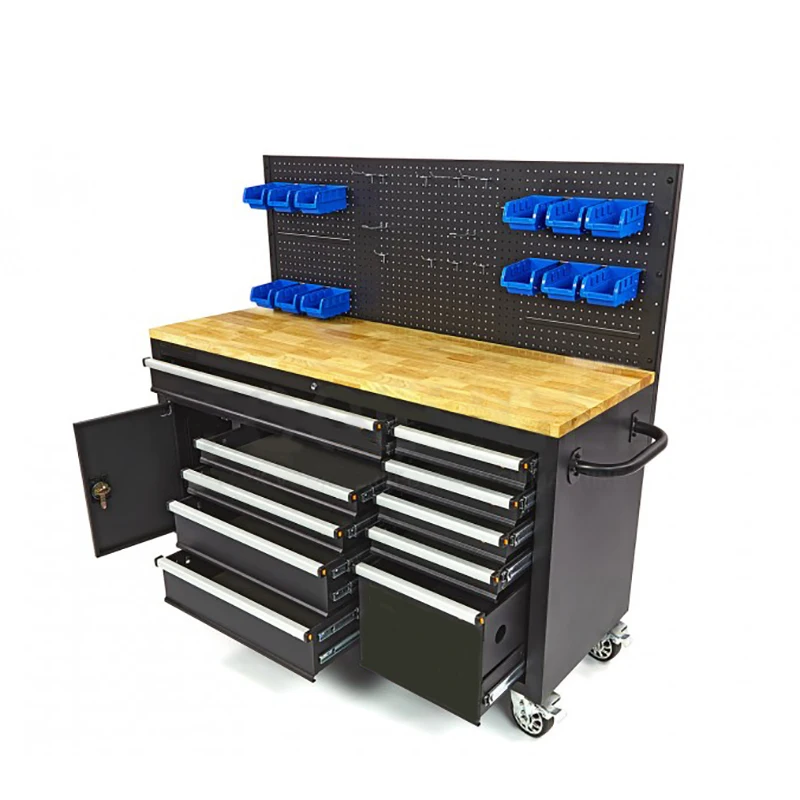
A factory should consider an industrial tool chest when a defined group of tools needs a secure, accessible home close to a work area and the expected loads, access pattern, and available space can be specified. The decision is not simply whether a chest looks sturdy. A useful purchasing brief connects the work done at the station with drawer layout, stability, construction and a way to check the finished unit.
For a brand sourcing metal storage for factory users, the first conversation should separate documented requirements from attractive options. An industrial tool chest may suit a maintenance bench or a repeatable workstation kit; a shared tall cabinet, mobile cart or open rack can be more appropriate when the tool mix or access pattern is different.
Start with the work sequence
Map where operators pick up, use and return tools. Note the items needed at each station, their dimensions, total mass, frequency of use and whether several shifts share them. An industrial tool chest becomes a strong candidate when small and medium tools benefit from a consistent drawer layout and users can return them to one location without a long detour.
For example, consider a hypothetical maintenance station that uses sockets, measuring tools and a few powered hand tools. Shallow drawers could separate small items, while deeper compartments accommodate bulkier equipment. The example is a planning exercise, not a description of a completed installation. Before ordering an industrial tool chest, check that the actual tools fit with their cases and that handles can be reached when drawers are open.
If the team needs a common supply of long, awkward items, a taller enclosure or rack may make more sense. If work moves between distant areas, assess a cart and the route it will travel. A chest mounted above another unit also needs confirmed compatibility; do not assume two items can safely be stacked because their widths look similar.
Define loads drawer by drawer
Calculate the intended contents of each drawer, including inserts and likely additions. Ask the supplier to document the rating for the complete drawer assembly, not just a slide component, and clarify whether it assumes evenly distributed contents, full extension and a particular installation. The total permitted load for an industrial tool chest may be different from the sum of individual drawer ratings.
When requesting heavy load drawers, send the expected mass and load distribution for each compartment. A single dense tool placed near the front is a different case from a spread of lighter tools. Ask what the quoted rating covers, what test method was used, and whether the cabinet body, fasteners and slides were evaluated together. Slide manufacturers may use cycle tests to determine ratings; a number without its test conditions is difficult to compare across suppliers.
Do not substitute a generous-sounding slide rating for a finished-product review. Request a drawing that shows drawer sizes, extension and mounting, then confirm the limits in the supplier's approved documentation. Where lifting a loaded tool would be awkward, review drawer height and access with the people who will use it.
Check stability and the surrounding space
An industrial tool chest should fit the space with enough room for drawers to open and people to work without obstructing a passage. Measure the footprint, full drawer projection and approach space, including nearby benches and doors. Check the floor condition and whether the unit is intended to stand alone, be attached to another structure or move between areas.
Opening a loaded drawer changes the load position, so discuss stability with the supplier for the proposed layout and use. Depending on the design and site assessment, a buyer may need an interlock, anchoring or another documented stability measure. Confirm the actual feature and its operating conditions rather than assuming all chests have it. Local workplace rules and the site's safety review remain relevant; no single checklist replaces them.
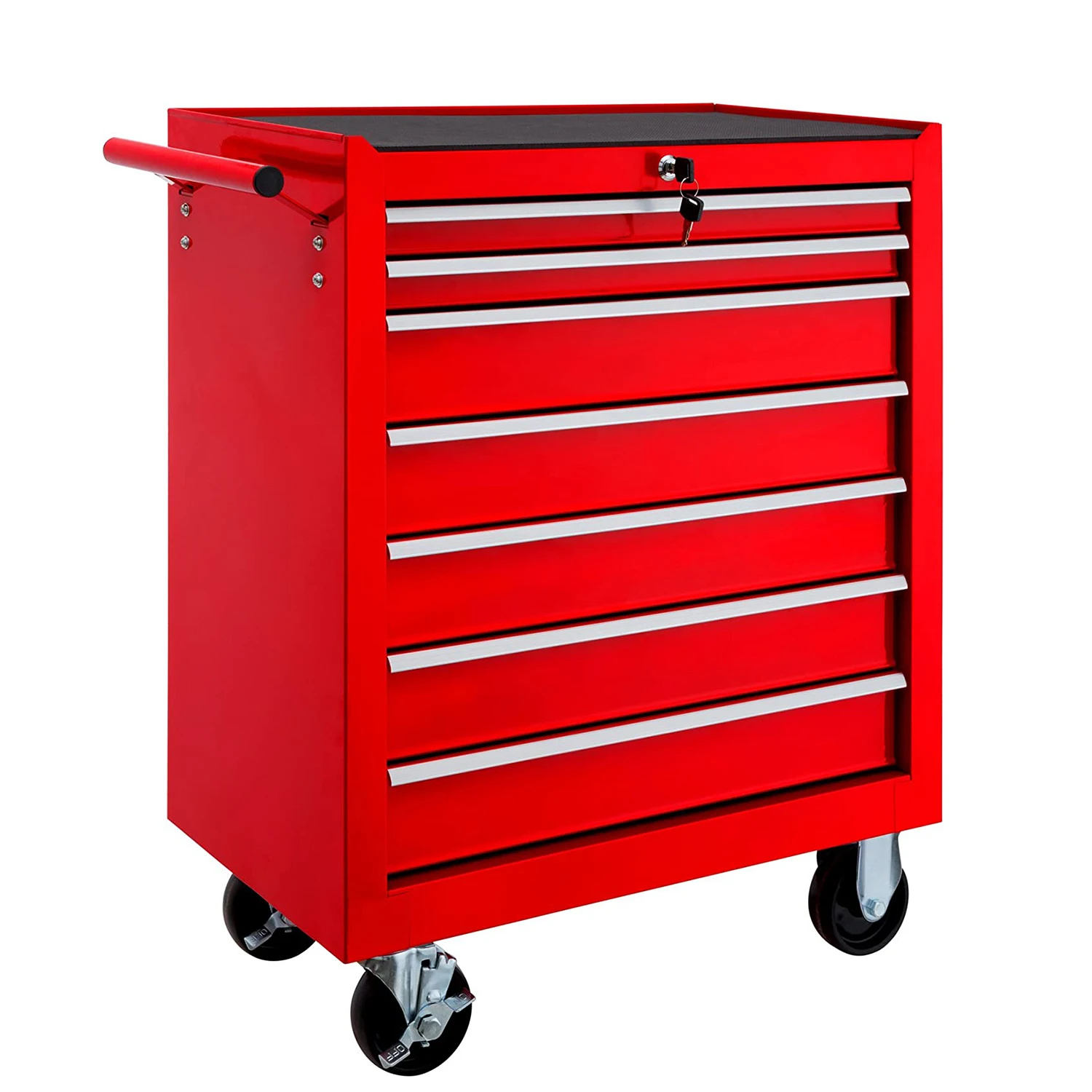
If mobility is needed, define the loaded mass, floor surfaces, thresholds and parking location. Ask about the specified wheels, brakes and safe moving instructions for the industrial tool chest. A wheeled unit is not automatically suitable for every route or for movement with its drawers loaded.
Specify construction for the real environment
Document the expected contact, cleaning routine and exposure to moisture or other substances. Ask how the body, drawer fronts, joints and finish are specified, and request suitable finish samples or evidence for the intended environment. Avoid treating a color or material name as proof that a coating is suitable for a particular chemical or outdoor exposure.
Reinforced corners can be worth discussing where the industrial tool chest is exposed to repeated contact during handling or movement. Define where reinforcement is needed and ask for a drawing of the construction. A corner detail alone does not establish the strength of the whole chest; the assembled body, attachments and any applicable test conditions also matter.
Security is another separate requirement. State which tools need controlled access, who needs keys and whether the requested locking arrangement covers every drawer. Confirm how the lock operates and how replacement parts are handled; do not assume that a lock implies any particular security rating.
Turn the decision into a comparable RFQ
A purchasing team can compare an industrial tool chest more reliably when suppliers receive the same scope. Include the working environment, quantity, layout drawing, external size limit, drawer-by-drawer contents and load expectations. Add finish, lock, labeling, packaging and delivery requirements only after the relevant stakeholders agree on them.
- Identify the work area and whether the chest is fixed, mobile or paired with another unit.
- List the dimensions and intended contents of each drawer, including any inserts.
- Request complete-assembly load ratings, test conditions and limits on drawer opening or movement.
- Ask for drawings covering construction, interfaces, corner details and any stability measures.
- Agree on sample review, inspection criteria, replacement parts and how changes will be approved.
Ask suppliers to identify what is included and what still requires confirmation. For an OEM program, a reviewed sample and agreed drawings can help both sides distinguish the intended specification from assumptions. Haiyang Libenli describes its work in sheet-metal processing and customized solutions. Suitability for a particular industrial tool chest configuration should still be confirmed directly against the project brief.
When another format is the better fit
Choose the format around the task, not the label. An industrial tool chest is useful when drawers give a known tool set an accessible place near its users and the unit's load and stability can be verified. A rack may fit long stock; a cabinet may accommodate taller items; a cart may suit work that follows a defined route. Mixed needs can call for more than one format.
Before approving a purchase, review the tool inventory, open-drawer clearance and supplier evidence together. If those details are still unknown, the next step is not a larger industrial tool chest by default. It is a short site assessment and a clear, shared specification.
 Hot News
