 EN

Why Pros and Builders Request a Garage Drawer Cabinet?
A garage drawer cabinet gives frequently used tools a defined place close to the work. For a mechanic, builder or storage brand, the reason to request one is more specific than simply adding capacity: a useful layout makes it easier to see, reach and return the tools needed for a particular job. The choice still depends on the space, the weight of the contents and the way people work.
From a storage-planning perspective, start with the routine rather than the number of drawers. A garage drawer cabinet intended for a fixed repair bench has different priorities from one that travels between work areas. The following checks help end users and OEM buyers turn that distinction into a clear specification.
Organize for the next task, not just the next empty drawer
Imagine a shared workbench where sockets, measuring tools and fasteners are mixed because they fit in the same tray. Each retrieval interrupts the job, and the next user has to work out where items belong. This is an illustrative situation, not a reported customer project. A garage drawer cabinet can support a clearer routine when each drawer has a purpose and its contents are visible.
List the tools used together, their approximate dimensions and their expected weights. Put frequent-use items within a comfortable reach; reserve deeper drawers for bulky equipment where appropriate. A garage drawer cabinet with fewer well-sized drawers may serve a task better than one with many shallow spaces. Check whether dividers or liners are included, optional or must be sourced separately.
Review the layout after the team has used it. A garage drawer cabinet is only part of the system: labels, return habits and the location of the bench matter too. If tool sets change, allow room for reassignment rather than assuming the initial arrangement will suit every future task.
Fit the cabinet to the available work zone
Before specifying a garage drawer cabinet, measure the proposed position, the path to it and the space needed when a drawer is open. A cabinet that fits beneath a bench may still block a walkway or clash with a neighboring door. Include skirting, floor irregularities and any required access for cleaning or service in the layout review.
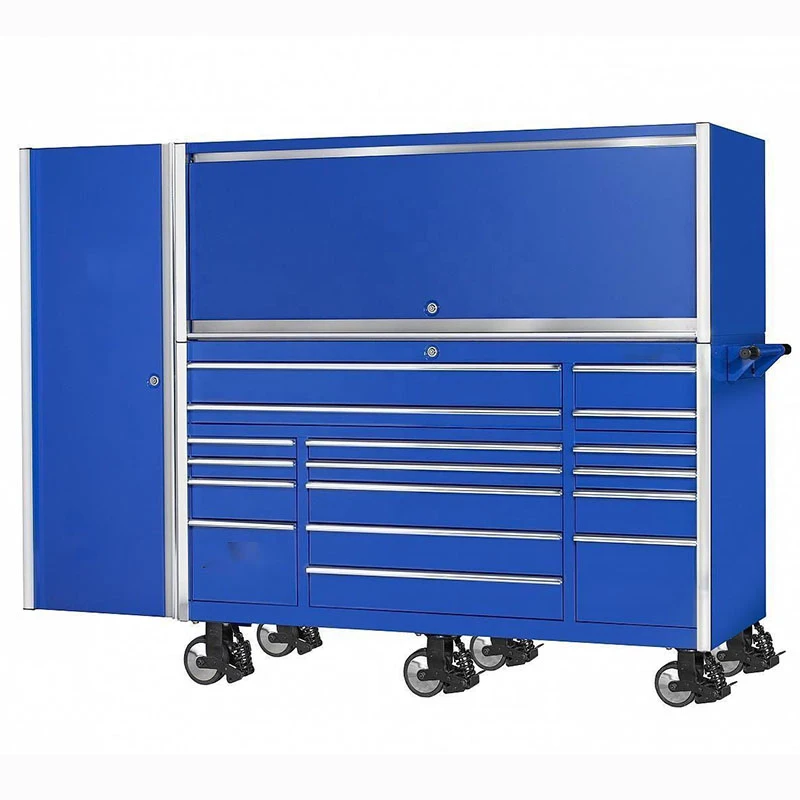
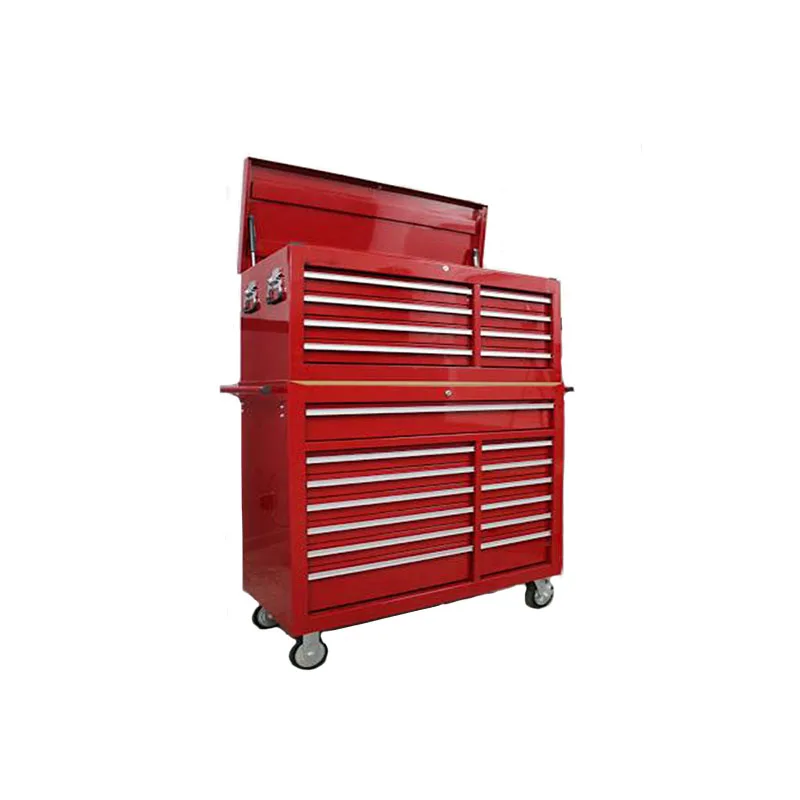
For a fixed installation, ask how the unit is supported or secured and follow the supplied instructions. For a mobile garage drawer cabinet, check the floor, thresholds, turning space and a practical parking position. Request the actual dimensions and caster details for the proposed configuration; a product photo does not establish clearance or compatibility.
There is also a trade-off between a cabinet and a cart. A garage drawer cabinet keeps grouped tools at a home station, while a cart can carry a selected set between tasks. If both are needed, define which tools stay at the bench and which travel, then confirm that any proposed units work together.
Assess heavy duty slides against the actual drawer load
The phrase heavy duty slides is a starting point, not a load specification. Ask the supplier for the rating of the installed slide pair, the relevant slide length, mounting method, extension and test conditions. Confirm whether the stated load includes the drawer itself as well as its contents. Compare the answer with the expected working load for each drawer, including organizers and future additions.
Slide ratings are tied to the conditions under which they are stated. One slide manufacturer's catalog, for example, bases a published rating on a pair of 18-inch slides; that number cannot be transferred to a different unit or configuration. For a garage drawer cabinet, request the documentation for the exact proposed assembly rather than borrowing a value from another product.
Extension matters alongside capacity. Full-extension heavy duty slides may give better access to items near the back, but the cabinet and work area must accommodate the open drawer. Ask about drawer travel, attachment points and replacement parts. During sample review, observe movement under an agreed representative load without exceeding the supplier's instructions.
Check how a flush handle design works in practice
A flush handle design reduces the projection of the pull relative to the drawer front. In a narrow aisle that may help keep the cabinet face less obtrusive, but the grip still needs to be accessible. Try the proposed handle with the gloves normally used at the workstation and check finger clearance, edge finish and the effort needed to operate the drawer.
For a garage drawer cabinet under a bench, a flush handle design also affects how the drawer front aligns with adjacent panels. Confirm the actual protrusion, opening direction and any latch or lock arrangement on a drawing or sample. Do not assume that a recessed pull automatically locks or that every drawer uses the same hardware.
Appearance and function should be reviewed together. A flush handle design may suit a coordinated product line, while a projecting pull may be easier for some users to grip. Ask users to compare the options in the intended setting before a brand commits to a garage drawer cabinet design.
Review stability and safe operation
A loaded open drawer shifts weight outward and can increase the tendency of a cabinet to tip. The U.S. Consumer Product Safety Commission discusses this leverage in its furniture tip-over analysis; the specific risk depends on the cabinet, load and installation. Follow the cabinet maker's instructions for anchoring, leveling, loading and drawer operation.
Ask whether the proposed garage drawer cabinet has an interlock, what it does and how it is maintained. Do not assume one is present. Place heavier contents as instructed by the manufacturer, and avoid pulling on an unstable unit. If a sample is reviewed, agree on the test method and safe setup with the supplier rather than improvising a tip test.
Translate the request into an OEM brief
For a storage brand, the garage drawer cabinet request should connect end-user needs to details a manufacturer can quote and review. Haiyang Libenli's profile describes sheet-metal processing and metal furniture work; product-specific dimensions, construction and available options still need confirmation for the project.
- Use and placement: describe the work zone, fixed or mobile use, expected tool groups and available clearance.
- Drawer arrangement: identify internal dimensions, the intended load in each drawer, divider needs and the desired access to rear items.
- Hardware: specify the proposed heavy duty slides, required documentation, handle style, locking needs and replacement-part expectations.
- Finish and presentation: define the desired surface, color, brand marks and packaging requirements as points for supplier confirmation.
- Review: request drawings, a sample where appropriate, an agreed inspection plan and written approval of changes before production.
Use the same brief when comparing quotations for a garage drawer cabinet. Check which components, finish, packaging and review steps are included rather than comparing an isolated price. A discussion of tool storage and garage cabinet applications can provide context for a wider project, while the tool cabinet range provides a starting point for a supplier conversation.
Questions to resolve before ordering
Which tools need immediate access? Where will the cabinet stand when the drawers are open? Are the selected heavy duty slides rated for the actual assembly and load? Can the intended users operate the flush handle design comfortably? The answers lead to a garage drawer cabinet request that is easier to discuss, assess and refine. Share the unresolved dimensions, loads and review needs with the supplier before confirming the configuration.

 Hot News
