 EN
EN

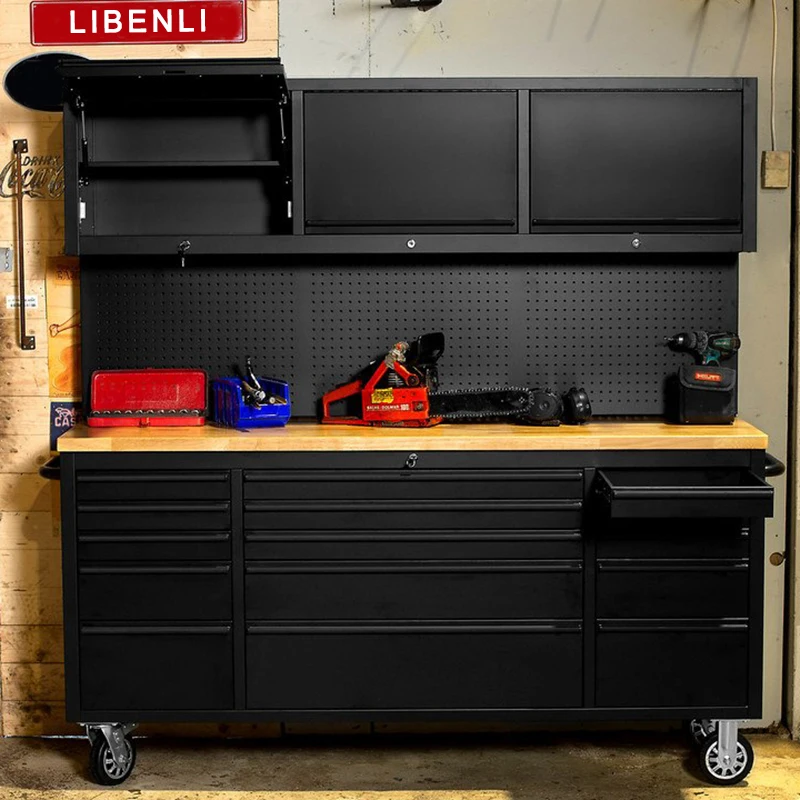
What Defines True High-Load Capacity in a Tool Workbench
Static vs. Dynamic Load Ratings: Why Both Matter for Real Industrial Use
When talking about real high load capacity, it's essential to look at both static and dynamic load ratings because this difference matters a lot for actual safety and how well things perform. Static load basically means the maximum weight something can hold when it's not moving around, like if we put a big diesel engine block on top. Dynamic load is what happens when there's action going on, such as when someone is hammering away, pressing down hard, or dealing with vibrations from machines working nearby. Tests across industries have found that these dynamic forces cut down the actual capacity by roughly 30 to maybe even 50 percent compared to what's listed for static loads. So a workbench that claims to handle 10,000 pounds sitting still might only be safe for around 5,000 to 7,000 pounds when someone starts doing heavy impacts on it. Skipping over those dynamic numbers can lead to serious structural problems, particularly when torque gets really high during jobs like installing bearings or aligning molds properly. Make sure manufacturers actually publish both types of ratings and back them up according to standards like ANSI/BIFMA X5.9 or ISO 7173.
The 5,000–10,000+ lbs Threshold: When It’s Essential for Engine Blocks and Molds
Benches rated under 2,000 pounds just won't cut it for serious industrial work. Think about diesel engines weighing anywhere from 2,500 to 5,000 pounds, or those massive injection molds that can tip the scales past 8,000 pounds straight off the press. When looking at capacity ranges between 5,000 and over 10,000 pounds, builders need to go big on structural integrity. Reinforced 7-gauge steel frames become essential, along with full length cross bracing and continuous seam welding across all joints. Without these reinforcements, even minor imbalances during loading can warp the entire structure over time. The numbers tell the story too. According to OSHA guidelines, any bench rated for 10,000 pounds needs to handle at least 15,000 without buckling. Foundries and engine rebuild operations absolutely require this extra margin of safety because when cranes are lifting parts into place or machines are cutting multiple axes simultaneously, those benches face all sorts of twisting forces and side loads that could spell disaster otherwise.
Tool Workbench Construction: Materials and Structural Design That Sustain Extreme Loads
Heavy-Gauge Steel, Reinforced Frames, and Precision Welding for Load Integrity
What materials get chosen and how well they're built really determines if something will hold up over time when loads are applied. Most serious industrial workbenches use at least 14 gauge cold rolled steel because it does more than just stand strong against weight. This type of steel actually resists those tiny deformations called creep and micro fractures that happen when things get stressed repeatedly day after day. The legs on these benches aren't just stuck together either. They have those triangle shaped braces across them which stops the whole thing from wobbling sideways when someone's doing heavy duty stuff like grinding metal or hammering rivets into place. When it comes to welding, spot welds just don't cut it for real durability. Continuous seam welding makes all the difference since it spreads out the stress instead of letting it concentrate in one spot where cracks start forming. According to a study published by AISC back in 2023, benches with proper seam welding could handle around 8,000 pounds before showing any sign of bending, whereas spot welded ones started to show problems at only 3,200 pounds with noticeable warping at the joints. Some manufacturers also offer optional mounts that absorb vibrations coming up from the floor. These mounts matter a lot for anyone working with CNC machines or doing precise measurements where even the slightest shake can throw off results completely.
Tubular vs. Box-Section Frames: Impact Resistance and Long-Term Rigidity Compared
Frame geometry fundamentally shapes performance under extreme conditions:
| Frame Type | Impact Resistance | Long-Term Rigidity | Best Use Cases |
|---|---|---|---|
| Tubular | High dent resistance | Moderate | Workshops with frequent tool drops or mobile equipment handling |
| Box-Section | Superior crush resistance | Exceptional | Precision machining, mold alignment, and static loads ≥10,000 lbs |
According to tests done in 2024 and reported in the Journal of Manufacturing Science and Engineering, box section frames handle twisting forces about 47 percent better than regular tubes. The reason? These frames have walls on multiple planes that spread out the twisting force across all four sides. This helps keep things from warping when there's lots of torque applied during tightening or when using hydraulic presses. Sure, these box sections cost around 15 to 20 percent more upfront compared to other options. But what manufacturers get in return is significantly longer lasting equipment. Most last between 8 to 10 extra years compared to angle iron frames or those with weak bracing. That's why we see these box sections becoming standard practice on original equipment manufacturer engine assembly lines as well as in the setup areas for aerospace components where reliability matters most.
Stability Engineering: How Tool Workbenches Prevent Tip-Over and Structural Failure
Center-of-Gravity Control, Wide Base Footprints, and Anti-Slip Mounting Solutions
Getting stability right at larger scales depends on three main engineering approaches that work together. The first involves controlling where weight sits by distributing it lower down. Things like reinforced shelves underneath and vertical storage rails help keep everything balanced within what the bench can support. This makes a big difference when heavier tools hit parts of the machine, like those flywheel removal hammers we all know about. Next up are wider base footprints. Ideally they should stretch at least 60 inches across and cover around a quarter of the whole work surface. This creates a stable triangle shape that helps prevent tipping. For bigger machines, manufacturers typically follow a rule where width is at least three times the height, which stops sideways forces from causing problems during forging or milling operations. Lastly there's the anti-slip mounting system. It uses tough rubber pads rated to handle serious weight plus bolts that go straight into concrete floors. Put all these elements together and the equipment only tilts less than one degree according to industry tests. And best of all, even if someone places a 3,000 pound mold 24 inches away from center, the setup won't tip over.
Selecting the Right Tool Workbench for Your Heavy-Duty Application
Choosing the right high-load workbench means aligning four non-negotiable criteria with your actual workflow:
- Dual-load validation: Confirm published static and dynamic ratings exceed your heaviest single load—including dynamic multipliers for impact or vibration. For diesel engine blocks or large molds, this means ≥5,000 lbs dynamic capacity.
- Structural integrity: Prioritize 14-gauge+ steel frames with full seam welding and box-section geometry for applications involving sustained or precision-critical loads.
- Stability assurance: Require wide-base footprints (≥60" span, 1:3 height-to-width ratio) and certified anti-slip mounting—anchored to substrate—not just surface-level rubber feet.
- Adaptability: Choose modular systems with tool-mount compatibility (e.g., T-slot or 5/8"-11 threaded patterns) and height-adjustable legs to accommodate evolving processes like robotic integration or ergonomic upgrades.
Neglecting any one criterion risks premature fatigue, unsafe deflection, or catastrophic failure. In high-stakes environments—from powertrain assembly to die-casting—specification alignment isn’t optional: it’s the foundation of operational safety, precision, and ROI.
Frequently Asked Questions
What is the difference between static and dynamic load ratings?
Static load rating refers to the maximum weight a workbench can hold when not in motion, while dynamic load rating accounts for actions and vibrations during use.
Why are reinforced steel frames important for tool workbenches?
Reinforced steel frames provide the necessary structural integrity to withstand high loads and prevent deformation over time.
How do I ensure my workbench won't tip over?
To prevent tipping, ensure a wide base footprint, lower center-of-gravity distribution, and use anti-slip mounting systems.
What should I consider when choosing a workbench for heavy-duty applications?
Consider dual-load validation, structural integrity, stability assurance, and adaptability to ensure the workbench meets your needs.
Table of Contents
- What Defines True High-Load Capacity in a Tool Workbench
- Tool Workbench Construction: Materials and Structural Design That Sustain Extreme Loads
- Stability Engineering: How Tool Workbenches Prevent Tip-Over and Structural Failure
- Selecting the Right Tool Workbench for Your Heavy-Duty Application
- Frequently Asked Questions