 EN
EN

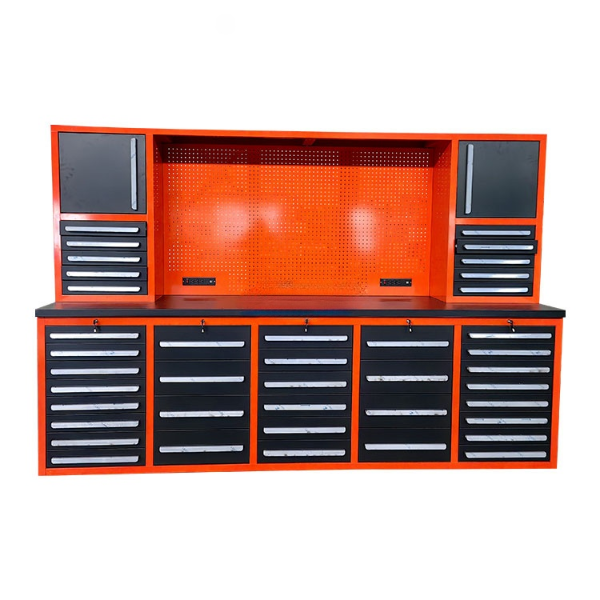
Why Mobility Is the Core Advantage of Modern Tool Storage
Swivel Casters, Locking Brakes, and Weight-Distribution Engineering for Safe, Agile Movement
Tool storage solutions have really changed the game for workshops thanks to smart mobility design. The swivel casters allow full circle rotation so workers can easily maneuver around all sorts of obstacles without constantly lifting or rearranging stuff. When working on concrete floors, epoxy coated areas, or those tricky sloped garage spots, the built-in locking brakes kick in right away to stop any unwanted sliding. And let's talk about balance - these carts actually distribute weight better so they stay upright even when loaded down with heavy gear like air compressors or battery packs. All these little improvements make workshops safer places to be while also making day-to-day operations much smoother. Each caster can handle well over 500 pounds individually, which is pretty impressive considering most standard wheels struggle with half that load. Plus, the braking system passes those tough ANSI/BHMA A156.11 tests that industrial equipment needs to meet. According to studies done by ergonomics experts, people who use these mobile storage systems report about 18 fewer back and muscle injuries each year compared to traditional fixed storage options. That means less time off work and more productivity overall.
Navigating Tight Spaces: Real-World Data on Mobility Performance in Residential Garages and Commercial Bays
Tool storage on wheels makes a real difference where space is tight, whether someone's working in their garage or at a packed commercial repair shop. Home mechanics find that these rolling carts take up about 40% less floor space than regular cabinets, which means they actually have room to work or park cars without constantly moving stuff around. The savings get even bigger at commercial levels. Techs at auto shops typically gain back around 12 minutes every hour because they don't waste so much time walking around or rearranging tools. Research backs this up too – when workers don't have to walk more than ten feet for what they need, productivity jumps by roughly 15%. People who had messy garage setups often finish projects 25% faster after switching to mobile systems. Service centers report similar improvements without needing extra space. What really stands out though is how flexible these systems are. Carts can just roll from one bay to another, move into inspection areas, or even reach EV charging spots as needed. That kind of adaptability has become essential for any workshop trying to stay competitive today.
Modular Tool Storage: Adapting Your System to Changing Workflow Demands
Interchangeable Trays, Slide-Out Bins, and Vertical Expansion Kits for Scalable Tool Storage
Modular tool storage systems are changing how workshops organize their gear, moving away from fixed setups toward something that adapts to what needs doing right now. These systems come with trays that click right into place on standard rails within seconds, making it easy to switch between different tasks like checking engines, running electrical tests, or working on suspensions. Transparent front bins help mechanics see exactly where those tiny parts are stored, saving loads of time searching through drawers. According to a recent study from NIOSH back in 2023, this kind of visibility cuts down on wasted time looking for tools by around 80%. What's really nice is how these units grow with the user. A basic model starts at four tiers but can expand up to seven levels tall, giving about 15% more storage space per square foot without taking up extra room on the floor. For someone starting out as a weekend project person, they might begin with just the essentials. But as their skills develop, they can keep adding new features to the same rail system over time - think magnetic holders for wrenches, special racks for air tools, even modules designed specifically for electric vehicle maintenance. All these additions fit together securely thanks to consistent connection points that work across different versions of the system.
Case Study: Auto Repair Shop Achieved 37% Faster Tool Retrieval After Modular Reconfiguration
An auto repair shop in Kansas City got rid of those annoying delays in their brake service process when they swapped out all those random tool bins for a mobile cart system that could be rearranged as needed. Before making the switch, mechanics were spending around 4 minutes and 40 seconds hunting down tools for every brake job. After setting things up with caliper tools and torque wrenches in specially cut foam trays at eye level, rotor measuring tools and pad shims in mid-level bins that opened quickly, and heavier stuff like presses and adapters on lower shelves that pulled out easily, the time spent finding tools went down to just 3 minutes flat. That's almost a 40% improvement in efficiency. Six months later, the number of times techs had to go back to the main storage area dropped by nearly 30%. The real bonus came when they started offering EV battery diagnostics services. Instead of buying whole new systems, they simply added diagnostic modules right onto the existing rail system without any extra work or duplicate equipment purchases. What this shows is that modular setups don't just make daily tasks faster now, they also prepare shops for whatever new technologies come along next without breaking the bank on constant upgrades.
Critical Build & Ergonomic Features That Define High-Performance Tool Storage
Corrosion Resistance, Optimal Handle Height, and Integrated Power Management for Long-Term Reliability
Good tool storage starts with solid construction that actually works for people. Frames made from powder coated steel or marine grade aluminum stand up better against rust and chemicals when exposed to moisture, oil spills, or salty air. Tests show these materials last around 40 to 60 percent longer than regular metal without protection (ASTM B117 salt spray tests back this up). The handles sit between 34 and 38 inches off the ground because that's where most folks find them comfortable according to workplace safety guidelines. Nobody wants to bend over repeatedly or strain their shoulders lifting heavy boxes all day long. For power needs, there are built in surge protected outlets right at waist level. No more dragging out extension cords across floors creating trip risks. Workers can charge multiple devices at once including cordless drills, diagnostic scanners, and various meters without interrupting workflow. All these design choices work together as part of a bigger picture. They create storage solutions that keep operations running smoothly day after day through countless tool movements and equipment checks.
Choosing the Right Mobile Tool Storage Cart: A Workflow-Driven Selection Framework
Choosing the correct mobile tool storage cart means basing choices on how tools are actually used rather than just looking at what's listed in catalogs. Start by taking accurate measurements of available space and figuring out where workers typically reach for their tools most often. Workshops with limited clearance between workstations need carts narrower than 30 inches so they can move around without getting stuck. Take stock of everything stored too, considering how much each item weighs, how frequently it gets pulled out, and whether it needs special protection. Heavy duty jobs call for steel frame carts rated above 1000 pounds capacity, whereas precision equipment demands drawers with partitions and those gentle closing mechanisms that stop sudden drops. Wheels matter a lot too look for dual swivel casters with sealed bearings plus a central brake system that locks all wheels at once these meet industry standards for durability. Rust proof finishes become essential in places like auto shops or boat yards where moisture and chemicals eat away at metal over time. Don't forget about security aspects either lockable drawers with matching keys or master key setups keep unwanted hands off valuable gear when staff rotate shifts or leave the area unmonitored. When shops follow this approach regularly, they tend to save considerable time finding tools and avoid constant rearranging of storage areas transforming what was once a hassle into something that actually supports daily operations.
FAQ
What are the benefits of mobile tool storage?
Mobile tool storage solutions offer enhanced maneuverability, space efficiency, and adaptability, contributing to safer and more productive work environments. They also help reduce physical strain and minimize time lost due to searching for tools.
How do modular tool storage systems improve efficiency?
Modular systems allow for quick reconfiguration according to specific tasks, providing clear visibility of tools and fostering significant time savings. They are scalable, growing with the user's needs while maintaining consistent compatibility.
What should be considered when selecting a mobile storage cart?
Consider factors such as workspace size, tool frequency of use, weight capacity, wheels for mobility, corrosion resistance, and security features to choose a storage cart that aligns with specific workflow requirements.