 EN
EN

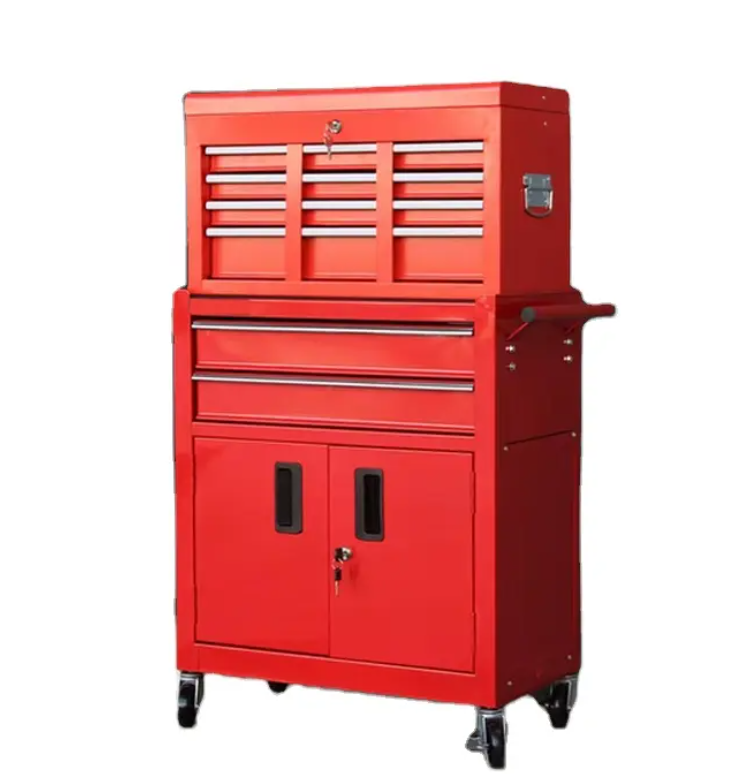
Why Adjustable Shelves Are Essential for Modern Garage Cabinet Functionality
Standard garage cabinets with fixed shelves end up wasting precious space and making it hard to adjust when tools change over time. With adjustable shelving units, what was once just static storage becomes something much more flexible. These systems can handle big power tools during construction season and then switch easily to smaller hand tools later on. Plus they eliminate all that wasted vertical space which is so important for storing things that come and go with the seasons, think holiday decorations or snow removal equipment. Research into workspace organization suggests that being able to rearrange storage cuts down on the time spent organizing by around 30%, while also making better use of available space compared to those old fixed shelf models.
When shelves match up properly with what they hold, safety gets better. Heavy stuff stays put instead of tipping over, dangerous chemicals don't leak out, and delicate items won't get smashed by heavier objects above them. From a money standpoint, cabinets with those special locking systems (like the ones that click into place) save cash because there's no need to replace whole units every time something new comes along. Take this example: raise a shelf now for that big table saw, then lower it down later when storing paint cans makes more sense. Adjustable storage solutions really do protect against future expenses, which is why so many shops invest in them upfront despite the initial cost.
| Shelf Flexibility Benefit | Impact |
|---|---|
| Seasonal Item Adaptation | Accommodates 40% more volume than fixed systems |
| Tool Acquisition Scaling | Reduces storage upgrade costs by 65% long-term |
| Hazard Prevention | Lowers accident rates by 22% (Workspace Safety Council 2023) |
Adjustable shelving turns ordinary garage cabinets into something much more than just storage boxes. When people can rearrange their space to fit different items like paint cans, toolboxes, or garden equipment all in one place, they actually keep things organized even as their interests change over time. And best of all, there's no need to buy new cabinets every few years when life takes unexpected turns. The real value comes out over many years as families grow and storage requirements naturally evolve with them.
How Garage Cabinet Shelf Adjustment Systems Work: Strength, Precision, and Ease of Use
Modern garage cabinet shelf systems transform static storage into dynamic workspaces through engineered adjustment mechanisms. Unlike fixed shelving, these systems allow vertical repositioning in 1-inch increments—supporting everything from compact hand tools to bulky power equipment. The true innovation lies in balancing three critical factors:
- Strength: Robust steel frames and reinforced joints support up to 350 lbs per shelf
- Precision: Laser-cut alignment holes ensure level positioning without wobble
- Ease of use: Tool-free adjustments take seconds using ergonomic levers
Pin-Indexed vs. Cam-Lock Mechanisms: Load Capacity and Long-Term Reliability
Garage cabinets typically employ two adjustment systems:
-
Pin-Indexed
- Uses removable steel pins inserted through pre-drilled cabinet holes
- Supports moderate loads (150–250 lbs)
- Potential long-term wear around hole edges
-
Cam-Lock
- Features spring-loaded levers that engage behind cabinet walls
- Distributes weight evenly, handling 300+ lbs safely
- Reinforced polymer components resist corrosion and fatigue
Cam-lock mechanisms offer 42% greater lifespan due to minimized metal-on-metal friction, according to Consumer Reports (2023).
Optimal Shelf Spacing Guidelines by Tool Type (Hand Tools, Power Tools, Containers)
Strategic vertical spacing maximizes accessibility and protection:
| Tool Category | Recommended Spacing | Safety Considerations |
|---|---|---|
| Hand Tools | 6–8 inches | Prevent hammers/wrenches from overlapping |
| Power Tools | 10–12 inches | Clearance for battery chargers and cords |
| Storage Containers | Height + 2 inches | Allow finger-grip clearance above lids |
Always place heaviest items near the bottom third of your garage cabinet to prevent tipping.
Designing a Scalable Garage Cabinet System Around Adjustable Shelving
Modular Integration: Pairing Garage Cabinets with Wall Systems and Mobile Bases
When we combine adjustable shelf cabinets with wall mounted panels plus mobile bases, we get a garage storage system that can really adapt to different needs. Slat walls and pegboards take advantage of vertical space where hand tools are grabbed often, leaving bigger power tools inside the cabinets where they fit better. Adding lockable casters to cabinets turns them into rolling storage solutions perfect for rearranging workshop areas whenever new projects start or seasons change. The adjustable shelves play a key role here too, fitting all sorts of odd shaped stuff like spray cans and battery packs once the wall hooks get crowded. According to some research from around 2023, garages using this kind of mixed approach saved about 30-35% on setup costs versus traditional fixed storage options. For everything to work together smoothly, it helps to pick wall panels with consistent rail heights and check that cabinet depths match what the mobile bases can handle.
FAQ
Why are adjustable shelves better than fixed shelves in garage cabinets?
Adjustable shelves enhance flexibility and efficiency, allowing for better space utilization to accommodate various-sized tools and items that change with seasons or needs.
What are the main mechanisms for shelf adjustment in garage cabinets?
The two main mechanisms are the pin-indexed system, which supports moderate loads, and the cam-lock system, which handles heavier loads and offers greater long-term reliability.
How do adjustable shelves contribute to safety in garage storage?
They allow for the optimization of weight distribution and accessibility, preventing accidents and ensuring the safety of stored items.
What is the benefit of a modular garage storage system?
Modular systems, which include adjustable shelves, wall panels, and mobile bases, offer flexibility, cost-efficiency, and the ability to adapt to changing storage needs.