 EN
EN

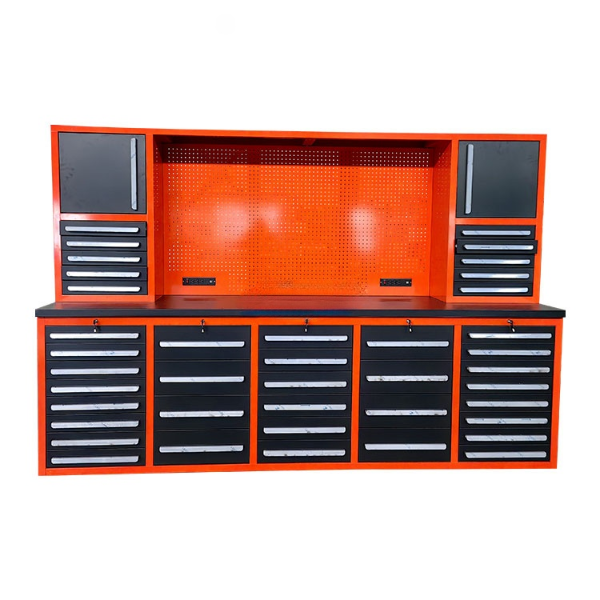
Structural Integrity: Steel Frame Design for Heavy-Duty Garage Workbench Load Capacity
Why Standard Frames Fail Under Dynamic Loads (e.g., Impact, Torque, Off-Center Weight)
Most standard garage workbenches are built using 14 gauge steel around 1.9mm thick with spot welds holding everything together. This works okay for basic static projects where nothing moves around much, but falls apart completely when subjected to real world stresses. Think about what happens when someone hits something hard with a hammer, drops heavy tools onto the surface, or applies torque from different angles. All these actions create shockwaves and twisting forces that wear down thin metal pretty quickly and weaken those spot welds over time. Place something really heavy like a 200kg engine block right at the edge of the bench? That becomes a lever effect problem. Stress on the legs gets multiplied somewhere around 300 percent. What usually happens next? Welds start cracking early, bolts snap off, frames bend out of shape permanently, and occasionally benches just collapse entirely during vibration intensive jobs. When these failures occur, they point to deeper problems with how materials respond to stress and how forces travel through the structure itself. Not everyone blames their own mistakes either.
Frame Gauge, Joint Construction, and Geometry: How 10-Gauge Steel + Through-Bolted Legs Enable 500kg+ Capacity
Industrial-grade garage workbenches reliably support 500kg+ through three interdependent structural principles:
| Feature | Standard Bench | Heavy-Duty Solution | Performance Gain |
|---|---|---|---|
| Steel Thickness | 14-gauge (1.9mm) | 10-gauge (3.4mm) | 2.5× greater bend resistance |
| Joint Design | Spot-welded corners | Through-bolted legs with locknuts | 70% higher shear resistance |
| Frame Geometry | Minimal bracing | Triangulated cross-supports | 3× improved vibration damping |
When it comes to absorbing impact without bending or breaking, 10 gauge steel has serious advantages thanks to its extra mass and density. The design also features through bolted legs instead of relying on welds which can be problematic spots. These bolts transfer all the weight straight through high tensile hardware that connects frame and legs together. Now looking at stability, these units have a much wider base than regular consumer grade equipment. We're talking about a stance that's around 40% broader than standard models. Combine that with triangular cross bracing and what happens? The whole thing becomes rock solid. It just sits there stable even when forces are applied off center. The complete package handles static loads up to 500 kg and takes repeated impacts at 50G levels. That kind of durability makes them ideal for workshops where power tools get used regularly, heavy duty vices need support, and engines are assembled daily.
Workbench Top Performance: Impact-Resistant Materials for Heavy Garage Workbench Use
Preventing Sag and Delamination: Why Thickness, Lamination, and Core Stability Matter Most
The workbench top serves much more than being a simple work surface; it actually forms a vital part of the bench's structure. Getting at least 1.5 inches thick material makes sure the bench won't sag when someone places heavy items on it for extended periods. Think around 500 kilograms worth of weight before we start seeing any real problems. Laminating process involves sticking a tough outer layer onto the main body of the bench. This creates a barrier that stops water from getting inside, which is what causes most wood types like plywood and MDF to fall apart over time. When looking at the core material itself, there's really no substitute for quality stuff. Solid hardwood works best, but even good quality plywood without gaps or holes handles pressure points much better than cheaper options like particleboard or low density fiberboard. If any one of these three things gets compromised thickness, proper sealing, or strong core material then those tools people rely on daily vices, clamps, presses will slowly warp the surface over time. Eventually this leads to uneven surfaces, inaccurate measurements, and worst of all potential safety hazards down the road.
Phenolic-Laminated Plywood vs. HPL-Clad MDF: Real-World Suitability for Vice Clamping and Power Tool Vibration
Phenolic laminated plywood works really well in garages where there's lots of stress on work surfaces. The way it's constructed with cross grain helps spread out the pressure when using bench vises, so we don't get those annoying cracks or blowouts at the edges that happen with other materials. Wood naturally bends a bit and dampens vibrations too. This means less shaking from power tools like grinders and sanders, which makes working longer periods much easier on the body and keeps tools aligned properly. Compare this to HPL clad MDF boards that do resist chemicals and scratches pretty well, but they just aren't strong enough when forces are applied sideways. Their solid construction actually sends vibrations right through instead of soaking them up, and over time they tend to crack near where things are mounted after repeated tightening and loosening. For anyone running a workshop focused on fixing machines, building stuff, or doing heavy duty work, phenolic laminated plywood still stands out as the toughest choice that holds up day after day in actual shop conditions.
Stability & Safety Protocols for High-Load Garage Workbench Operation
Tipping Risks During High-Torque Tasks "“ Physics of Center of Gravity Shifts and Anchoring Thresholds
When forces push sideways or twist against a bench, they gradually shift where the center of gravity sits. This creates what engineers call a moment arm, basically multiplying the force applied times how far it is from the bench's base. The tipping point comes when this force gets too strong for what the bench itself can balance against. Safety studies show anchored benches can handle almost three times more sideways pressure before they start to tip compared to regular free standing ones. Before starting work, many shops run a quick check by placing weights on the very edges of the bench and watching if it rocks or lifts legs off the ground. This simple test is actually required under most OSHA compliant safety standards for workshops.
Dual-Stability System: Floor Anchoring + Industrial Casters with Mechanical Bracing
Engineers often go with a dual stability setup when they need both flexibility and solid structural support. The back legs stay put thanks to floor bolts that should be at least three quarters of an inch thick and sunk around four inches into hardened concrete. Front wheels are different though - we're talking industrial grade casters capable of handling roughly 150 kilograms each. These wheels need two locking systems actually, one that stops them from turning side to side and another pin lock mechanism to keep things stable during those intense vibrating operations. There's also this important crossbeam connecting opposite legs underneath the main frame. From what we've seen in testing according to ASTM F1487 standards, this setup cuts down on unwanted movement by about 60% when loads start shifting around. What makes this arrangement work so well is that it keeps equipment mobile enough to move around but still provides rock solid stability needed for heavy duty work without messing up how forces travel through the structure. Before starting anything involving serious torque or impact, always check that weight is spread evenly across the whole top surface area first.
Frequently Asked Questions (FAQ)
1. Why is steel frame design important for garage workbenches?
Steel frame design is crucial for garage workbenches because it determines the structural integrity and load capacity, ensuring stability during heavy-duty tasks.
2. What materials are best for high-load workbench surfaces?
Phenolic laminated plywood is preferred for high-load workbench surfaces due to its impact resistance, durability, and ability to handle heat and vibration.
3. How do anchored garage workbenches enhance safety?
Anchored garage workbenches provide enhanced safety by minimizing the risk of tipping during high-load and high-torque tasks, maintaining stability under intense pressure.
4. Why choose industrial-grade casters for garage workbenches?
Industrial-grade casters provide mobility while offering enhanced stability through locking systems and mechanical bracing, ideal for workshops requiring heavy-duty work.