 EN
EN

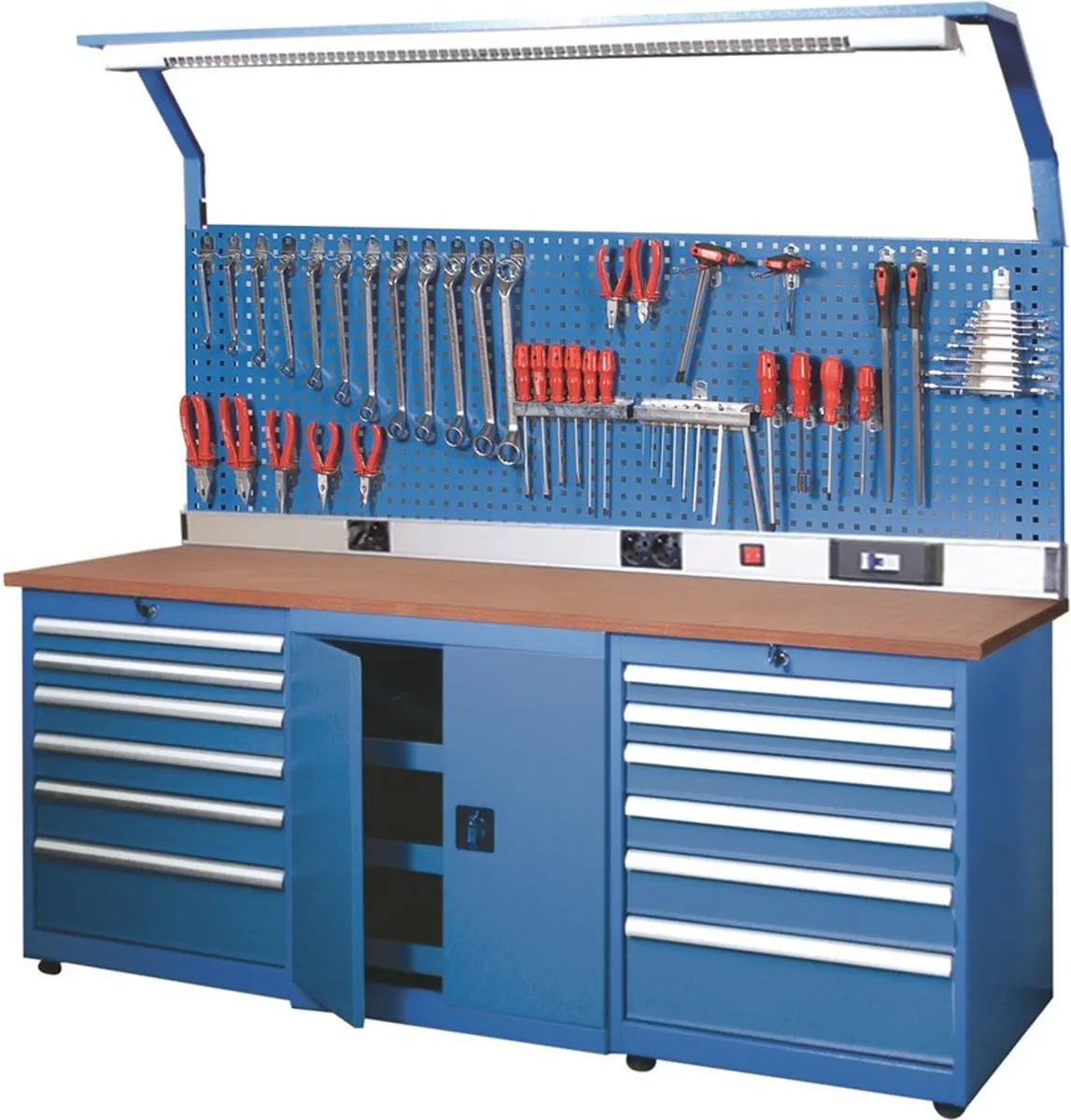
Core Materials for Weather-Resistant Tool Workbench Construction
Weatherproof Worktop Materials: Stainless Steel and Galvanised Steel
Building weather resistant tool workbenches starts with selecting surfaces that can handle moisture, temperature changes, and physical stress without breaking down over time. Stainless steel is definitely the top choice for high end models because it doesn't absorb liquids and stays rust free for about three times longer than regular carbon steel when exposed to damp conditions according to recent industry findings from 2024. For those looking at budget options, galvanized steel works pretty well too. The zinc coating stops rust formation and these benches can actually hold quite a bit of weight around 1000 pounds give or take. Most quality bench makers go one step further by adding reinforced laminated cores inside the structure. This extra layer makes all the difference in preventing warping issues especially important if someone needs to store their heavier tools outside where temperature swings happen regularly.
Marine-Grade Stainless Steel and Its Corrosion Resistance in Outdoor Environments
Stainless steel rated for marine environments, usually type 316L, holds up really well outdoors because it contains molybdenum which helps fight off salt spray and acid damage. Regular stainless just doesn't cut it near the coast where salty air can make things rust up to 40 percent faster according to some research from Ponemon back in 2023. What makes this stuff special is its ability to heal itself through what's called a passivation layer. This means even when scratched by rough tools or exposed to car fluids, the metal keeps protecting itself. That's why so many people choose it for tough outdoor applications where regular materials would fail within months.
Heavy-Gauge Steel Frames for Long-Term Durability in Harsh Conditions
Workbench frames constructed from 12 gauge steel at around 2.7mm thickness really stand out for their longevity, often lasting anywhere between seven to ten extra years compared to those built with thinner materials in garage environments that don't have heating systems. The welding process creates solid connections throughout the frame structure, which means there are no little spaces left open where water might get inside over time something that tends to be a big problem with workbenches assembled using bolts instead. And when these steel frames come with a good quality powder coating applied, they handle both sunlight damage and extreme temperatures ranging all the way down to minus twenty degrees Fahrenheit up through well over a hundred degrees Fahrenheit without showing any cracks or other signs of wear, making them reliable even as seasons change throughout the year.
Protective Finishes That Prevent Rust and Extend Workbench Life
Protective finishes are responsible for 85% of rust prevention effectiveness in outdoor and garage-based tool workbenches (Workshop Equipment Durability Report 2024). These coatings serve as the first line of defense against rain, humidity, and thermal cycling that degrade metal over time.
Powder Coating vs. Hot-Dip Galvanising for Tool Workbench Protection
Each finish has distinct advantages depending on environment and budget:
| Factor | Powder Coating | Hot-Dip Galvanising |
|---|---|---|
| Process | Electrostatic paint | Molten zinc immersion |
| Corrosion Resistance | Moderate (indoor/covered) | Extreme (coastal/outdoor) |
| Cost Efficiency | 30-40% lower upfront | Higher initial investment |
| Lifespan | 8-12 years | 15-25 years |
Hot-dip galvanising provides superior protection in marine and fully exposed settings through sacrificial zinc action, while powder coating delivers strong UV resistance at a lower costâ€"ideal for covered garages.
How Advanced Coatings Prevent Rust and Corrosion in Outdoor Use
Multi-layer systems combining epoxy primers and UV-resistant topcoats reduce moisture permeability by 98% compared to single-coat solutions. Zinc-rich primers offer electrochemical protection: when damaged, the zinc oxidizes before the underlying steel, slowing rust spread by 70% (Ponemon Material Science Study, 2023).
Coated vs. Uncoated Steel: Durability Comparison for All-Weather Performance
Uncoated steel develops surface rust within 18 months in humid climates, according to the 2024 Workshop Equipment Durability Report. In contrast, coated alternatives remain functional for 7â€"12 years under the same conditions. Accelerated aging tests show:
- Coated benches retain 98% load capacity after five years outdoors
- Uncoated units degrade to 62% capacity due to structural corrosion
- Maintenance costs for uncoated steel average 3.7ÃÂ higher over ten years
This performance gap justifies the 20â€"35% premium for galvanised or powder-coated finishes in all-weather applications.
Frame Design and Structural Integrity for All-Weather Durability
The durability of weather-resistant tool workbenches depends on frame design that blocks moisture infiltration while maintaining strength. Poor joint construction creates entry points for water, accelerating corrosion and weakening structural performance.
Fully welded vs. bolt-together frames: impact on weather resistance
Welded frames form solid barriers that keep moisture out completely, unlike bolted together structures which leave tiny gaps where humidity builds up over time. Modular setups might be quicker to put together, but those overlapping panels and bunches of screws actually collect water, something we know causes premature rust according to lots of research on boat parts. Garage owners and people storing stuff outside will notice the difference too. Welded frames last anywhere from three to five times longer before showing any signs of rust in areas that constantly go through wet and dry cycles throughout the year.
Joint design and its role in preventing moisture ingress and rust formation
For those critical connections, going with continuous weld beads makes much more sense than relying on stitch welding techniques. This approach stops capillary action from pulling moisture right into those tiny steel pores where problems start. When it comes to how joints are shaped, angles matter a lot for water management. Tests show that joints sloped at around 85 degrees let water run off much better than regular 90 degree corners, cutting down on liquid buildup by nearly three quarters according to drainage tests. And when parts need to come apart later on, compression locked fasteners paired with nylon insert nuts work wonders. These hold their grip even as materials expand under damp conditions, something every engineer knows can be a real headache if not properly addressed.
Moisture Management and Ventilation Strategies for Outdoor Tool Workbenches
Effective weather-resistant design integrates active moisture control with engineered airflow. Sloped surfaces and integrated drainage channels help prevent poolingâ€"responsible for 42% of outdoor workstation failures (National Association of Corrosion Engineers 2022).
Integrated Drainage and Airflow Optimization in Outdoor Workbench Design
Modern outdoor workbenches incorporate:
- Cross-ventilation gaps (4â€"6mm optimal spacing) beneath work surfaces
- Minimum ground clearance of 150mm to support airflow and flood resilience
- Laser-cut drainage patterns capable of shedding 2.4L/minute during heavy rainfall
Ventilation-enhanced models retain 67% less internal humidity than sealed units in 18-month field trials, significantly reducing condensation-related corrosion.
Case Study: Sealed vs. Ventilated Designs in Humid and Semi-Outdoor Environments
A two-year comparative study measured corrosion rates under various conditions:
| Design Type | Coastal Installation | Covered Patio Use | Full Outdoor Exposure |
|---|---|---|---|
| Fully Sealed | 0.12mm/year pitting | 0.08mm/year | 0.35mm/year |
| Ventilated (Base + Top) | 0.05mm/year | 0.03mm/year | 0.18mm/year |
Results show ventilated designs reduce galvanic corrosion by 58% in high-humidity environments (>70% RH). Open-frame construction also preserved fastener integrity 2.3 times longer than sealed cabinets in semi-outdoor garages under accelerated salt spray testing.
Maintenance Best Practices for Long-Term Performance in Garage and Outdoor Settings
Proactive maintenance is essential for maximizing the service life of weather-resistant tool workbenches exposed to humidity, thermal cycles, and outdoor elements. A 2022 industry survey found that workbenches with regular care routines last 6â€"8 years longer than neglected ones, highlighting the importance of consistent upkeep.
Essential Maintenance Routines for Weather-Resistant Tool Workbenches
- Daily Cleaning: Wipe down surfaces with pH-neutral cleaners to remove corrosive salts, grease, and moisture
- Lubrication Cycles: Apply silicone-based lubricants to moving parts every 90 days to prevent seizing
- Load Management: Keep loads below 500 lbs (227 kg) to minimize stress on joints and coatings
- Rust Surveillance: Inspect welds and fastener holes monthly for early signs of corrosion
Seasonal Inspection Checklist: Rust, Weld Integrity, and Fastener Stability
- Spring: Assess winter moisture damage; re-torque fasteners to 18â€"22 Nm
- Summer: Check UV-resistant coatings for degradation; replace worn drawer slides
- Fall: Clear debris from ventilation channels; test drainage functionality
- Winter: Remove ice with plastic scrapers only; inspect anti-slip feet for wear
In coastal areas, apply zinc-rich primer touch-ups quarterly. For powder-coated models, an annual application of paste wax enhances protection. Following guidelines from the National Association of Corrosion Engineers, elevate workbenches at least 4" (10 cm) above concrete floors to prevent capillary moisture absorption.
FAQ
What are the best materials for constructing weather-resistant tool workbenches?
Stainless steel, marine-grade stainless steel, galvanised steel, and heavy-gauge steel frames are highly effective for weather-resistant tool workbench construction.
Why is marine-grade stainless steel preferred in coastal environments?
Marine-grade stainless steel, typically type 316L, is resistant to salt spray and acid damage, making it suitable for use in coastal areas.
What role do protective finishes play in preventing rust on workbenches?
Protective finishes like powder coating and hot-dip galvanising act as barriers against moisture, greatly reducing rust and extending the product's lifespan.
How does frame design impact the durability of tool workbenches in outdoor settings?
Frame design, particularly fully welded frames, prevents moisture ingress, reducing the risk of rust and enhancing structural integrity over time.
What maintenance practices help prolong the life of workbenches?
Regular cleaning, lubrication, load management, and rust surveillance are essential maintenance routines that significantly extend the service life of workbenches.
Table of Contents
- Core Materials for Weather-Resistant Tool Workbench Construction
- Protective Finishes That Prevent Rust and Extend Workbench Life
- Frame Design and Structural Integrity for All-Weather Durability
- Moisture Management and Ventilation Strategies for Outdoor Tool Workbenches
- Maintenance Best Practices for Long-Term Performance in Garage and Outdoor Settings
- FAQ