 EN

Global Trends in Portable Metal Tool Chest Engineering
A portable metal tool chest is no longer designed as a simple container with a lid and latch. Across workshop, service, and private-label programs, engineering teams are balancing transport, access, protection, and repeatable manufacture in the same compact object. The useful question is not whether the chest is light or strong in isolation. It is how its shell, joints, handle, internal layout, and expected load work together in a real carrying routine.
For a metal-storage brand, that distinction matters early. A product brief that merely names the format can leave key decisions undefined. A better brief describes the intended tool mix, carry distance, opening frequency, storage environment, packaging constraints, and the evidence required before product claims are published.
Portability is becoming a system requirement
Current search results group portable chests with drawers, rolling formats, and weight-capacity filters. That is a useful market signal: a portable metal tool chest is assessed alongside organization and handling, not as a standalone box. Engineering programs increasingly begin with the user’s route: from shelf to vehicle, from vehicle to bench, and back again. Each lift, turn, set-down, and reopening cycle introduces different stresses and usability questions.
This perspective changes the specification discussion. The outer dimensions of a portable metal tool chest affect vehicle placement and bench clearance, while the internal arrangement influences whether the carried mass remains stable. A shallow tray may speed retrieval of small hand tools; partitions can reduce rattling; a drawer may change the center of mass and impose a different latch requirement. None of those choices is automatically suitable. They should follow the intended workflow.
Lightweight steel gauge is a trade-off, not a shortcut
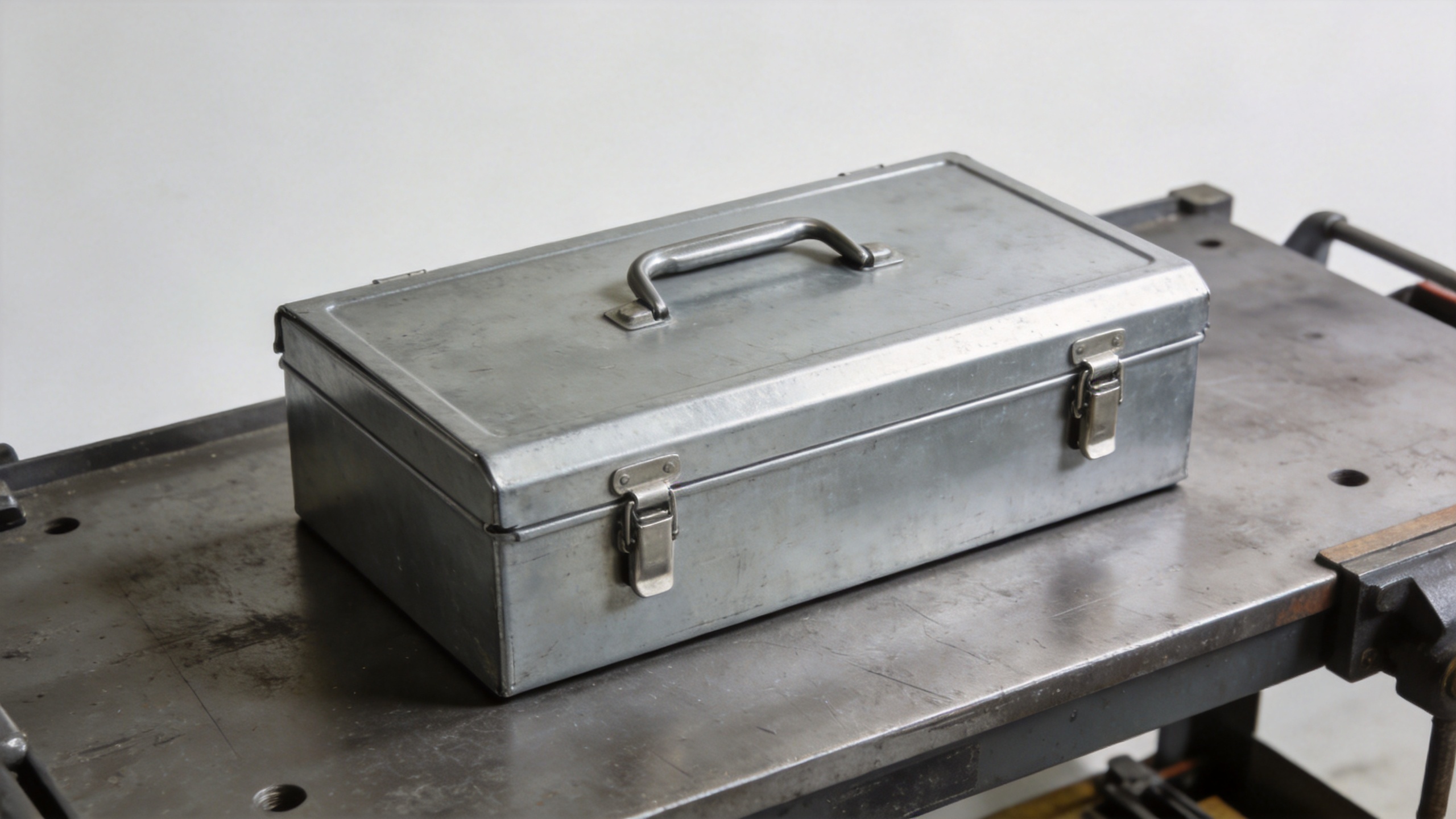
One global trend is closer attention to lightweight steel gauge as a design variable. Retail listings sometimes surface 18-gauge steel as a comparison attribute, but a published gauge alone does not establish how any product will perform. In a portable metal tool chest, the relevant engineering question is how material thickness interacts with panel span, bends, hems, reinforcements, spot-weld locations, hinge support, and the expected payload.
A lighter panel can help reduce empty carrying mass. Yet a lightweight steel gauge can also require careful geometry so broad surfaces do not feel overly flexible under normal handling. Formed edges, ribs, folded seams, and local reinforcement may contribute more to perceived rigidity than a number copied from a comparison table. The most useful specification identifies the construction zones that need review rather than treating one gauge value as a universal answer.
For example, the lid, base, and handle mounting area do not necessarily experience the same load path. A portable metal tool chest that is acceptable for occasional light tools may need a different construction discussion when it will carry dense sockets, measuring devices, or service tools. Engineers should therefore request a stated use condition and a reviewable sample or drawing before turning a gauge choice into a product promise.
The ergonomic handle now belongs in the structural conversation
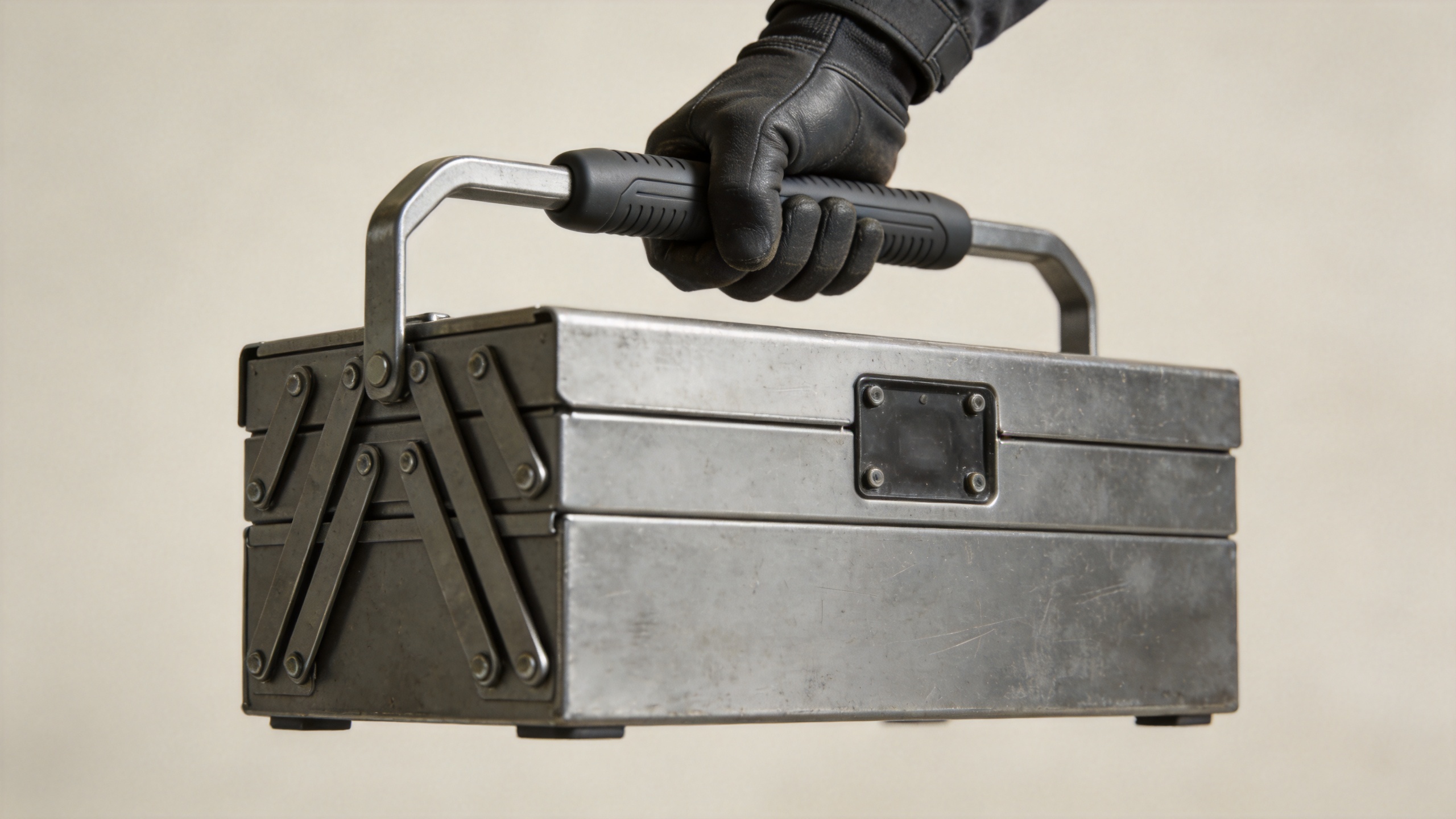
A shaped carrying handle is often described as a comfort feature, but its engineering role is broader. When a user lifts a portable metal tool chest, the handle transfers load into the lid, sidewalls, brackets, or other attachment points. Grip diameter, edge treatment, clearance for gloved hands, pivot behavior, and handle position all influence the carrying experience. The same handle can feel different when the chest is partly loaded, fully loaded, or lifted from a low surface.
The trend is toward treating the ergonomic handle and its attachment as one review item. A padded or shaped grip may improve hand contact, while the mount still needs to suit the specified load path. A centered handle can reduce tilt for a balanced tool layout; an off-center internal arrangement may still cause the chest to rotate in the hand. That is why a portable metal tool chest should be assessed with its anticipated tool distribution, not with an empty shell alone.
For OEM teams, a practical question list includes: Who carries the chest? How far? With gloves or without? Is one-handed lift expected? Which tools create the heaviest zone? Does the handle need to fold for stacking or packaging? These inputs make a handle requirement testable without claiming an unverified comfort outcome.
Designing for access without adding needless bulk
As compact storage becomes more task-specific, designers are moving from raw volume toward retrieval logic. A portable metal tool chest can hold many items yet still interrupt work if frequently used pieces are buried. The emerging engineering response is not simply more compartments. It is to map the daily sequence: pick up, use, return, and replenish.
This is where a portable metal tool chest can differ from a fixed cabinet. The layout must tolerate movement. Loose items can shift, trays can lift, and latches can encounter repeated cycles. Dividers, removable trays, drawer stops, and lid clearance should be treated as connected design decisions. A lightweight steel gauge may assist transport, but it should be considered alongside the stiffness needed for those moving interfaces.
| Review area | Question to confirm | Why it matters |
|---|---|---|
| Shell and base | What tool load and distribution are expected? | Supports a more relevant construction review for the portable metal tool chest. |
| Handle assembly | What grip, clearance, and attachment conditions apply? | Connects ergonomic handle choices to the carrying load path. |
| Internal layout | Which tools need immediate access and which need restraint? | Helps maintain organization during transport. |
| Verification | Which drawing, sample, or test record is available? | Prevents general language from becoming an unsupported claim. |
Manufacturing conversations are becoming more evidence-led
For brands sourcing a portable metal tool chest, global engineering direction also means clearer handoffs between design, procurement, and manufacturing. Sheet-metal processing context can support a focused discussion of formed features and attachment areas, but it does not prove the details of a particular configuration. The responsible approach is to keep standard scope, requested customization, and pending verification visibly separate.
A concise request can state the preferred lightweight steel gauge range, target tool list, ergonomic handle concept, finish expectation, labeling needs, and packaging conditions. The supplier can then respond with questions, drawings, and sample-review points rather than broad quality language. For a portable metal tool chest, this makes comparison between quotations more meaningful because the same assumptions are being reviewed.
A practical direction for the next brief
The next generation of this product format is likely to be defined less by a single feature than by better alignment among material use, structural form, hand contact, and access flow. Start with the carried tool set and route. Then review the shell construction, lightweight steel gauge, ergonomic handle, latches, internal restraint, and packaging as a connected system.
Before publication or purchase approval, ask for the evidence appropriate to the claim: an approved drawing for dimensions, a sample for handling observations, and a current record for any load, finish, or compliance statement. That process gives a portable metal tool chest program a clearer engineering basis while leaving room for brand-specific choices.
 Hot News
