 EN

How a Rolling Tool Storage Cabinet Fits Modern Garages?
A modern garage often has to accommodate a vehicle, a workbench, household storage, and the occasional repair project. Finding room for tools is just the start. They also need a place where they can be reached, used, and put back without blocking the next task. A rolling tool storage cabinet can serve as a movable tool station when its size, contents, and travel route fit the room.
For a workshop user, the useful starting point is the routine rather than the cabinet's appearance. Which tools move with the job, and which can stay against the wall? The answer helps separate a practical mobile station from a cabinet that is wheeled but rarely moved.
Start with the work, then map the space
List the tasks that share the garage and the hand tools used for each. A rolling tool storage cabinet can hold the items that need to travel between a bench and a vehicle, while rarely used equipment remains in fixed storage. Grouping tools by task or frequency makes it easier to find a home for each item and return it after use.
Next, mark a parking position and trace the route to each work area. Check the width and height of openings, the available turning space, and the room needed to open drawers. Consider a parked vehicle, doors, uneven flooring, and anything usually stored on the floor. Measure the actual space and compare it with the manufacturer's confirmed external dimensions, including handles and casters.
Mobility has a trade-off. If the route is crowded or the cabinet would block an exit, a stationary unit near the bench may make more sense. If the route is clear and work shifts around the garage, a rolling tool storage cabinet can bring selected tools to the task and then return to a designated position.
Choose a drawer layout around retrieval
Begin with the tools that come out most often. Lay them in groups and check their lengths, heights, and how much room is needed to pick them up. Shallow and deeper drawers can serve different tool groups, but the available configuration depends on the cabinet. Ask for internal drawer dimensions rather than assuming the exterior footprint tells the whole story.
Give each group a recognizable location. For example, keep frequently used hand tools together and give measuring equipment its own space. Labels or suitable inserts may help, provided they fit the drawers and do not interfere with closing them. Avoid filling every gap just because it is available; leave enough access to remove an item without disturbing its neighbors.
A rolling tool storage cabinet also needs a sensible loading plan. Check the approved cabinet and drawer load ratings and follow the supplier's instructions for distributing weight. Position heavier items as directed by the manufacturer, close drawers before moving the unit, and use any supplied locking or retention features as instructed. Do not assume that a particular product has an interlock or a given load rating.
Make movement and parking part of the specification
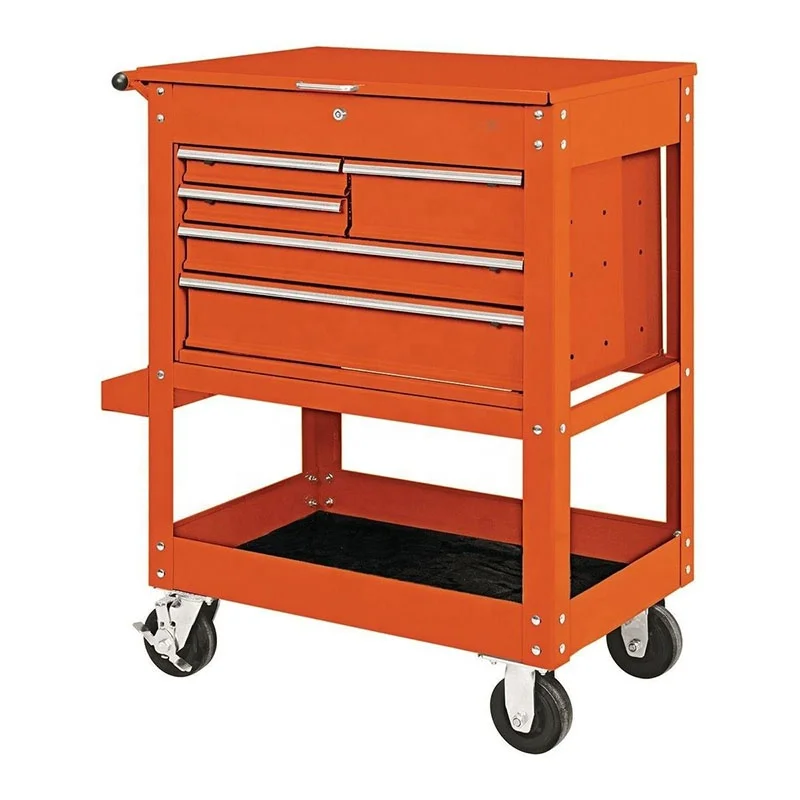
Casters affect how a rolling tool storage cabinet follows its route. Swivel wheels can help a unit change direction, while a caster arrangement may combine fixed and swiveling positions. The right choice depends on the floor, the load, the available turning room, and the supplier's design. Ask which wheels swivel, which have brakes, and what each brake actually locks.
Review the floor for joints, thresholds, debris, and slopes before deciding where the cabinet should travel. Confirm wheel material and the complete unit's permitted load with the supplier; a rating for an individual component is not automatically a rating for the assembled cabinet. Try the intended movement and parking routine with a representative configuration when a suitable sample is available.
When the cabinet is parked, apply its brakes according to the instructions and check that drawers can open without interfering with nearby equipment. Brakes are not a substitute for a suitable level parking location. For movement and stability, follow the product documentation rather than assuming all rolling cabinets behave alike.
Connect mobile storage to the rest of the garage
A rolling tool storage cabinet does not have to carry everything. Wall storage can hold items that stay near the bench, while the mobile cabinet carries a smaller working set. This division leaves a clear home for the cabinet and reduces the temptation to move unnecessary items on every job.
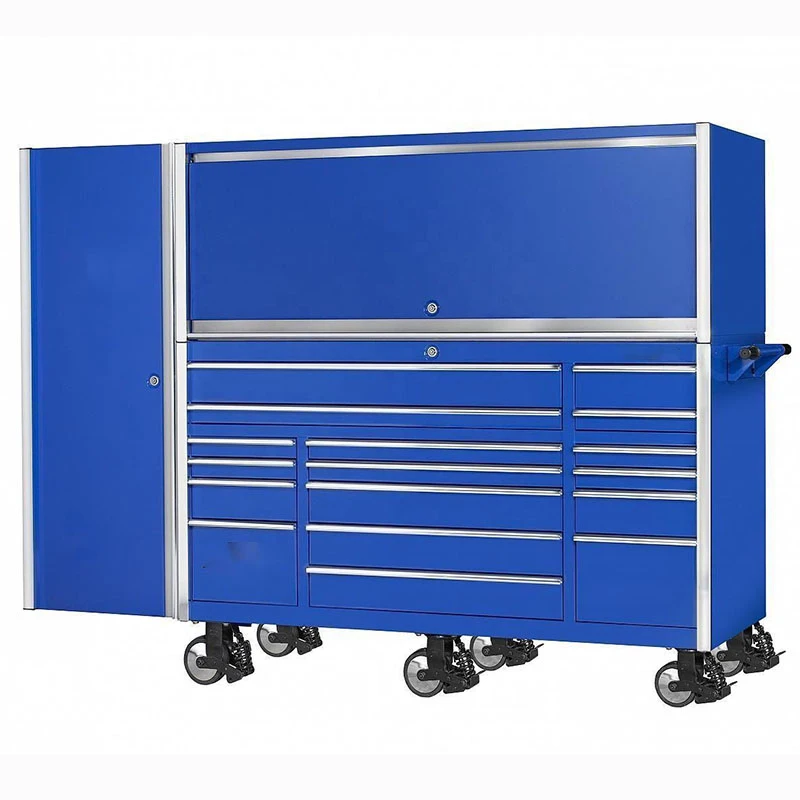
A modular cabinet system can be useful when a garage needs several storage zones. A fixed unit, a mobile drawer cabinet, and a work surface may form a coordinated arrangement, but visual similarity does not establish compatibility. Confirm dimensions, clearances, attachment methods, and any approved stacking arrangement before combining units. If parts are intended to connect, request the relevant drawings or instructions rather than relying on a catalog image.
Consider access on a busy day: can a person reach the bench while the mobile unit is parked? Can the drawers open without touching a vehicle? Is there room to return the cabinet after cleanup? The answers connect a modular cabinet system to the actual floor plan, not just the available wall space.
Turn the layout into a sourcing brief
For a tool-storage brand developing a rolling tool storage cabinet, the end user's routine can become a clearer request to a manufacturing partner. Define the intended tool mix, target placement, outside dimensions, drawer arrangement, desired finish, and packaging needs. Separate mandatory requirements from options that are still open to discussion.
Include the conditions that affect the design: expected contents, floor characteristics, travel route, parking needs, and any applicable market requirements. Ask the supplier to identify what documentation, drawings, samples, and verification steps are available for the proposed configuration. Confirm capacities and hardware details in the approved product information before making claims about them in a listing.
Haiyang Libenli Metal & Technology describes sheet-metal processing and metal furniture among its capabilities. A brand considering a custom project can use that context to start a discussion about its requirements; the final configuration and any product-specific claims still need confirmation.
A practical fit check before deciding
- Measure the parking space, travel path, and drawer clearance with the garage in its normal working arrangement.
- Group the tools by task and check the internal drawer dimensions against the actual contents.
- Review the confirmed load information, wheel arrangement, brakes, and handling instructions.
- Check how the mobile unit relates to fixed storage and whether any connections are approved.
- For a sourcing project, put unresolved dimensions, finish, packaging, and evidence requests into the brief.
The value of a rolling tool storage cabinet depends on the whole routine: where it starts, where it travels, and where the tools return. Review the layout after using it and adjust the organization as the work changes. A careful fit check gives both garage users and product teams a more useful basis for choosing the configuration.

 Hot News
