 EN

2026 Industry Trends in Custom Tool Chest Production
A tool chest is more than a box with drawers when a brand needs a distinct, repeatable product line. For 2026 planning, the useful question is not which feature sounds newest, but which requirements can be specified, reviewed and supported through production. This article discusses possible directions for custom tool chest development; it does not claim that adoption or demand is growing, because comparable industry statistics were not available for this review.
From a brand procurement perspective, a tool chest brief connects user access, sheet-metal construction, hardware, finish and packaging. Each choice has consequences for the others. The following considerations can help a product team turn broad ideas into questions for a prospective manufacturing partner.
1. Configuration around actual tool access
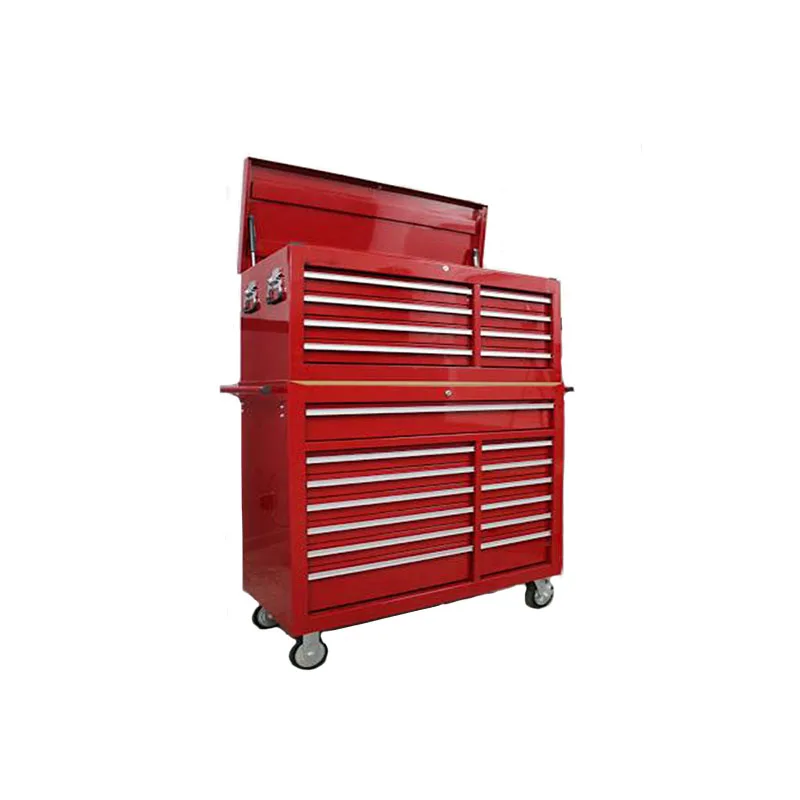
One direction worth examining is a tool chest layout designed around the user's sequence of work rather than a drawer count alone. A shallow drawer may suit small hand tools, while a deeper space may suit larger items. Whether either arrangement works depends on the actual tool mix, available internal space and the approved drawer design.
Start by grouping the tools that should be stored together. Then define which items are retrieved most often, what clearance is needed and where the chest will sit. A custom tool chest might use dividers, liners or interchangeable inserts, but compatibility and availability must be confirmed with the supplier. Ask to review a drawing or sample before treating an insert as part of the offer.
The choice has a trade-off: a dedicated arrangement can make a particular task easier to organize, while a flexible layout may accommodate changes in the user's tool collection. Neither is automatically right for every tool chest. Product teams should decide which layout assumptions belong in the initial brief and which remain options.
2. Modular thinking across a product range
Another useful exercise is to consider the tool chest as part of a wider storage range. A brand may want consistent visual details across different sizes or combine a chest with another storage unit. This is a planning approach, not evidence that any specific modules are interchangeable.
For a proposed tool chest family, ask which dimensions, mounting interfaces, handles and finishes must stay consistent. Also identify where variation is acceptable. Shared appearance does not prove shared components: a handle location, lid clearance or drawer connection can change the design. The supplier should confirm the interfaces and assembly details against approved drawings.
Consider how the user will open drawers when another unit is nearby and whether the selected configuration needs a stable supporting surface. If mobility is requested, the rolling base and loaded operating conditions require their own review. Do not assume a chest can be stacked or moved safely without checking the proposed configuration.
3. Access control as an integrated design choice
A smart lock system is another option to evaluate when a tool chest brief calls for controlled access. The starting point should be the access problem: who needs entry, how access is granted or withdrawn, and what happens if the power source or credentials are unavailable? A conventional mechanical lock may be sufficient when simple, power-free operation is the priority.
Some electronic cabinet locks offer a mechanical override, but the feature is not universal. For a particular smart lock system, ask the lock supplier for the recovery procedure, power requirements, maintenance instructions and any stated operating limits. Check whether user administration or access records are actually included; those functions must not be inferred from the word smart.
Integration also affects the tool chest itself. A lock needs an appropriate mounting location and a defined relationship to the drawer or lid mechanism. If wiring is involved, the design should identify routing and access for service. Agree on responsibility for the lock, installation, functional checks and replacement parts before finalizing the tool chest specification. An electronic option adds choices; it does not by itself establish a security rating.
4. Sheet-metal decisions tied to verification
In custom tool chest production, sheet-metal choices should follow the intended use and the design, not a generic claim about strength. Material grade, thickness, formed edges, joining methods and finish are all specification items to discuss. Their suitability depends on the approved design and the evidence available for that design.
Ask the supplier to identify which requirements appear on drawings and which need separate inspection or sample review. For a tool chest with drawers, review panel alignment, drawer travel, contact points and how hardware is fixed. If a load requirement matters, define the load condition and test method in the brief rather than copying a number from a different product.
Finish selection is similarly conditional. Discuss appearance, handling and the intended environment, then request the relevant finish information and agreed acceptance criteria. A color name alone does not define a coating system, and a finish description should not be converted into a durability claim without supporting evidence.
5. OEM fabrication needs a shared change process
OEM fabrication begins with a scope that both the brand and supplier can interpret. For a tool chest, the brief might cover overall envelope, drawer arrangement, hardware, branding location, finish, packaging and the documents needed for approval. At this stage, distinguish desired options from confirmed requirements and identify any information the brand still needs to supply.
Changes deserve particular attention. Moving a handle or changing a lock can affect surrounding parts, assembly and the instructions supplied with the tool chest. Record the requested change, check its effect on associated components, and agree on the drawing or sample that will be used for review. A practical change record also identifies who approves the revised version.
For supplier discussions, Haiyang Libenli Metal & Technology describes sheet-metal processing and customized solutions on its site. The specific capabilities, configuration and documentation for any proposed tool chest still need to be confirmed directly for the project.
6. Service, packaging and evidence before launch
A tool chest can look ready in a drawing while important ownership questions remain open. Ask how the selected hardware will be identified, whether replacement components can be requested, and what installation or care instructions will accompany the proposed design. Availability and service arrangements should be agreed for the actual order, not assumed.
Packaging also belongs in the tool chest discussion. Clarify the delivery format, protection expectations, labeling and any handling requirements with the supplier. If a brand needs a particular transport test or market-specific statement, specify the method or applicable rule and ask for documentation. A package description alone is not proof of test performance.
A practical 2026 planning checklist
Before requesting a custom tool chest quotation, assemble a brief that separates facts from decisions still to be made:
- Describe the intended users, tools, workspace and access sequence.
- Define proposed dimensions, drawer layout and mounting interfaces, or mark them as open questions.
- Identify whether a mechanical lock or a smart lock system is being considered, including recovery and service requirements.
- List material, finish and hardware requirements along with the evidence needed to verify them.
- Document packaging, branding, drawing approval and change-control responsibilities.
- Request confirmation of the supplier's actual scope, sample process and applicable inspection plan.
These are discussion directions, not a forecast of industry adoption. A useful tool chest program starts with a clear brief and advances through documented choices. For a brand exploring OEM fabrication, the next step is to bring the unresolved requirements to a supplier and agree which drawings, samples and records can answer them.


 Hot News
