 EN

Assembly Plant Case Using Rolling Cabinet With Drawers
What should a rolling cabinet with drawers carry when tools need to travel between assembly work areas? The answer starts with the sequence of work, not the number of drawers. An OEM brand developing metal storage for industrial users can use that sequence to turn a broad product idea into a reviewable configuration brief.
Illustrative scenario: The assembly plant described below is hypothetical. It is not a named customer, a completed project, or evidence of measured results. The layout and tasks are examples for planning; dimensions, loads, finish performance, and suitability must be confirmed for an actual site.
The hypothetical assembly workflow
Imagine a plant with several workstations where assemblers use hand tools, measuring equipment, and small setup accessories. Some items stay at one position throughout the shift, while others are needed at more than one point. A rolling cabinet with drawers could be considered for the shared items, provided its movement and parking location fit the site's operating rules.
In this scenario, the team maps a typical sequence: collect a tool, move to the task, return the tool, and restore the work area. The cabinet is not a substitute for fixed storage or a reason to place every item on wheels. Its proposed role is to keep a defined group of shared tools together when that group needs to move.
Before choosing a rolling cabinet with drawers, the buyer should ask the people responsible for the work which tools are shared, how often the route changes, and where the unit can stand without obstructing another task. Those answers may point to a mobile layout, a fixed station, or a combination. The hypothetical exercise does not establish which option a real plant needs.
Translate the tool list into drawer zones
Begin with an inventory organized by task rather than by tool appearance. Group frequently used hand tools together; keep measuring items separate if the site requires additional protection; and give setup accessories a defined location. For each group, note the largest item, how it is picked up, and whether people need to see its absence during the return check.
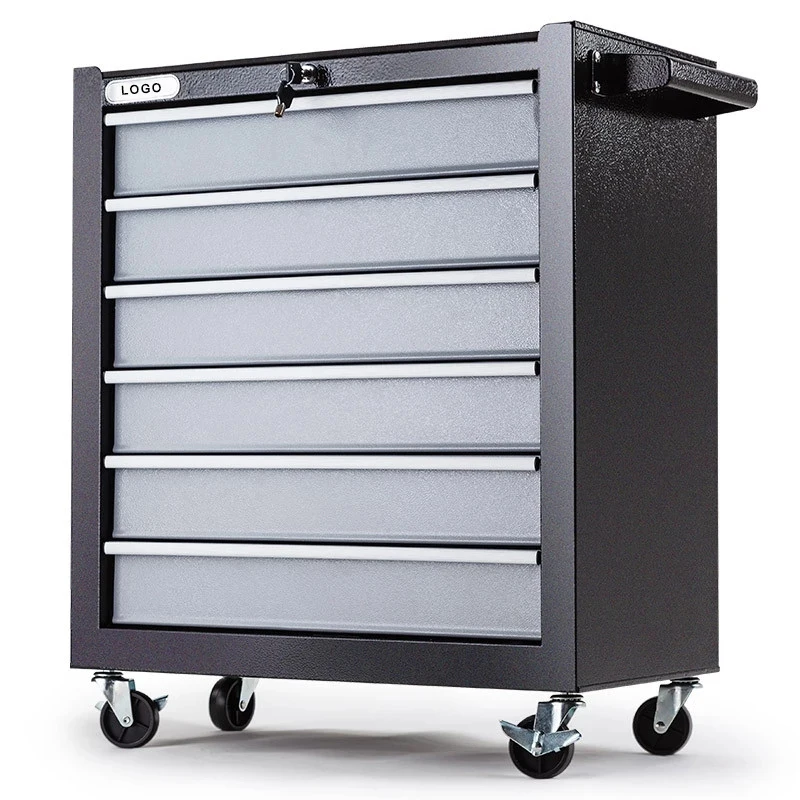
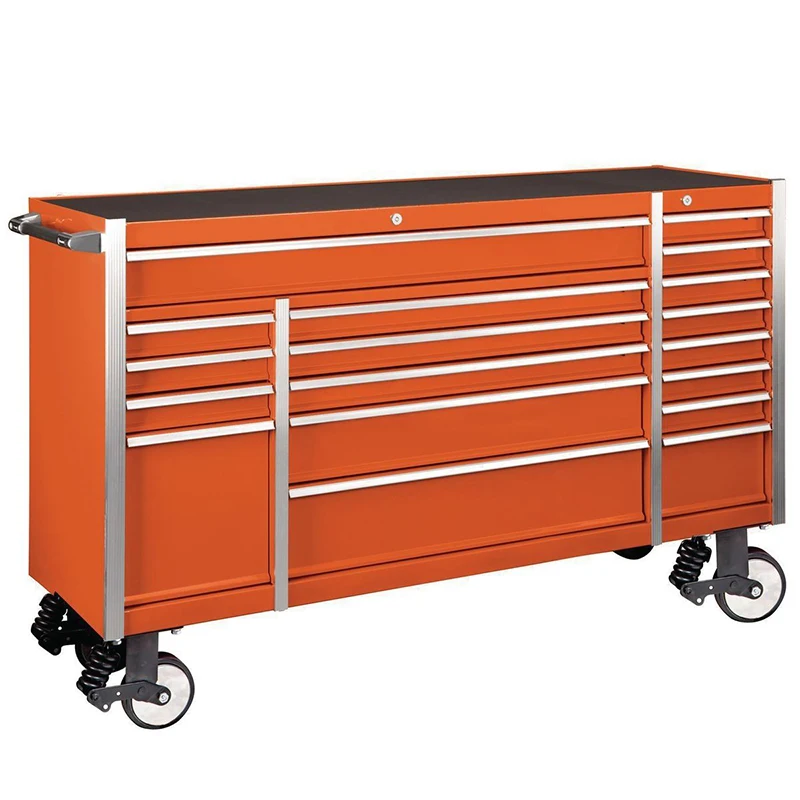
A rolling cabinet with drawers can then be reviewed as a set of access zones. Shallow compartments may suit flatter tools, while taller items may need more clearance. That is a planning distinction, not a claim that a particular cabinet has either configuration. Ask for a drawing showing usable space, drawer travel, internal obstructions, and any proposed dividers before deciding where each group belongs.
A request for custom drawer height should describe the contents and required usable clearance rather than only an outside height. The buyer should also confirm how the proposed drawer arrangement affects the overall cabinet, other drawers, and the space available to open it. A sample layout or an approved drawing gives both sides a common reference for review.
Keep the return routine visible
Tool placement should support the end of the task as well as the start. An agreed label or a simple layout record can identify where an item belongs. In the hypothetical plant, the team could walk through the list at shift handover and decide who reports a missing or damaged item. Whether this routine works depends on local procedures and the tools involved; no reduction in loss or search time is assumed.
Review movement, parking, and stability
A rolling cabinet with drawers needs a practical route from its storage position to each intended work area. Walk the route with the site team and identify doorways, turns, floor transitions, nearby equipment, and places where people pass. Check that the cabinet can be parked without blocking access to workstations, emergency equipment, or marked passages.
In the United States, OSHA's 29 CFR 1910.176(a) addresses safe clearances where mechanical handling equipment is used. Its application to a particular operation should be reviewed by the site's safety personnel. The regulation is not a certification of a cabinet, and this scenario does not establish compliance with any site's rules.
Discuss the planned contents and their distribution with the supplier before selecting wheels or drawer hardware. Request the applicable load information for the proposed configuration, including any restrictions on movement and drawer opening. Confirm how the unit is to be secured while parked and how it should be moved; do not infer load ratings, brake performance, or stability from a product name.
In the hypothetical review, the team would also check whether an open drawer leaves enough clearance for the next task. If it narrows a passage or conflicts with nearby machinery, the parking position or storage approach needs reconsideration. Mobility is useful only when the full route and the stopping points are workable.
Specify the surface finish for the actual environment
A buyer considering powder coating should describe the intended environment, cleaning practices, appearance requirements, and areas exposed to regular handling. The finish discussion is more useful when it includes a proposed color reference, visible surfaces, and how edges or hidden areas will be reviewed.
Surface preparation is part of that discussion. Cleaning and other pretreatment steps depend on the material and coating process, so ask the supplier to explain the proposed preparation and how the finished surface will be assessed. Do not assume a particular coating thickness, chemical resistance, or corrosion result without the relevant specification or test evidence.
If the rolling cabinet with drawers is intended for several plant areas, compare the finish requirements across those areas before approving the brief. A sample panel or a production sample may help align the appearance discussion, but any performance acceptance should follow the agreed requirements and documented evidence.
Turn the scenario into an OEM request
A storage brand can share the following information with a potential manufacturing partner. The items are questions for a real project, not specifications already established for this example.
- Use and route: identify the users, intended tasks, floor conditions, movement route, and parking restrictions.
- Contents: list the tools and accessories, their actual dimensions and weights, and any handling or separation requirements.
- Drawer arrangement: supply a proposed layout, required usable heights, travel expectations, labels, and divider needs.
- Mobility and safety: state the intended load and request documented limits, wheel details, parking arrangements, and any applicable review criteria.
- Finish: document the color, visible surfaces, expected exposure, preparation questions, and acceptance method.
- Review process: agree on drawings, sample scope, changes, and the evidence required before approval.
Ask which details are confirmed and which still require engineering review. This distinction matters when comparing quotations: a rolling cabinet with drawers described only by its overall appearance may conceal important differences in usable drawer space, fittings, finish, and review scope.
From illustrative layout to an approved brief
The hypothetical plant has not demonstrated an outcome; it has shown a method for asking better questions. Map the route, identify the shared tool groups, review the drawer layout, and verify the finish and mobility requirements against the real site. Then revisit the draft brief with users, the site safety team, and the supplier.
Haiyang Libenli Metal & Technology describes its work in sheet-metal processing and customized metal solutions. A brand discussing a rolling cabinet with drawers can bring an application brief and ask which configuration details and supporting documents are available for its project. The final choice should depend on the approved information, not on the hypothetical scenario alone.

 Hot News
