 EN

What Are the Structural Highlights of Metal Tool Chest?
A metal tool chest is more than a steel box with drawers. Its shell, lid, joints and moving parts work together to support the way tools are stored and accessed. For a brand developing an OEM brief, the useful question is not simply whether a feature appears in a catalog. It is how that feature is constructed, where forces enter the assembly and what evidence is available for the finished design.
Start with the construction details worth discussing with a supplier. These are design possibilities, not claims that every chest includes them. Actual materials, dimensions, hardware and ratings should be confirmed for the model being considered.
The shell: panels, bends and joints
The shell of a metal tool chest forms the enclosure around its storage spaces. Top, bottom, side and back panels may be made as separate pieces or as portions of formed sheet. Bends and return flanges can create edges for attachment and increase section depth. A thicker sheet alone does not explain the behavior of the whole assembly: panel geometry, the way parts join and the placement of openings also matter.
Look at the corners and the transitions around the drawer openings. Ask whether joints are welded, mechanically fastened or made using a combination of methods, and how those joints are shown on the drawing. Check that panel edges, seams and finishing details are appropriate for the intended handling and environment. A supplier's sample can reveal fit and finish; any strength or durability conclusion still needs a defined test or specification.
How a lid and continuous hinge work together
Where a metal tool chest has a top compartment, its lid is an access panel and a moving structural element. The lid needs enough clearance to open around nearby objects, while its support or stop arrangement should suit the way it is used. Review the open position, closing path and clearance between the lid, handle and back wall before deciding on hardware.
A piano hinge lid uses a continuous hinge along much of the lid edge rather than relying solely on widely separated hinge locations. The long hinge provides attachment along that edge, but hinge length alone does not establish the capacity of the assembly. The hinge material, pin, fastener spacing, attachment to the lid and body, and the lid support all affect the result. Confirm the actual construction with drawings and the supplier's applicable load and cycle information.
For a sample review, open and close the lid through its intended travel. Check alignment, access to any support mechanism and whether the lid meets the body evenly. Do not infer that a hinge will hold an open lid by itself; specify the required support separately.
Reinforced ribs and formed edges
Large flat panels on a metal tool chest can be candidates for formed ribs, beads or folded edges. A rib moves material out of the panel plane, which can increase bending stiffness without changing the starting sheet thickness. The effect depends on its shape, orientation and position, as well as the surrounding attachment points. A rib running in one direction does not necessarily address bending in every direction.
When reinforced ribs are proposed, ask to see their location on the lid, side or base drawing and how they affect usable space. A raised form that helps a panel may also change clearance for a drawer, liner or stored item. Compare the proposed geometry against the intended loads and ask for evidence relevant to that configuration rather than assuming that additional ribs necessarily mean a more suitable chest.
Drawers, slides and load paths
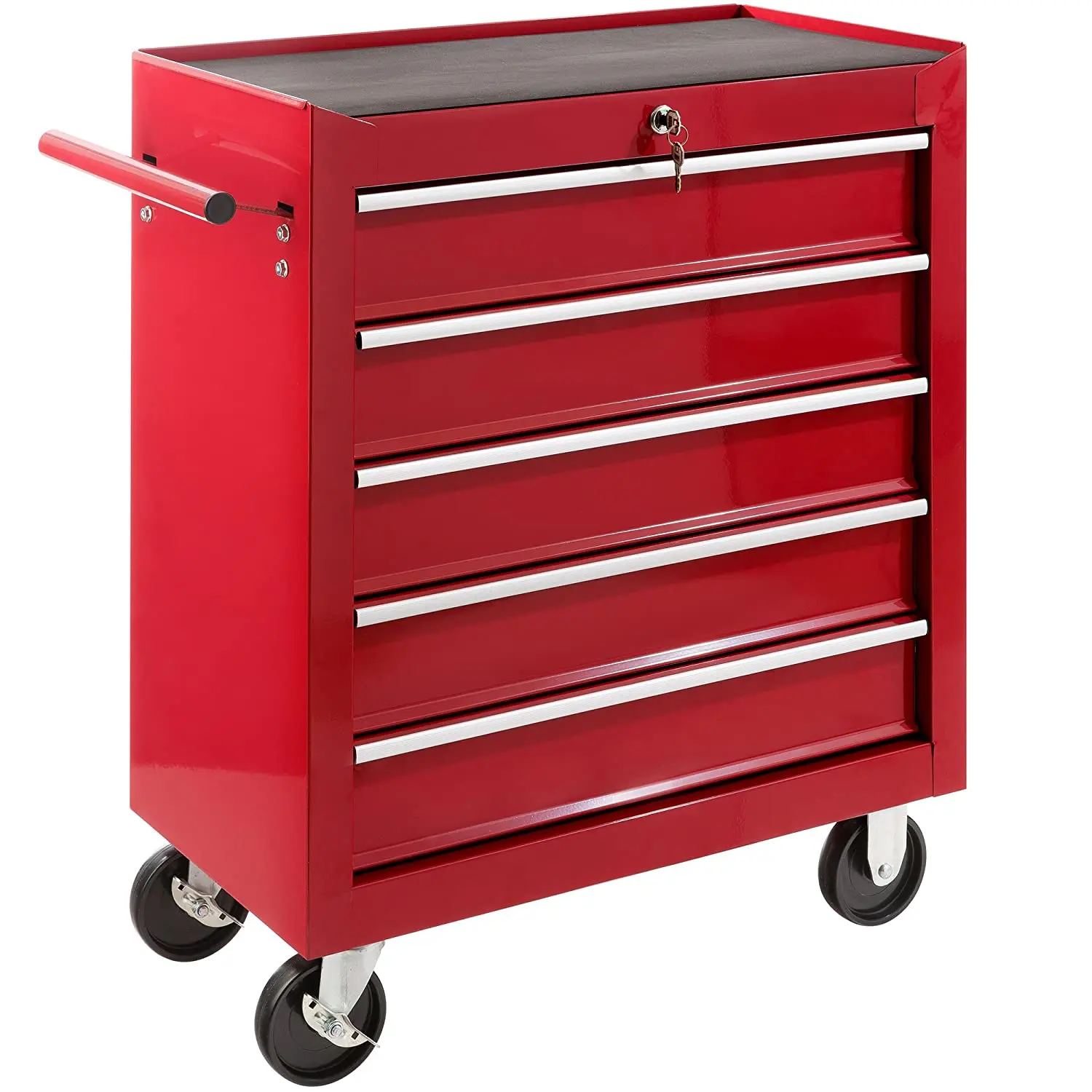
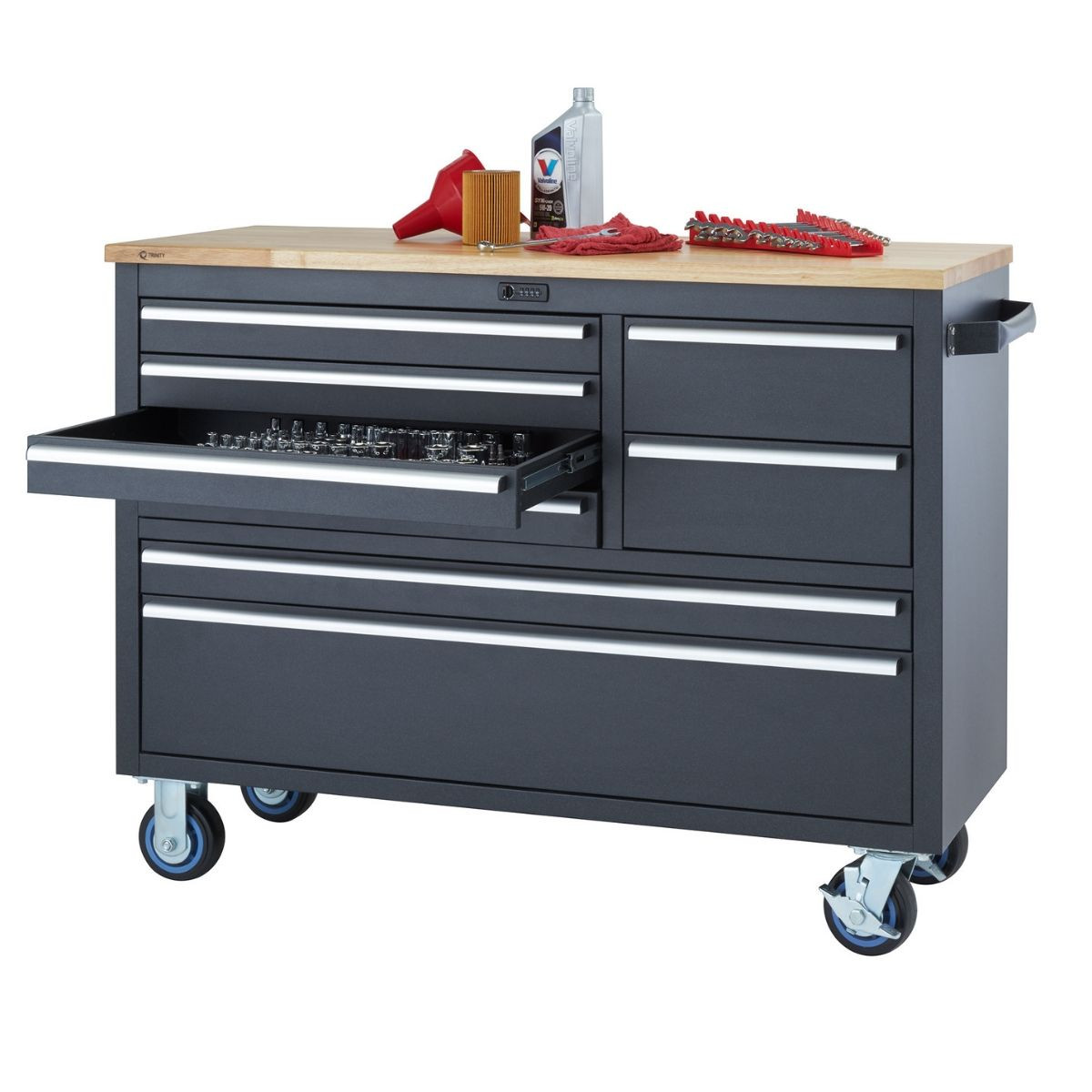
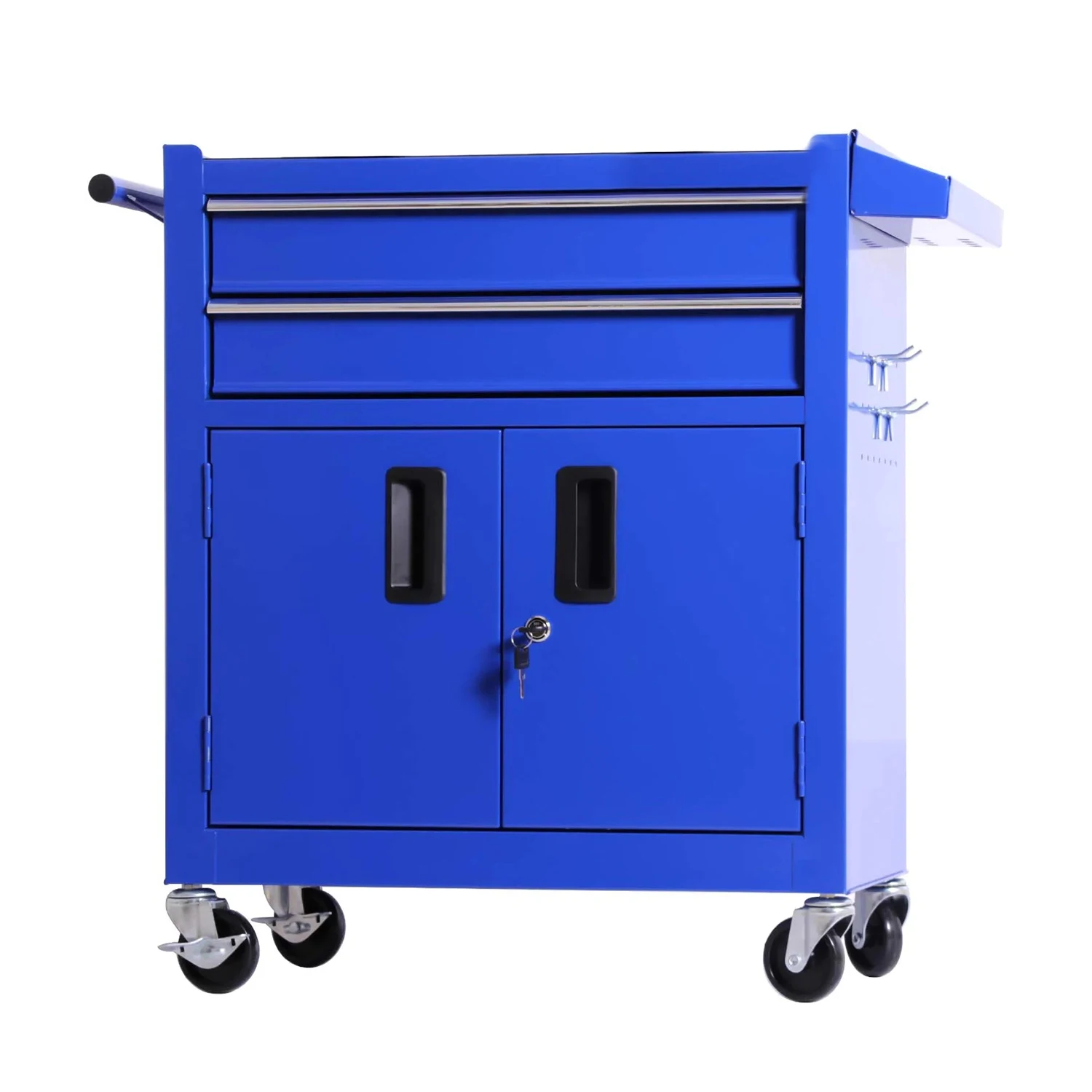
The drawer assembly determines how a metal tool chest presents its contents to the user. A drawer has its own bottom, sides and front, while its slides connect it to the body. The visible front dimensions tell only part of the story; usable opening depends on the slide design and installation. Check the clear internal space, travel and spacing between drawers against the actual tool groups.
Review the complete load path from stored tools through the drawer and slides into the shell. Ask for the supplier's stated rating for the specific drawer and slide arrangement, the conditions behind that rating and any limits on load distribution. If a brief calls for concentrated loads or frequent cycling, request the relevant test method and acceptance criteria. Do not assume that a rating applies to a different slide, drawer width or installation.
In an illustrative workshop, a shallow drawer for frequently used hand tools and a deeper compartment for bulky items may make sense. The right arrangement depends on the user's inventory and reach, not on drawer count alone. Check whether a fully opened drawer obstructs the aisle or another workstation.
Base, mobility and stability
A metal tool chest may sit on a fixed base, stack on a compatible cabinet or be part of a mobile arrangement. Each option changes where forces enter the structure. For a fixed unit, inspect the support points and any contact with the surface below. For a rolling configuration, ask how the mounting points connect to the base, which wheels have locks and what floor conditions the assembly is intended to encounter.
Stability is an assembly-level question. Consider the intended load, how high it is placed, the number of drawers opened at once and any manufacturer instructions for stacking or anchoring. A wheel lock and a drawer lock serve different purposes; neither should be treated as proof of tip resistance. Request the supplier's guidance and any applicable stability test for the specified configuration.
Handles, locks and finish details
Handles, latches and locks influence how a metal tool chest is handled and closed. Review their mounting, access and replacement arrangements, including whether an open lid or adjacent unit blocks operation. A lock may control access, but its presence does not by itself establish a security rating. Confirm the mechanism and any relevant rating only from supplier documentation.
Finish selection belongs in the structural discussion because edges, seams, contact areas and hardware interfaces are exposed differently. Identify the intended indoor or outdoor environment, cleaning needs and areas subject to abrasion. Ask the supplier to specify the coating system and any test evidence for the actual finish. Avoid assigning corrosion performance from a color or coating name alone.
Turn the features into a reviewable OEM brief
Before requesting a metal tool chest sample, describe the tools, storage layout, working environment and intended handling. Then ask for a drawing and a component list that identify the shell, lid support, hinge, reinforcement, slides, locking arrangement and base. Record which details are required, which are options and which are still open to engineering review.
- Confirm overall and usable dimensions, including open-lid and open-drawer clearances.
- Identify material, panel forms, joining methods and any reinforced areas.
- Request ratings and test conditions for the exact drawer, lid and base configuration.
- Review sample fit, safe handling instructions and any intended maintenance or replacement parts.
- Agree on the drawing revision and the evidence needed before approving production.
Haiyang Libenli Metal & Technology describes sheet-metal processing among its capabilities. For an initial discussion, visit the company website and share the intended configuration and the checks that matter to your application. The company also maintains a tool box category page. A clear brief makes it easier to compare a proposed design with the actual work it needs to support.
 Hot News
