 EN

What Gives a Stamped Steel Tool Chest Superior Rigidity?
A steel tool chest can look substantial on a product page yet feel loose once drawers are opened, a lid is lifted, or the unit is rolled across an uneven floor. The difference is rarely one visible detail. Rigidity comes from how a manufacturer turns flat sheet into a connected structure: formed panels, folded edges, overlap geometry, and carefully placed joints all work together. From a metal-storage design advisor’s view, the useful question is not simply whether a chest is made of steel. It is how the steel tool chest carries load through its shape.
That distinction matters for brands, distributors, and workshop buyers reviewing a stamped steel tool chest. A rigid enclosure helps drawers stay aligned, keeps a lid or top frame feeling controlled, and limits the panel vibration that can develop when the unit is moved or loaded. Material thickness still matters, but it is only one part of the design. A well-formed thin panel can resist flex in ways a broad, flat panel of the same material cannot.
Rigidity starts with shape, not sheet thickness alone
Stamping gives a steel tool chest more than a recognizable exterior. During forming, the press can create returns, hems, channels, beads, and shallow contours directly in a panel. These features change the panel’s cross-section. Instead of behaving like a flat sheet that can oil-can under hand pressure, the shaped panel has depth and directional geometry that resists bending.
This is why ribbed steel panels are common in structural areas. A rib acts like a small beam formed into the sheet. It can make a lid, back, side, or drawer face less willing to bow between supports. The effect is stiffness rather than a blanket claim of greater material strength: a formed rib does not change the steel grade, but it changes how the panel responds to a load.
When comparing a steel tool chest, look for where the forming appears. A single decorative groove in the center of a large side wall may have limited structural value. Multiple ribs placed across a broad span, folds around panel edges, and channels near drawer openings are more likely to support the enclosure’s load path. The better fit depends on the panel size, intended load, and drawer layout, not on one styling feature.
Folded edges turn panels into sections
A stamped steel tool chest gains another important advantage when its sheet edges are folded or returned. An edge flange gives a panel depth at its boundary, much like bending the edge of a strip of paper makes it harder to flex. In a chest body, these returns can connect the sides to the top, bottom, back, or front frame while reducing exposed edges.
Corner design matters because a rectangular cabinet wants to rack: one corner moves relative to another and the rectangle tends toward a parallelogram. Folded seams create longer contact zones between panels, which gives the assembly more opportunity to resist that movement. This is particularly relevant around a top compartment, drawer case, and base. If the tool mix changes often, inspect the frame around the openings as closely as the drawer count; repeated access concentrates forces there.
Hems and double folds can also stiffen a lid perimeter or front edge. They should be assessed as part of the whole construction. A pronounced fold paired with a weak joint can still move, while a modest fold tied into a continuous seam can contribute to a more controlled enclosure.
How spot welding supports the load path
Spot welding joins overlapping sheet at discrete locations. On a steel tool chest, those welds may connect a side to a back, secure a bottom pan, or attach internal reinforcements. The value is not a simple matter of counting visible weld marks. Location, spacing, overlap, access to the joint, and process control determine whether the joined panels act together.
Think of the chest as a series of panels that need to share load. When a drawer is pulled, its slides transfer forces into the drawer case. When the chest is pushed, the base and corners see different forces. Well-planned spot welding helps transfer those forces from one panel to the next rather than allowing a seam to act like a hinge. Welds along a formed flange can be especially useful because the flange provides overlap and puts the joint where it can support the panel geometry.
For procurement, ask the supplier which seams are welded, which use mechanical fastening, and whether internal braces are joined before final assembly. A supplier should also clarify its inspection approach for spot welding. Visible consistency can be a useful prompt for questions, but it cannot by itself verify nugget size, fusion, or process settings.
Reinforcement around drawers and top openings matters
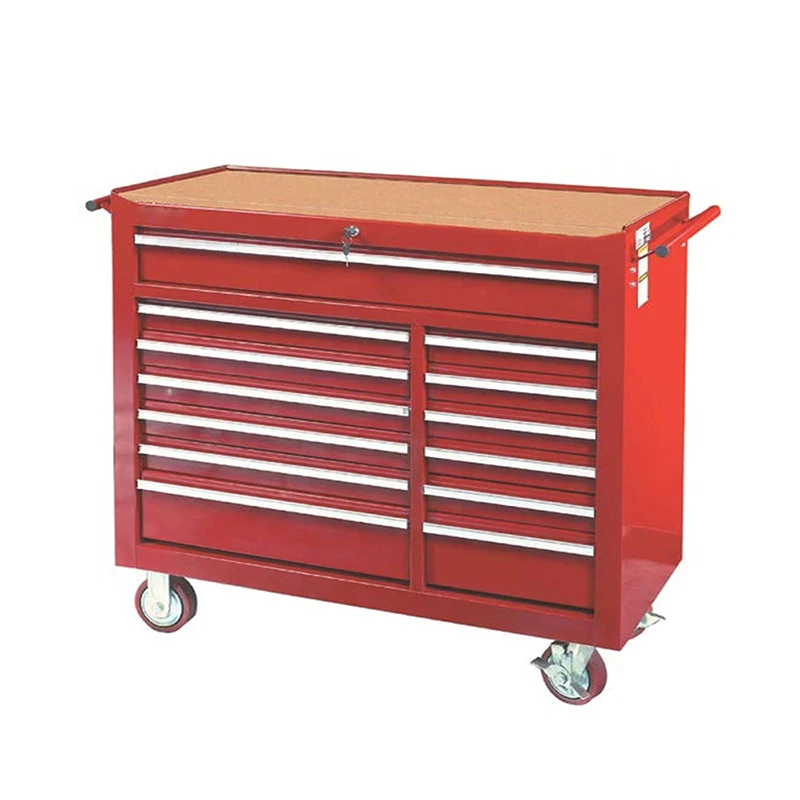
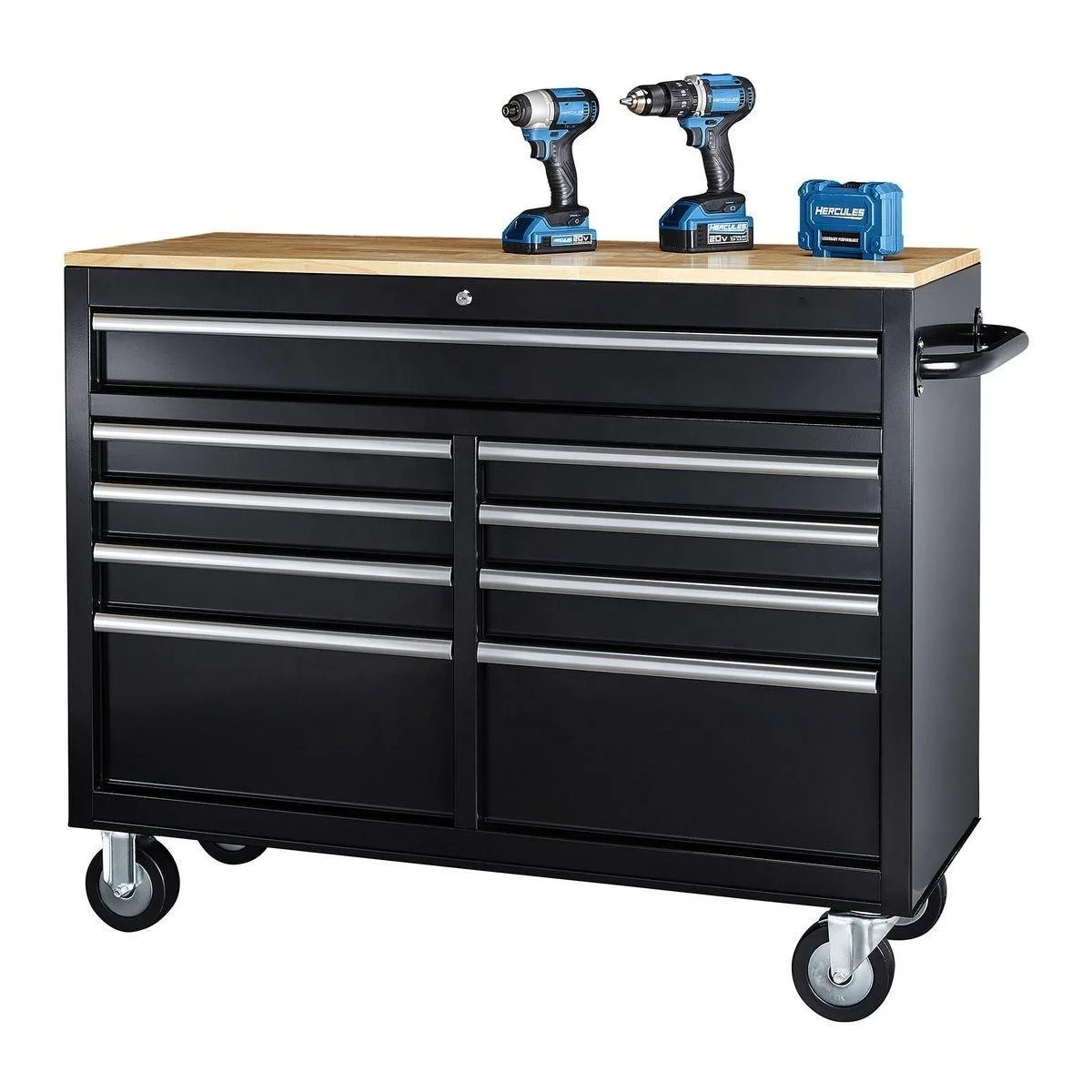
The front of a steel tool chest is interrupted by drawer openings, so it is often more demanding than a closed side panel. Each opening removes continuous material and creates a frame that must support slides, drawer loads, and repeated pulling. Stamped returns around the opening, cross rails, and formed drawer supports can limit local movement that would otherwise affect drawer alignment.
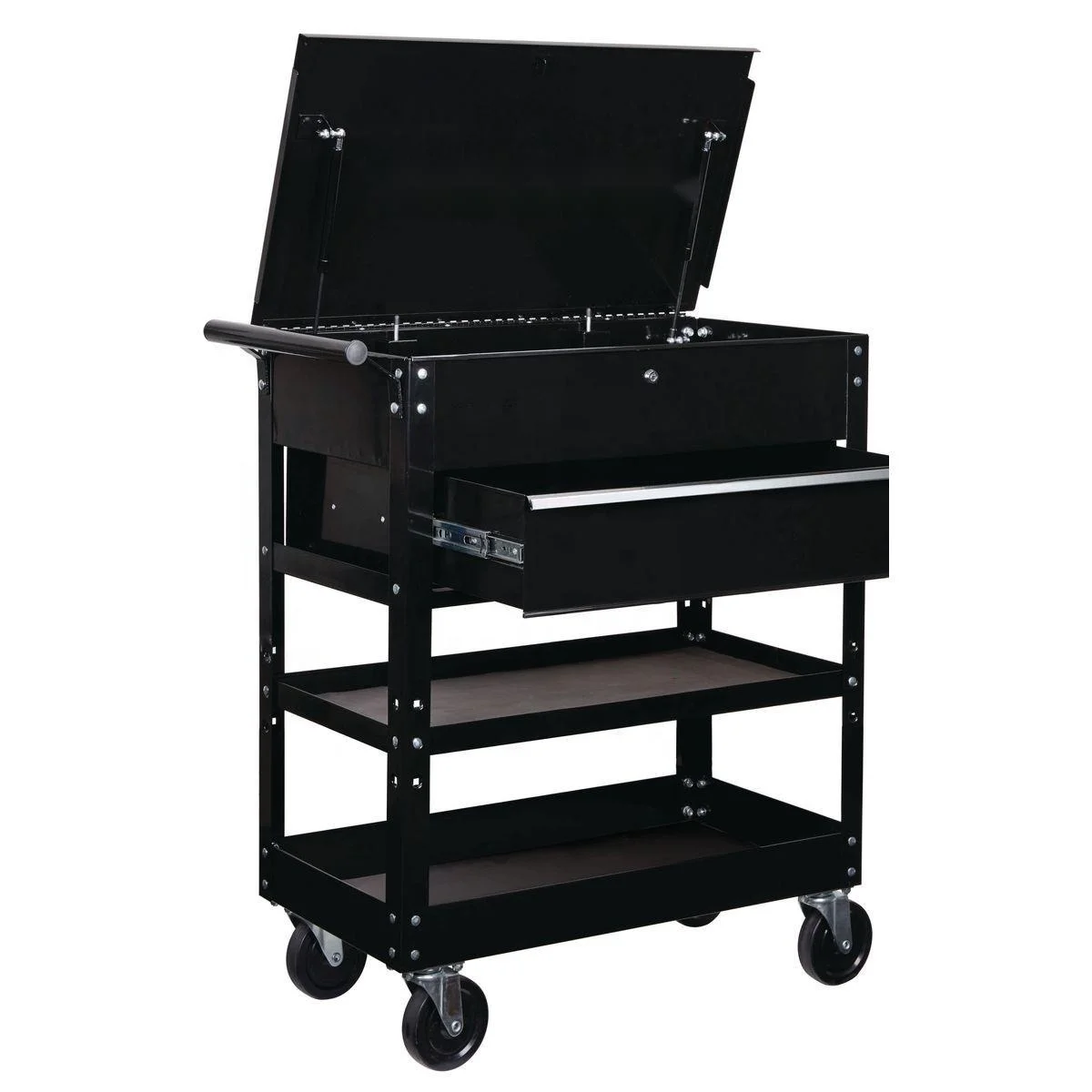
The top section deserves the same attention. A lid, top tray, or work surface spans an area that may receive tools temporarily. Ribbed steel panels beneath that surface can reduce flex, while folded edges and supporting members help the load reach the side structure. Do not assume that a smooth exterior means the area lacks reinforcement; request a section drawing, assembly view, or sample inspection when the application has demanding storage needs.
Why the base and corners decide how solid it feels
A rigid upper shell can still feel unsettled if the base is not tied in well. The bottom pan, lower rails, feet, casters, or plinth connect the steel tool chest to the floor and receive loads as the unit is moved. Formed base channels and reinforced corner connections can reduce twisting. For mobile configurations, review the relationship between the caster mounting area and the chest body, since rolling over joints in the floor can load the corners differently from stationary use.
That sounds straightforward, but the next question is how tools actually move through the workspace. A fixed bench-top chest may need stiffness around its drawer openings and lid. A mobile chest may also need attention to the lower frame and mounting zones. The construction review should reflect that workflow rather than treating every steel tool chest as the same product.
A practical inspection checklist for buyers
- Trace the panel geometry: identify ribs, channels, return flanges, and folded perimeter edges on wide spans.
- Check the corners: look for overlapping seams and connections that tie the sides, back, top, and base together.
- Review drawer-opening support: ask how slide mounts and front rails are reinforced.
- Ask about spot welding: confirm where spot welding is used, the joining method for key seams, and the supplier’s inspection controls.
- Match construction to use: verify the approved load, configuration, and mobility requirements instead of inferring them from appearance.
- Request evidence: for a production program, use drawings, a sample, or documented test criteria to confirm the selected steel tool chest fits the intended workflow.
The takeaway: a connected stamped structure resists flex
Superior rigidity in a stamped steel tool chest comes from coordinated geometry and joining. Ribbed steel panels limit broad-panel flex; folded edges create deeper, stiffer sections; and spot welding helps overlapping parts transfer load across seams. Reinforced openings, corners, and base connections complete the system. When reviewing a steel tool chest, treat these features as a connected structure and confirm product-specific details with the supplier. That approach gives procurement teams a clearer way to separate a well-engineered stamped enclosure from one that only looks heavy.
 Hot News
