 EN

What Makes a 42 Inch Tool Chest Ideal for Workshops?
A 42 inch tool chest can be a useful middle ground when a workshop needs more organized drawer space without dedicating an entire wall to storage. Its value, however, depends less on the number in its name than on the tools, available floor space, drawer arrangement and movement around the work area. Start with a simple question: can the people using it reach, return and secure their tools without blocking another task?
For a workshop user, the practical test is the daily routine. For a tool-storage brand sourcing an OEM product, that same routine needs to become a clear, reviewable specification. These checks help both groups decide whether this width fits the work.
1. Measure the space around the chest, not just its width
A 42 inch tool chest is identified by a nominal width of about 42 inches, or 1,066.8 mm. That measurement alone does not establish its overall footprint. Handles, side attachments, casters and other components may extend beyond the cabinet body. Ask the supplier which parts are included in the stated width, then verify the complete external dimensions on the current drawing.
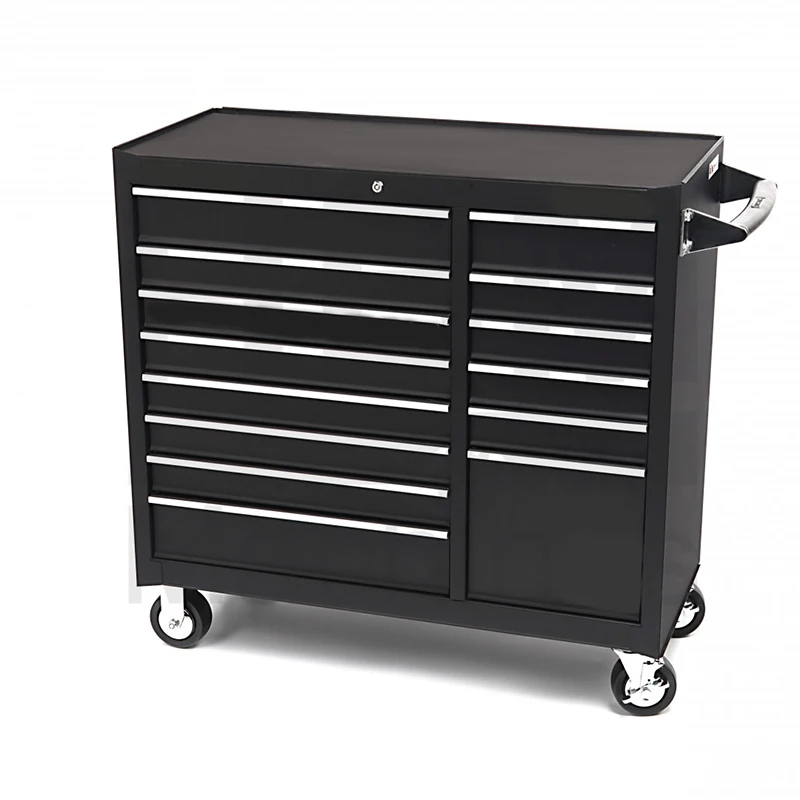
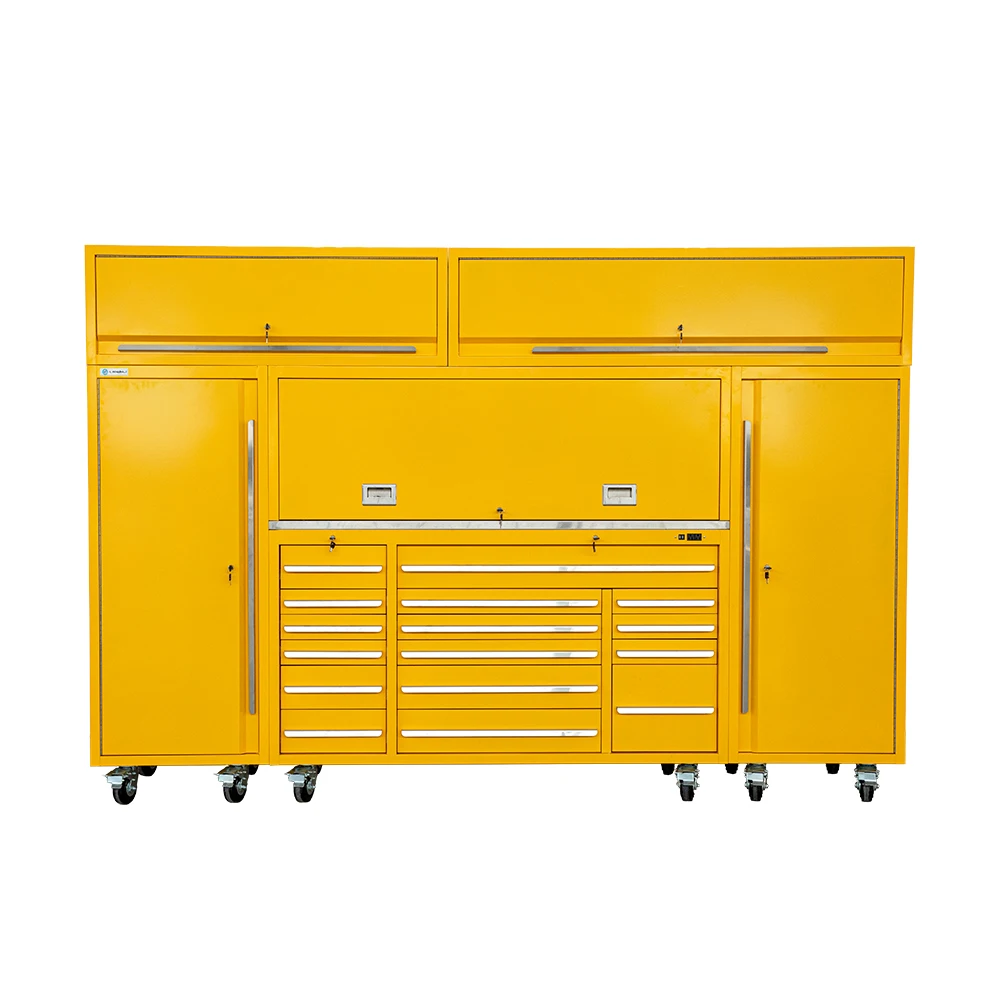
Measure depth and height as well. One commercially listed 42-inch chest combination, for example, is 59.4 inches high and 18.1 inches deep; those figures describe that specific model, not the category. A different configuration can occupy a different amount of space. If an upper chest or a worktop is planned, include it in the measurement rather than assuming it is part of the base cabinet.
Mark the proposed position on the floor. Add the space needed for a fully extended drawer and for a person to stand in front of it. Check nearby doors, vehicle movement and access to the workbench. A chest that fits into a recess on paper may still interfere with traffic when its drawers are open.
2. Match drawer layout to the tools actually used
Drawer count is a starting point, not a measure of useful organization. Place the longest tools, socket trays, meters and bulky equipment on a list, then compare their dimensions with the usable internal width, depth and height of the drawers. A shallow drawer may suit spanners and small hand tools; deeper drawers can make room for taller items if the available clearance and rated load are appropriate.
A 42 inch tool chest can offer room to group related tools side by side, but drawer walls, slides and dividers reduce the usable space. Request internal dimensions rather than calculating storage space from the outer width. Also ask whether liners or dividers are included, optional or absent; a photograph is not enough to establish the supplied configuration.
In an illustrative repair bay, technicians might keep frequently used sockets near the main work position and reserve a lower drawer for heavier tools. This is a planning example, not a reported customer installation. A clear return location can help users see where items belong, while the layout can be revised when the tool mix changes.
3. Check load ratings and stability together
The strength of a 42 inch tool chest cannot be inferred from its width or appearance. Request the rated load for each drawer, the cabinet as a whole and, where applicable, the caster assembly. Confirm whether the ratings assume an evenly distributed stationary load, and ask how the intended combination of top chest and base is assessed. Different components can have different limits.
Plan the tool weights before purchase and allow for future additions within the supplier's stated limits. Keep heavier items low where the manufacturer recommends it, place the unit on a suitable level surface and follow the supplied instructions for anchoring, drawer use and movement. An open, loaded drawer shifts weight outward; do not assume the cabinet is stable simply because it feels solid when closed.
If the unit will move between bays, review the floor surface, thresholds, route and parking location. Confirm the caster size, load rating and locking arrangements for the proposed configuration. A stationary layout may be more appropriate when frequent movement is unnecessary or the route is uneven.
4. Look beyond the surface when comparing construction
For buyers evaluating a 42 inch tool chest, construction details help explain why two similarly sized units may be specified differently. Ask for material grade and thickness, cabinet and drawer construction, slide type, joints, finish and applicable inspection criteria. Check the edge treatment and how the drawer operates under the intended load on a sample. Look at how the whole design will be used, rather than relying on a single material figure.
Sheet metal fabrication can involve cutting, forming and joining the cabinet and drawer parts. During CNC bending, material can spring back after forming; the amount depends on factors including material properties and bend geometry. A brand can discuss bend requirements, fit and inspection with its supplier, but a process name by itself does not prove the accuracy or load capacity of a finished chest.
Haiyang Libenli's profile describes sheet-metal processing and customized metal solutions. For an OEM discussion, share the intended configuration and ask which manufacturing and inspection details apply to that particular project. Avoid assuming a particular production method, finish or certification without written confirmation.
5. Compare a chest with the alternatives in the same space
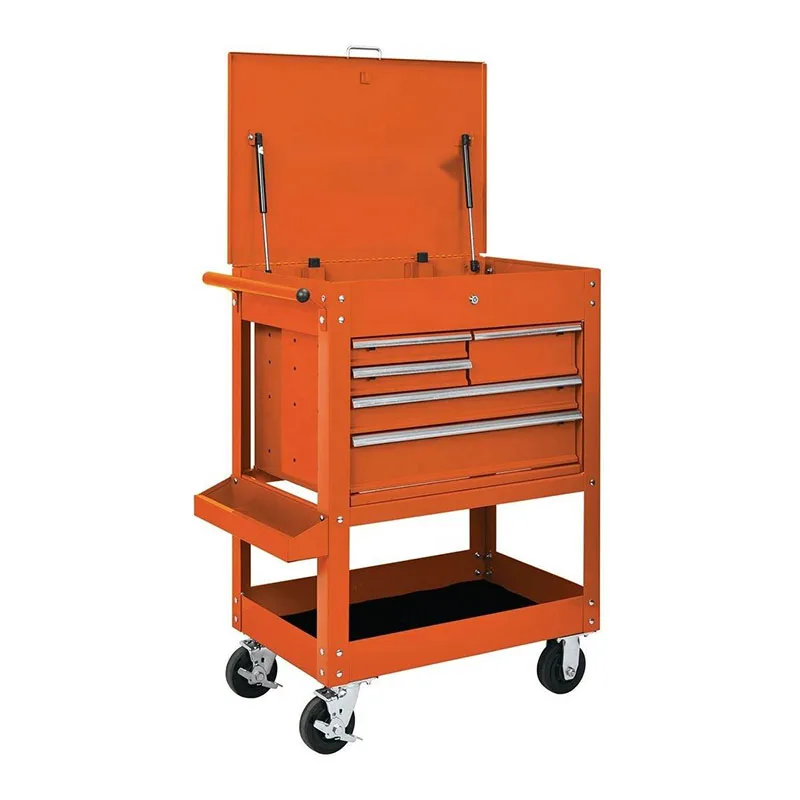
A 42 inch tool chest may suit a work area where users need grouped drawers near one main bench. A narrower unit can be easier to place in a tight bay, while a wider unit may accommodate longer tools or more groups if the floor plan allows it. A mobile cart can support tools that travel between tasks, although an open cart and a drawer chest solve different storage problems.
Use the same criteria for each option: usable drawer dimensions, available aisle clearance, load ratings, movement, access and security. A combination of fixed storage and a smaller cart may suit some workflows. Check compatibility before stacking or connecting units; similar nominal widths do not establish that two products are designed to work together.
6. Turn the decision into a supplier-ready brief
Before ordering a 42 inch tool chest, record the items that matter to the intended users and ask the supplier to confirm them in the quotation or drawing:
- Overall width, depth and height, including handles, casters and any upper unit.
- Drawer count, usable internal dimensions, slide arrangement and rated loads.
- Intended tool mix, operating location, floor conditions and movement needs.
- Material, finish, locking arrangement and any requested branding.
- Sample review, packaging requirements and the revision of the drawing to be approved.
Separate required features from options and ask what is included in each quote. If the article of interest is a different storage format, the site's multi-layer tool box overview offers another way to think about grouped tools. For this size, the final decision comes down to the approved specification and a realistic workshop layout, not the nominal width alone.
 Hot News
