 EN

When Do Workshops Need a Heavy Duty Garage Cabinet?
A heavy duty garage cabinet becomes worth evaluating when the tools and parts a workshop needs to store place demands on ordinary storage: concentrated weight, frequent access, awkward shapes, or a need to keep shared equipment contained. The label alone is not a specification. Start with what will go inside, where the cabinet will stand, and what evidence supports its stated capacity.
For a tool-storage brand planning an OEM range, that same exercise turns a broad product idea into a reviewable brief. Consider the workshop routine first, then define construction and testing questions for the proposed configuration.
Start with the items, not the cabinet label
Make an inventory of the items that need a fixed home. Note the weight and dimensions of each tool, case, bin, and spare part, including the contents of filled containers. Group items by how often they are retrieved and whether they are moved together. A shelf filled with small metal components can carry a substantial load even when no individual component seems heavy.
Next, estimate the intended load on each shelf and the combined cabinet load. Ask the supplier which limits apply to individual shelves, drawers, and the whole unit, and whether ratings assume an evenly distributed load. A concentrated load, such as a compact machine component, may require a separate assessment. Do not infer a shelf rating from the overall cabinet rating.
A heavy duty garage cabinet is a sensible candidate when ordinary storage cannot accommodate the documented load or when the workshop needs enclosed storage for dense, frequently handled equipment. If the contents are light and access is occasional, a simpler cabinet may be sufficient. The decision is about the use case, not the adjective on the listing.
Read construction details in context
Steel thickness is only one part of the structure
Buyers often ask for thick gauge steel, but that phrase does not identify an exact material or thickness. Ask for the steel type, the thickness in millimeters or inches, and the gauge system used. Clarify whether the stated thickness applies to the body, doors, shelves, or all of them. Gauge conventions vary by material, so a number on its own is not a complete comparison.
Panel shape, folded edges, joints, the base, and the way shelves connect to the cabinet also matter. Thicker material can be one design consideration, but it does not establish the capacity of an assembled unit. Request drawings or a specification that describes the complete load path, along with the basis for any advertised rating.
Check shelves and their supports together
Reinforced shelves may be appropriate where dense tools or bins create demanding loads. Ask what the reinforcement consists of, how each shelf is supported, and whether the rating changes with shelf position or the way weight is distributed. Shelf clips and supporting rails are part of the system; a strong shelf panel paired with unsuitable supports is not a complete answer.
For a proposed heavy duty garage cabinet, obtain a shelf-by-shelf loading plan and check it against the supplier's documented limits. If the supplier offers adjustable shelving, ask how adjustment affects supported positions and whether extra shelves are included or optional. Confirm these details for the particular model rather than assuming them from a photograph.
Look at stability, access, and the workspace
Measure the space where the cabinet will be installed, including the access route, floor condition, door swing, and clearance for removing large cases. Check whether equipment parked nearby will obstruct the doors. A tall cabinet can use vertical space, but it may put a frequently handled item above a comfortable reach. Keep heavier items low where practicable and arrange everyday tools where they can be retrieved without unnecessary lifting.
Stability needs its own review. Ask whether the manufacturer requires anchoring, what mounting hardware and wall or floor conditions are suitable, and how the unit should be leveled. Follow the supplied installation instructions and applicable local requirements. In U.S. workplaces, OSHA's general materials-handling rule at 29 CFR 1910.176(b) addresses secure storage of materials; its applicability depends on the operation. A cabinet description alone does not establish compliance.
Also consider how the cabinet is used during a shift. Are doors left open into an aisle? Do several people need access to the same contents? Can bins be removed without disturbing adjacent items? A heavy duty garage cabinet should fit that sequence as well as the available footprint.
Fixed cabinet or mobile storage?
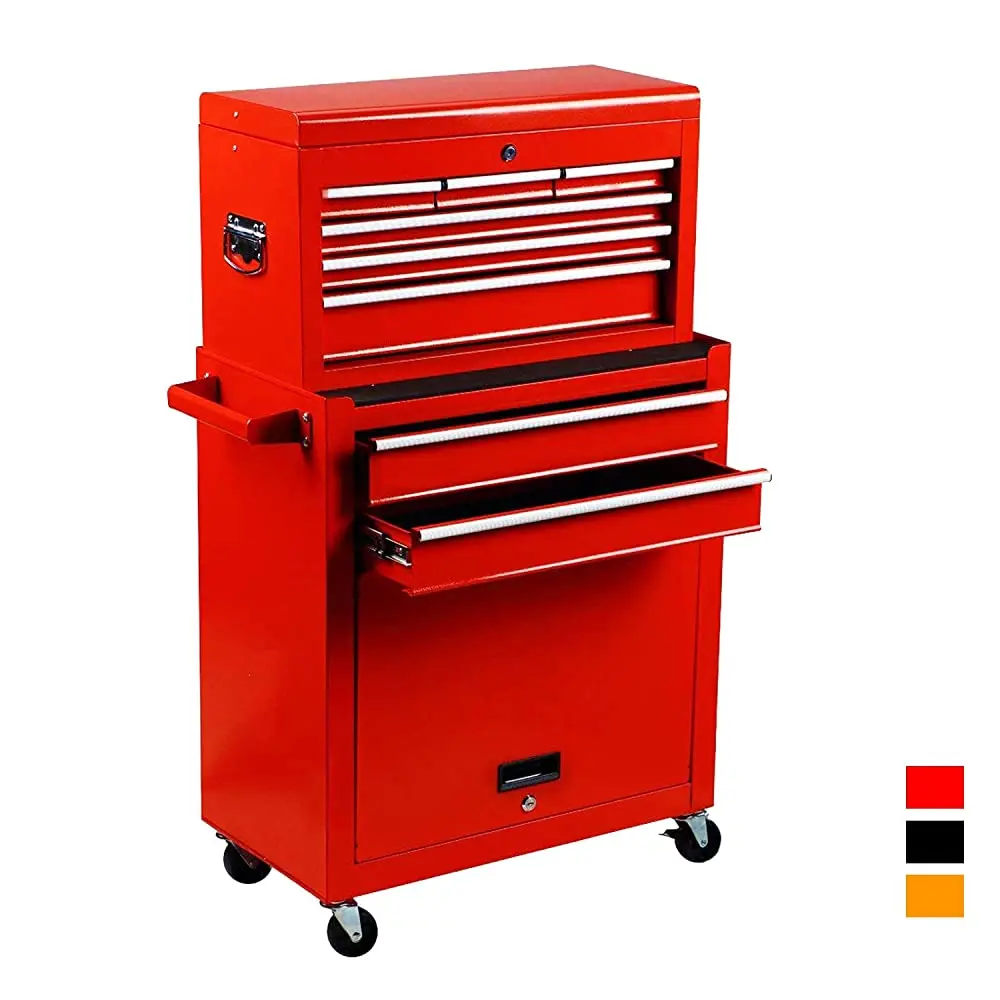
Fixed storage can make sense when bulky stock, shared spares, and less frequently moved tools need one designated location. A cart or portable chest may be more convenient when the working set follows a technician between stations. A workshop may use both: a fixed home for reserves and a smaller mobile set for the current task.
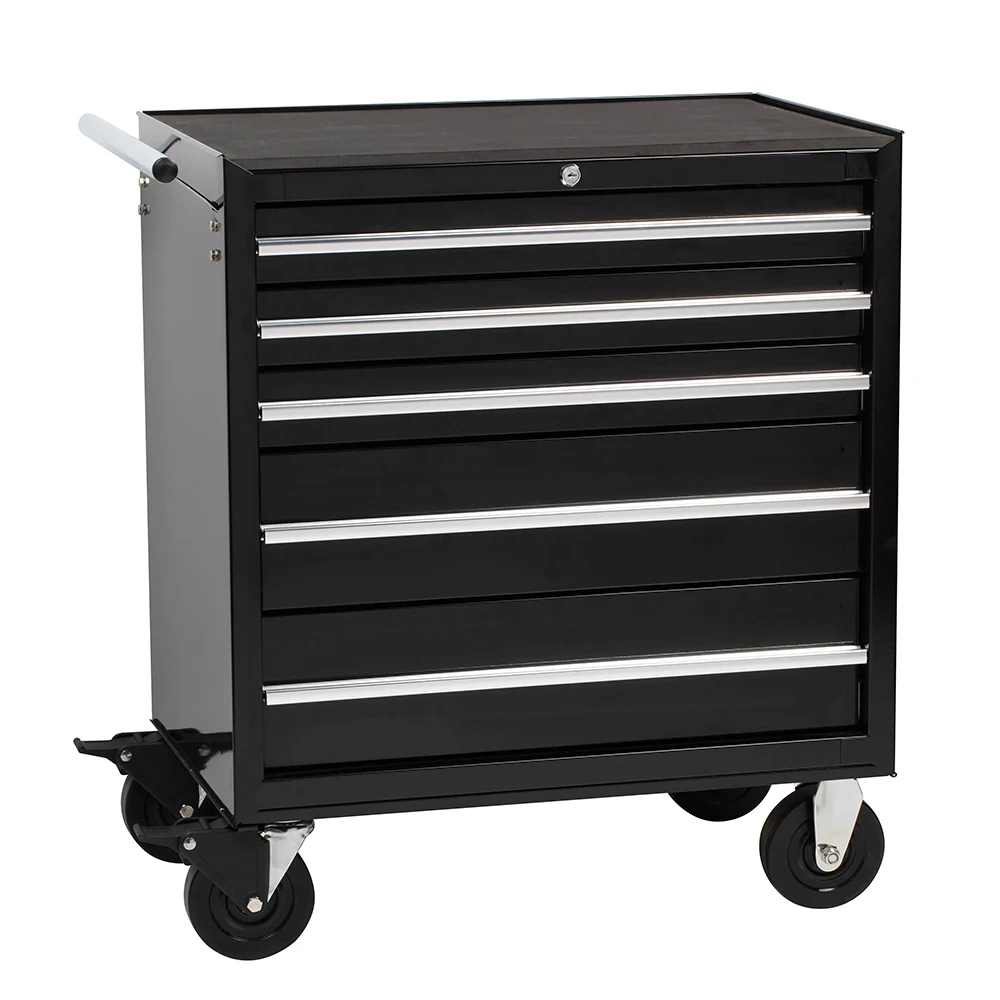
If movement is required, ask for the applicable loaded and stationary ratings, caster details, braking arrangements, and instructions for moving the loaded unit. Do not assume that a cabinet designed for fixed installation can be safely moved while full. Confirm the operating conditions with its manufacturer before choosing a mobile format.
Turn workshop needs into an OEM brief
A heavy duty garage cabinet brief is more useful when it distinguishes required functions from preferences. Provide the intended tool groups and load distribution, target footprint, installation environment, door clearance, and preferred shelf layout. Where locking matters, explain who needs access and what the lock must control; a lock description alone is not a security rating.
For construction, request material and thickness by component, assembly details, shelf supports, finish requirements, and any drawings or samples needed for review. State whether the brand needs particular colors, markings, packaging, or configuration options. Ask which details are standard, which are proposed changes, and how the final configuration will be documented before an order.
Haiyang Libenli's published profile describes sheet-metal processing and customized solutions. For a sourcing discussion, share the intended use and request confirmation of the specific design, scope, and supporting documentation; the profile is not a substitute for model-level specifications.
Questions to settle before choosing
- What is the measured load for each shelf, and is it distributed or concentrated?
- Which documented limits apply to the shelves, supports, cabinet, and any mobile components?
- What material thickness is specified for each relevant part, and how is it measured?
- Does the location allow safe access, installation, and any required anchoring?
- Which construction, finish, and packaging details need supplier confirmation?
Choose a heavy duty garage cabinet when the verified load, access pattern, and installation conditions justify its construction. If those inputs are still unclear, complete the inventory and ask for the relevant drawings and ratings before selecting a model. That leaves the decision grounded in the work the storage must actually support.
 Hot News
