 EN

When Is a Portable Metal Tool Chest Essential on Site?
A portable metal tool chest becomes essential when the tools needed for a task cannot stay neatly assigned to one fixed bench. This is less about owning a large box and more about keeping the right working set close to the point of use, protected between tasks, and easy to return at the end of a shift. For a workshop user, the useful test is simple: do people lose time walking back to a storage wall, hunting through mixed containers, or leaving hand tools where they interrupt the next task?
On a changing site, a portable metal tool chest can give a repair crew, installer, maintenance technician, or small fabrication team a defined home for its daily tools. Its role is practical: carry an assigned kit to a work zone, keep it organized while work is under way, and bring the kit back into controlled storage afterward. It is not automatically the right choice for every layout. A fixed cabinet may suit a stable workstation; a portable metal tool chest matters when movement is a recurring part of the workflow.
Start with the work sequence, not the container
Before choosing a portable metal tool chest, map the take-out-and-return routine. Which tools are picked up first? Do they stay in one bay, or do they move between equipment, rooms, vehicles, or temporary stations? Capacity is not the only question. The more useful question is how quickly daily-use tools can be retrieved and returned without turning every handoff into a search.
A portable metal tool chest is worth considering if a crew repeatedly builds a small tool kit at the start of work and breaks it down at the end. That repeated packing is a sign that the kit needs a permanent, movable home. In contrast, if the same tools remain beside one machine all day, fixed drawers or a cabinet may offer a clearer arrangement.
Five site conditions that make a portable chest essential
1. The work area changes during the day
Maintenance rounds, installation work, punch-list tasks, and mobile repair calls often shift from one area to another. In that situation, a portable metal tool chest keeps a selected group of hand tools together rather than sending people back to a central store for each item. The key is to confirm the intended route, lifting method, and parking position before specifying a model.
2. Space is limited but tool access cannot be delayed
A compact footprint can matter where a full cabinet would crowd a temporary station or take space from the task itself. A portable metal tool chest can be appropriate when it fits beside the work area without narrowing an aisle or blocking access. Larger storage may be less useful when a smaller, well-organized chest fits the work zone and the daily tool mix is focused.
3. Multiple people share an assigned tool set
Shared tools need an obvious home. A portable metal tool chest gives a crew a visible return point during shift changes, so the next user can see what belongs with the set. This does not replace an inventory process, but it makes grouping and ownership easier to review. Labels, drawer dividers, and a simple list of the core kit can make the return routine more consistent.
4. Tools need to be secured between active tasks
When a chest may be left near an active work zone, a locking hasp is a useful feature to evaluate. A portable metal tool chest with a locking hasp can support controlled access when the chest is unattended for short periods or returned to a shared storage area. The lock arrangement, material, and site security practice should be verified for the actual use case; a hasp alone does not establish a security rating or make an unsecured location suitable.
5. A small working kit must travel with the job
For service teams and contractors, a portable metal tool chest can separate daily-use tools from heavier, less-frequent equipment. This keeps the mobile kit focused. Put the tools used on nearly every visit in the chest, and keep specialty tools in a separate, planned location. Mixing everything into one container may create more retrieval friction than it solves.
What to confirm before treating it as an on-site necessity
A portable metal tool chest should be reviewed as part of a workflow, not as a stand-alone feature list. First, list the tools that truly travel. Next, measure the route from storage to the work zone and identify where the chest will rest while work is happening. Then check whether the compact footprint still leaves a clear path around the station. Finally, decide whether a locking hasp is needed for the period between tasks and what site procedure will govern access.
- Tool group: Separate daily-use hand tools, measuring tools, consumables, and specialty items.
- Access: Place frequently used items where they can be reached without emptying the whole chest.
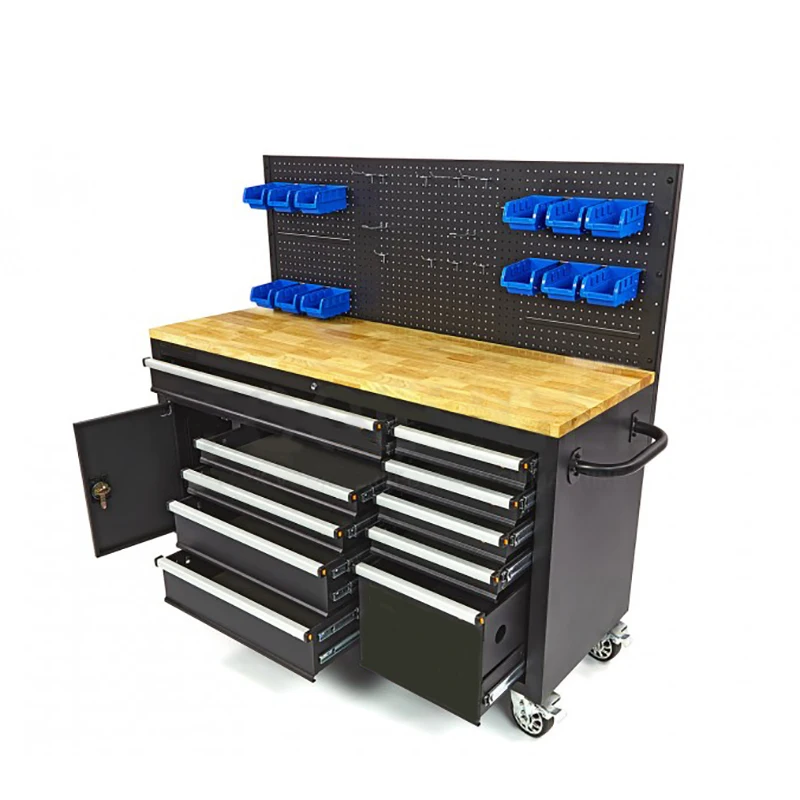
- Movement: Confirm how the portable metal tool chest will be carried, transported, or positioned.
- Parking: Choose a location that does not create an obstruction or trip risk.
- Control: Define who may open it and how the kit is checked back in.
Portable chest, fixed cabinet, or another storage format?
Choose a portable metal tool chest when recurring movement, a focused daily kit, and limited space are more important than storing every tool in one place. Choose fixed storage when the work remains at a stable station and the tool collection is broad. A rolling option may suit a clear, predictable route, but it needs its own aisle and parking review. The goal is not maximum storage in theory; it is useful access in the actual work area.
For procurement or OEM planning, turn those observations into confirmable details: outer dimensions, internal layout, handle arrangement, closure type, finish, and any locking requirement. Ask for drawings, samples, or approved specifications before relying on a feature in a purchase decision. Haiyang Libenli Metal & Technology Co., Ltd. provides sheet-metal and pipe processing as well as customized metal solutions; any configuration should be reviewed against the intended workflow and confirmed scope.
A practical decision rule
A portable metal tool chest is essential on site when its absence repeatedly causes a real workflow problem: tools migrate between zones, the daily kit has no consistent home, a larger storage unit does not fit the available area, or controlled access is needed between tasks. If those conditions are occasional rather than recurring, a simpler fixed arrangement may be enough. Review the daily loop after use: take out, use, return, and adjust the organization where search time or clutter appears.
In short, choose a portable metal tool chest for a defined mobile tool group, not merely because portability sounds useful. A measured compact footprint, clear placement plan, and appropriately specified locking hasp can turn a loose collection of tools into a workable on-site system.
 Hot News
