 EN

Why Energy Sector Plants Need Heavy Duty Tool Storage?
In an energy plant, a misplaced torque wrench or test lead is more than an irritation. It can slow planned maintenance, complicate shift handover, and leave a work area harder to control. That is why heavy duty tool storage belongs in maintenance planning rather than at the end of a purchasing list. A storage unit should support the way technicians collect, stage, return, and account for tools during real work.
From a metal storage design advisor’s view, the first question is not simply how large a cabinet should be. It is how tools move through a maintenance workflow. When a crew is preparing a pump inspection, electrical task, or outage activity, access sequence matters: frequently used items need a known home, while task-specific equipment needs defined custody and protected space. Thoughtful heavy duty tool storage turns that sequence into a repeatable routine.
Plant maintenance puts different demands on tool storage
Energy-sector sites often combine round-the-clock operations, dispersed equipment, controlled work zones, and scheduled shutdown windows. A cabinet that looks adequate in a light workshop may not suit the repeated opening, loaded contents, relocation, and housekeeping expectations of a plant environment. The value of heavy duty tool storage is its ability to be specified around that operating context.
Tool storage also has a housekeeping role. OSHA’s material-handling guidance states that storage areas should be kept free of accumulated materials that create trip, fire, explosion, or pest-harboring hazards. A cabinet does not by itself establish compliance, but a clearly assigned heavy duty tool storage location can support a site’s own housekeeping process by reducing loose tools and unclear return locations.
Maintenance work frequently includes energy-control procedures. OSHA’s lockout/tagout rule addresses servicing and maintenance where unexpected energization, startup, or release of stored energy could cause injury. Storage equipment is not a substitute for those procedures. Still, a planned heavy duty tool storage layout helps teams stage authorized tools, keep unrelated items out of a task area, and make post-job reconciliation more practical.
Why drawer capacity and frame construction matter
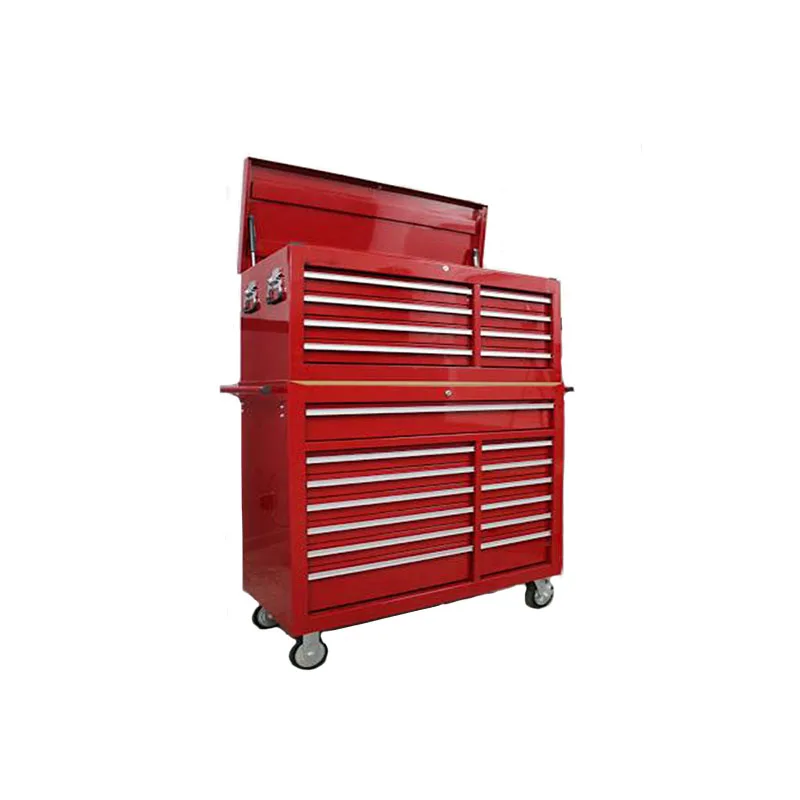
Plant teams may store hand tools, measuring devices, consumables, adapters, and task-specific kits together. The issue is not only total cabinet capacity. It is the load path from the stored contents through the drawer slides, drawer body, cabinet carcass, and floor contact points. Buyers evaluating heavy duty tool storage should ask suppliers to state the intended load for each configuration rather than relying on a product name.
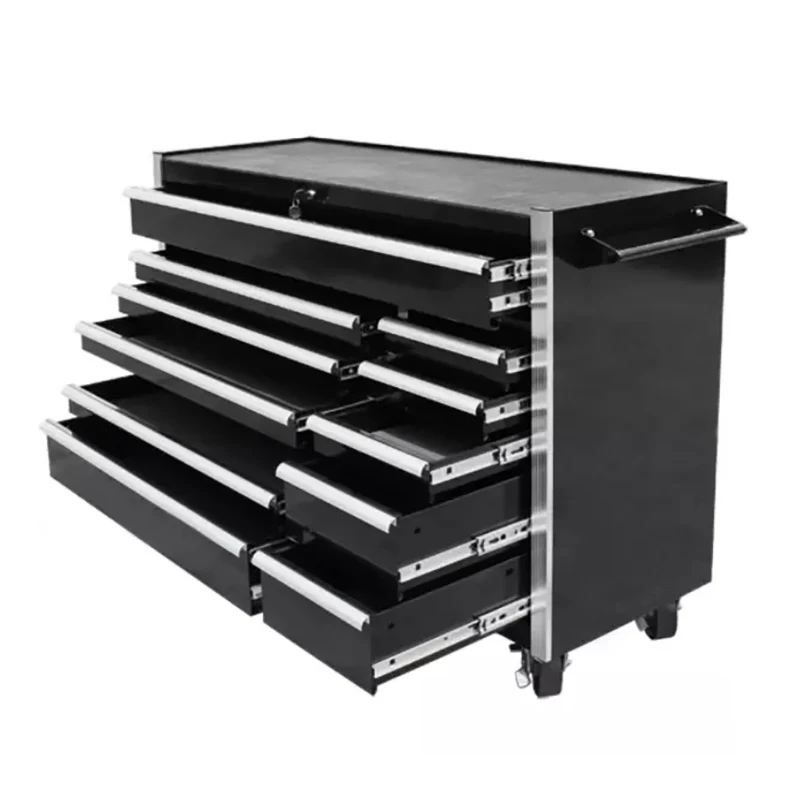
High load drawers are useful when a team needs dense, separated storage for sockets, pullers, instruments, or other heavy assortments. They make retrieval easier when drawer partitions, labels, and opening clearances match the actual tool mix. Before selecting high load drawers, maintenance and procurement teams should verify the planned contents, the number of drawers likely to be opened during a job, and whether the site has a policy for opening one drawer at a time.
A welded steel frame may be appropriate when the cabinet will see frequent movement, sustained loading, or use beside active maintenance areas. The phrase alone is not enough to define suitability. Ask how the frame connects to the cabinet body, what finish is specified for the environment, how the unit is anchored or moved, and what evidence the supplier can provide for the proposed configuration. In this way, heavy duty tool storage becomes a documented equipment decision rather than a generic cabinet purchase.
Start with access flow, not cabinet appearance
Teams often start by comparing cabinet dimensions or drawer counts. A more productive method begins with access flow. List the tools used daily, weekly, during shutdowns, and during urgent callouts. Then identify who retrieves them, where they are used, and how they are checked back in. Capacity is not the only question; the more useful question is how quickly daily-use tools can be retrieved and returned.
This shifts heavy duty tool storage from a product decision to part of a maintenance system. A fixed cabinet near a service bay may fit stable tool sets. A mobile unit may fit work that moves between assets, if site travel routes, wheel condition, braking, and parking controls have been reviewed. The right choice depends on the workflow, not on a blanket ranking.
A practical specification checklist
Before requesting quotes for heavy duty tool storage, write down the details that determine a usable configuration:
- Tool inventory and load: Identify each tool group, its estimated stored weight, and the drawer or compartment assigned to it.
- Drawer plan: Define which high load drawers need dividers, foam cutouts, labels, or restricted access.
- Structure and finish: State whether a welded steel frame, corrosion-conscious finish, or fixed mounting arrangement is required for the location.
- Security and accountability: Describe lock access, key control, shift handover, and how missing tools are reported.
- Placement: Confirm clear aisles, door and drawer swing, emergency access, floor condition, and cleaning access.
- Supplier confirmation: Request drawings, dimensional details, declared load information, and packing requirements for the exact configuration.
A complete scope also makes supplier responses easier to compare. Rather than asking for a “heavy cabinet,” specify how the proposed heavy duty tool storage will be loaded, accessed, installed, and maintained. That detail is especially helpful when procurement, maintenance, and facility teams all review the same request.
Use storage to make maintenance work more repeatable
Well-planned heavy duty tool storage does not remove the need for training, inspections, energy-control procedures, or site-specific risk assessment. Its purpose is narrower and useful: give tools a durable, logical, and reviewable home. When the layout reflects the work sequence, technicians spend less time searching, supervisors can review readiness more easily, and purchasing teams can evaluate configuration requirements with fewer assumptions.
For energy-sector plants, the useful next step is a short walk-through of one recurring maintenance task. Map the tools from issue to return, note where congestion or confusion occurs, and use that evidence to define the cabinet, drawer, frame, security, and placement requirements. That is the basis for heavy duty tool storage that fits the plant’s actual maintenance rhythm.

 Hot News
