 EN

Why Workshops Standardize Rolling Cabinet With Drawers?
In a busy workshop, a tool that has no agreed home can turn a simple handover into a search. Standardizing a rolling cabinet with drawers gives teams a shared way to organize, move, and return their tools. The value is not that every workplace needs the same cabinet. It is that a consistent layout, matched to the actual work, gives people a familiar starting point at each station.
For a workshop manager or a brand developing a storage range, that distinction matters. A repeatable layout is useful only if the drawers, wheels, access rules, and load limits suit the job. Here is how to translate the idea into a practical specification.
One layout makes shared work easier to navigate
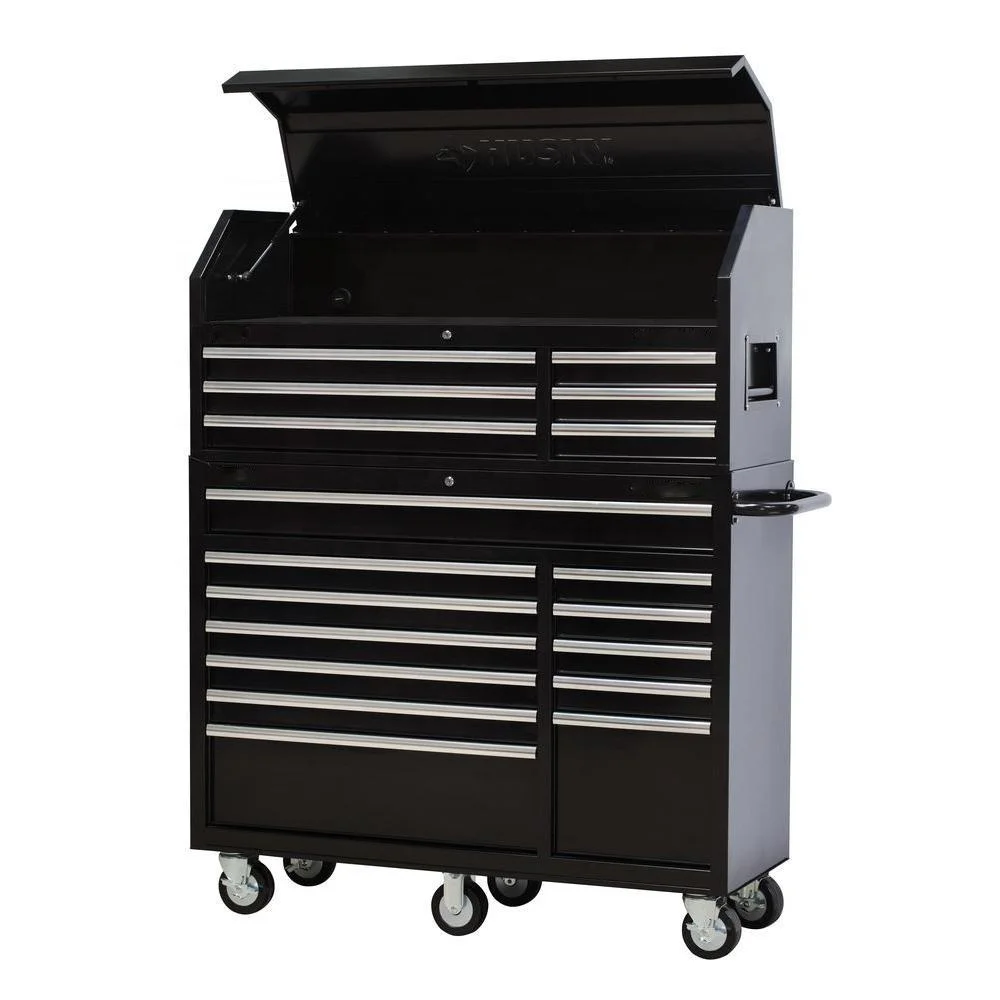
When people use different stations, a common drawer plan lets them look for the same tool group in the same place. For example, a team might reserve a shallow upper drawer for frequently used hand tools and a lower drawer for larger items. This is an illustrative layout, not a prescription: the right arrangement depends on the tool inventory and the users' reach.
Labels or simple drawer maps can make the plan visible. At the end of a task, the user can compare each space with the inventory and return items to their assigned locations. A rolling cabinet with drawers also gives a shift taking over a clear reference for checking what is present and what needs attention. Agree on who updates the map when the tool mix changes; otherwise a standard can become outdated.
Mobility follows the job, not the other way around
Wheels can make sense when the same set of tools is needed at several work areas. Instead of carrying individual items back and forth, a team can move the cabinet to an approved position near the task. A fixed cabinet may be more suitable when tools stay at one bench or when the route is too narrow, uneven, or obstructed for a loaded unit.
Before selecting a rolling cabinet with drawers, trace the intended route. Check doorways, turning space, floor transitions, slopes, and the space needed to open a drawer without blocking a passage. Ask the supplier about caster configuration, brakes, and the permitted total load for the actual unit. A wheel brake is not a substitute for checking the manufacturer's instructions or the conditions of the floor.
Drawer consistency helps teams manage the tool mix
Drawer count alone says little about whether storage will work. Consider the usable internal space, drawer depth, slide travel, and how tools are divided. A shallow compartment can suit small items, while larger tools may require a deeper space. Check the available drawer and cabinet load ratings in the confirmed documentation rather than assuming all drawers carry the same weight.
An anti slip mat is an option to discuss where tools need a surface that limits movement within a drawer. Confirm the mat's dimensions, material compatibility, cleaning needs, and whether it is supplied with the selected configuration. It should not be described as a safety device or treated as a substitute for proper loading.
With a rolling cabinet with drawers, the layout can also support restocking: assign a position to common consumables and review it against a written list. Keep pointed or sensitive items in suitable holders where appropriate. The practical test is simple: can a user identify the intended space, retrieve the item, and put it back without rearranging unrelated tools?
Agree on access and movement rules
Central locking can be useful when a workshop wants one locking action for a group of drawers, but the exact coverage depends on the mechanism. Ask which drawers it controls, how keys are managed, and whether the arrangement is included or optional. A lock controls access; it does not by itself verify inventory or make an unattended cabinet secure against every threat.
For movement, agree on a routine that follows the specific manufacturer's instructions. Close and secure drawers before moving the unit, check that the path is clear, and do not exceed documented loading limits. During use, consider the unit's stability and follow its guidance on opening drawers and distributing weight. US OSHA's general industry rule 29 CFR 1910.176(b) states that stored materials must not create a hazard; its applicability depends on the workplace and jurisdiction. It is a general storage requirement, not a certification of a particular cabinet.
Turn a common layout into a repeatable specification
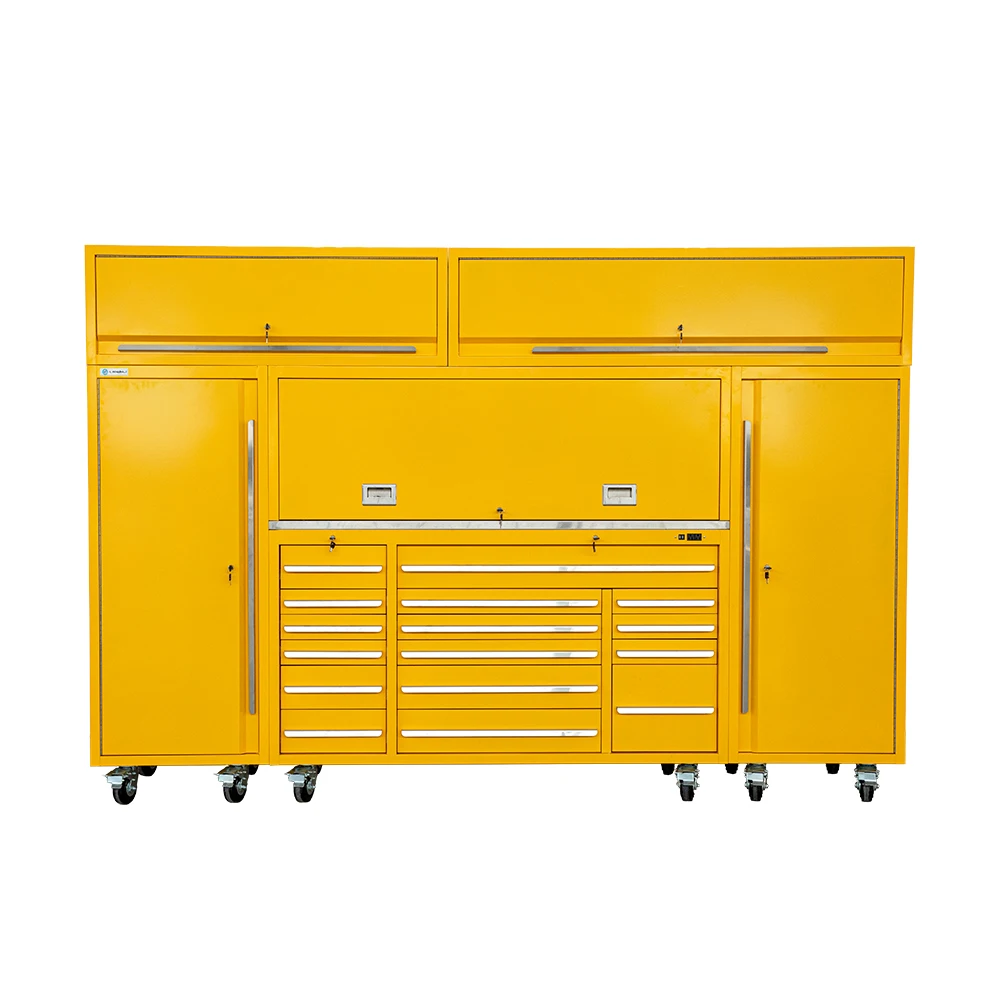
For a brand sourcing a rolling cabinet with drawers, standardization means documenting the details that must remain consistent across orders. Start with the working environment and tool list, then agree on the exterior footprint, usable drawer arrangement, required load ratings, handles, casters, and locking scope. Include the expected finish, markings, packaging, and any accessories in the same request so that quotations can be compared on equivalent scope.
Separate confirmed requirements from options. A sample or drawing review can then focus on the points users will notice: drawer opening clearance, access to the lock, movement along the intended route, and the fit of the tools or inserts. Record changes and ask which documents or tests support any performance claim. Haiyang Libenli's merchant profile describes sheet-metal processing and a focus on metal tool-storage brands; a specific cabinet's capabilities still need confirmation for the requested configuration.
When a standard cabinet is not the right answer
A rolling cabinet with drawers is not automatically the right storage choice for every station. A workshop with little room to maneuver may need fixed storage; a task requiring only a few portable tools may call for a smaller portable container. Different teams may also need distinct drawer inserts even when the outside dimensions match. Standardize the common interfaces and working rules first, then allow documented variations where the task calls for them.
Before committing, ask three questions: Where do the tools travel? Which items must be reached and returned together? What evidence confirms the cabinet can handle the proposed load and environment? Answering those questions turns a rolling cabinet with drawers from a generic purchase into a storage plan the workshop can maintain.
 Hot News
