 EN
EN

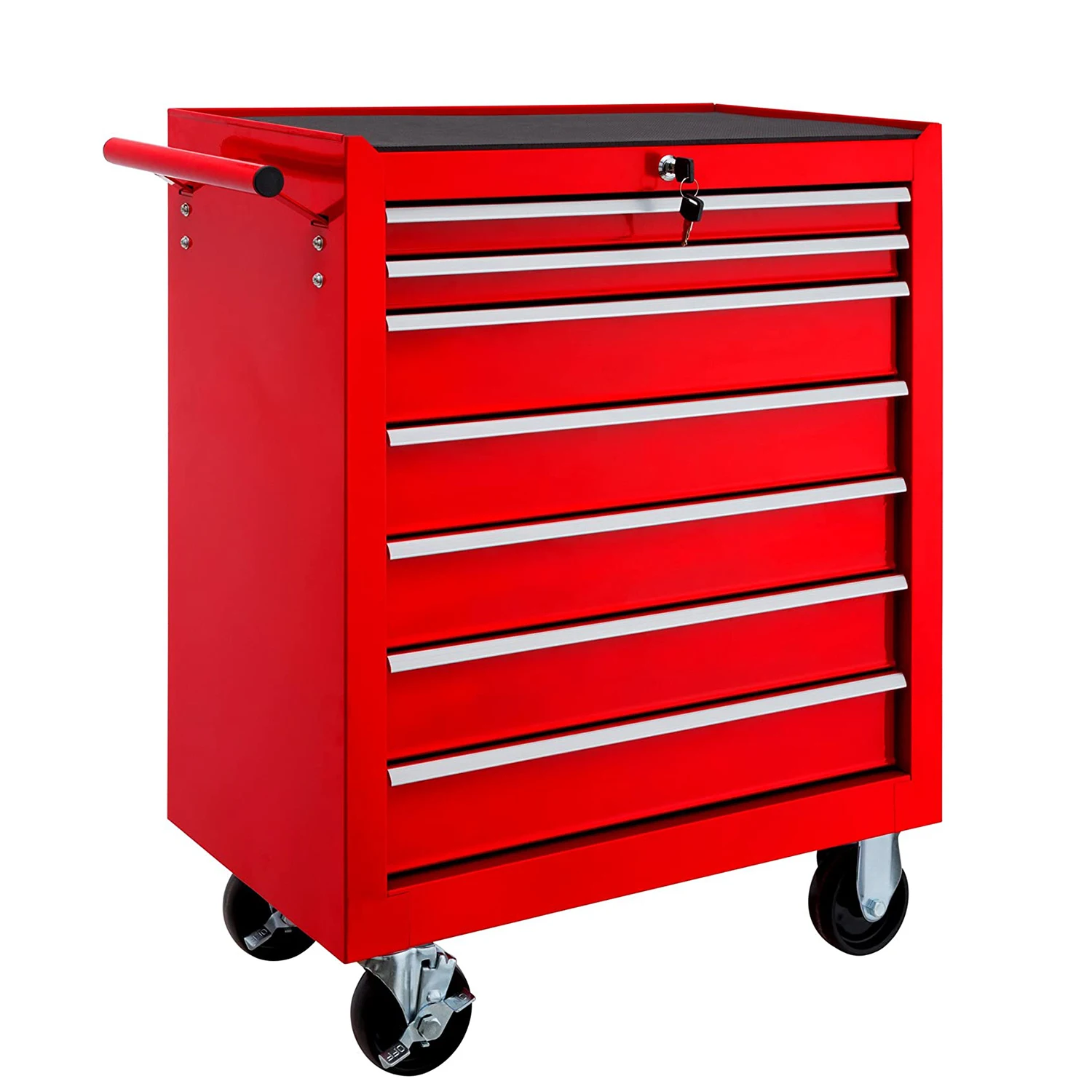
Why a 7 Drawers Tool Cart Maximizes Workshop Efficiency
How Drawer Count Balances Accessibility, Capacity, and Workflow Logic
Workshop efficiency gets a serious boost with a good old fashioned 7 drawer tool cart that strikes just the right balance between storage capacity and easy reach. Mechanics love these because they can organize their stuff in smart ways – wrenches go in the top drawers obviously, daily used tools sit comfortably at waist height where hands naturally find them, and those big heavy bits get tucked away in the deeper bottom drawers. No more wasting precious minutes rummaging through one giant mess of a drawer system. Small carts just don't cut it since everything ends up piled on top of everything else which damages delicate measuring equipment over time. What we end up with instead is a workflow that makes sense, where mechanics know exactly where their sockets, drivers, and even those fancy diagnostic gadgets live without having to think about it.
Real-World Impact: 28% Faster Tool Retrieval vs. Lower-Drawer Carts
Getting more done in workshops isn't just theory it actually happens when techs switch to 7 drawer carts instead of the old 4 drawer ones. According to some recent field work Snap-on did last year, mechanics find their tools almost 30% quicker with these bigger setups. Makes sense really because everything is organized better in space. Think about complicated car fixes where time matters so much. If someone saves just 5 seconds each time they grab a tool throughout an 8 hour day, that adds up to around half an hour extra work time every single day. Plus, the 7 drawer system cuts down on back pain since are right at waist level or chest height, so nobody has to bend as much all day long. And fewer lost tools means less downtime looking for misplaced wrenches too. All these small improvements add real value over time both in terms of what gets billed to customers and how long equipment lasts before needing replacement.
Design Essentials of a High-Performance Tool Cart
Heavy-Duty Mobility: Frame Construction, Casters, and Load Rating Standards
The frame is what makes or breaks a good professional tool cart. Most quality carts use around 14 to 16 gauge steel because it strikes that sweet spot between being strong enough but not too heavy. Stability? That comes down to those industrial casters we see on these carts. Look for ones with 6 to 8 inch rubber wheels and double locking systems. These help keep things upright even when rolling over rough shop floors with full loads. When checking specs, make sure the load rating goes well beyond what the heaviest tools weigh. Good ANSI certified carts spread out the weight properly thanks to their reinforced corners and cross bracing at the base. Bigger wheel spacing really cuts down on side to side movement while transporting stuff around. And don't forget about sealed bearings inside those casters they handle all sorts of workshop mess like metal chips and oil spills without breaking down. Getting the weight distributed right across the cart helps avoid stress points in the metal framework. This simple step can actually make these carts last about 40 percent longer than cheaper lightweight versions that tend to bend or warp after some time.
Drawer Engineering: Ball-bearing Slides, Depth Options, and Weight Distribution
Ball bearing slides rated between 100 to 150 pounds per drawer let users pull out everything they need smoothly, even when fully loaded. These slides just won't jam up after repeated opening and closing. The storage system itself is pretty smart too. Shallow compartments around 2 inches deep work great for small stuff like wrenches, whereas deeper drawers measuring about 10 inches accommodate bigger items such as power tools. This arrangement makes better use of available space without throwing off balance. Most importantly, heavier items should go in the bottom drawers where they belong anyway. That's why manufacturers put roughly 60% of the weight down there, which keeps things stable on the workbench. Reinforced front panels stop those heavy drawers from drooping over time. Some newer models come with steel inserts inside to catch any accidental spills, plus adjustable dividers that can be moved around depending on what tools are stored where. Workers report saving somewhere between 15 to maybe 20 seconds each time they grab what they need because everything stays organized logically.
Tool Cart Organization Strategies for Long-Term Usability
When properly organized, a standard 7 drawer tool cart stops being just another clutter box and becomes something much better for getting work done faster. The trick is sorting out what gets used most often versus what sits around collecting dust. Top drawers should hold those go-to items everyone reaches for every day - wrenches, screwdrivers, pliers basically anything needed within arm's reach. Deeper drawers at the bottom are great spots for bigger stuff that doesn't come out as frequently, maybe specialty tools or larger components. People who actually work with these carts know this setup makes life easier on their back and shoulders after hours of bending down repeatedly to grab things from awkward places.
Implement labeling systems using engraved tags or color-coded tape to eliminate guesswork. Labeled storage cuts retrieval errors by up to 40%, particularly valuable in high-pressure environments. For sockets and drill bits, foam insert customization prevents shifting during cart mobility, maintaining order even when navigating uneven workshop floors.
Maintenance routines ensure sustained efficiency:
- Conduct monthly tool audits to purge duplicates or damaged items
- Wipe drawer liners quarterly to prevent corrosion-inducing debris buildup
- Rebalance drawer loads annually to preserve ball-bearing slide integrity
Pro Tip: Reserve one shallow drawer exclusively for measurement toolsâcalipers, levels, and torque wrenches benefit from separation from abrasive materials. This compartmentalization prevents calibration drift from vibration or contact damage.
Long-term usability hinges on anticipating workflow evolution. Leave 15â20% of drawer space open for future tool acquisitions, and position the cart centrally to minimize transit time between workstations. This strategic foresight turns organization into a competitive advantage rather than a reactive chore.
Total Cost of Ownership: Durability, Ergonomics, and ROI of a Premium Tool Cart
Beyond Upfront Price: Service Life, Repairability, and Reduced Downtime
Smart shop owners don't just look at the sticker price when choosing tool carts they consider total cost of ownership instead. The good ones built with solid welded steel frames and heavy duty casters tend to stick around 3 to 5 times longer than cheaper options, so they don't need replacing as often. With modular parts such as removable drawer liners and standard ball bearing slides, fixing them becomes much easier which cuts down on repair costs by about 40% compared to those throwaway designs. Shops that invest in proper ergonomics see real benefits too fewer tired mechanics hunting for tools all day long. Most technicians will tell you those extra 15 to 20 seconds saved per task adds up fast. The numbers back this up too workshops with quality carts stay operational about 98% of the year while basic models only hit around 87%. Even though they cost more upfront, these industrial grade carts typically pay for themselves within five years thanks to longer lifespan, better efficiency, and decent resale value when it's finally time to upgrade.
FAQ
- Why is a 7 drawer tool cart considered more efficient than smaller ones? A 7 drawer tool cart offers balanced storage capacity and accessibility, allowing mechanics to organize tools effectively, leading to faster retrieval and minimized search time.
- How does tool organization influence workshop productivity? Properly organized tool carts lead to time savings in tool retrieval, reduced physical strain, and extended tool longevity, thereby improving overall workshop productivity.
- What materials and features should I look for in a high-quality tool cart? Look for carts made from 14-16 gauge steel for durability, with industrial casters for mobility and load rating standards that support the weight of your tools.
- What maintenance is required to ensure the longevity of a tool cart? Regular tool audits, cleaning of drawer liners, and rebalance of loads are essential to preserve the functionality and longevity of a tool cart's components.
- How do premium tool carts justify their higher cost? Premium tool carts offer extended service life, reduce downtime, possess higher resale value, and result in operational efficiency, leading to long-term cost savings.