 EN

Client Insights on Our Metal Storage Drawers Garage Line
When people ask about storage drawers garage options, the first question is often about how many drawers will fit along a wall. In practical planning conversations, that is rarely the deciding question. The more useful starting point is the daily loop: which tools are taken out first, where they are used, and how they return at the end of a task. This article shares the recurring questions that shape a garage drawer-storage brief. They are planning insights rather than named customer testimonials, so every configuration still needs review against its approved drawing and intended use.
Start with the work routine, not the drawer count
A storage drawers garage layout has to make sense when the space is busy, not only when it is photographed empty. Separate tools into groups such as measuring, fastening, cutting, repair, and reserve items. Then note how frequently each group is used. Daily-use items normally deserve the most direct reach, while occasional items can sit in a less immediate zone. This simple inventory often reveals that capacity was not the only question; retrieval and return paths matter just as much.
The next step is to look at how the drawers work with the rest of the room. A fixed drawer unit may suit a stable bench-side zone. A mobile unit may be worth considering only where tools truly travel between work areas and there is a clear route and parking position. The goal is not maximum storage in theory, but useful access in the actual garage.
What buyers commonly ask of storage drawers garage
In a purchasing review, a few checks tend to settle the discussion. First, can the internal layout match the real tool mix instead of a generic list? Second, is there enough clearance to open drawers without interrupting an aisle or another work surface? Third, which details are standard and which need to be specified for an OEM project? Asking these questions early creates a more useful brief for a storage drawers garage line than choosing by appearance alone.
- Tool grouping: Keep similar small parts visible and assign a repeatable home for each group.
- Access sequence: Test the take-out, use, and return routine for frequently used tools.
- Space check: Measure the intended location, drawer opening zone, nearby bench, and walking path.
- Scope check: Record which dimensions, finishes, fittings, labels, packaging needs, and branding details require confirmation.
More drawers do not automatically improve organization if the grouping logic is unclear. In the same way, a larger cabinet may be less useful when it makes everyday access less direct. A well-framed storage drawers garage request describes the workflow first and lets the configuration follow.
Why rail movement deserves a separate review
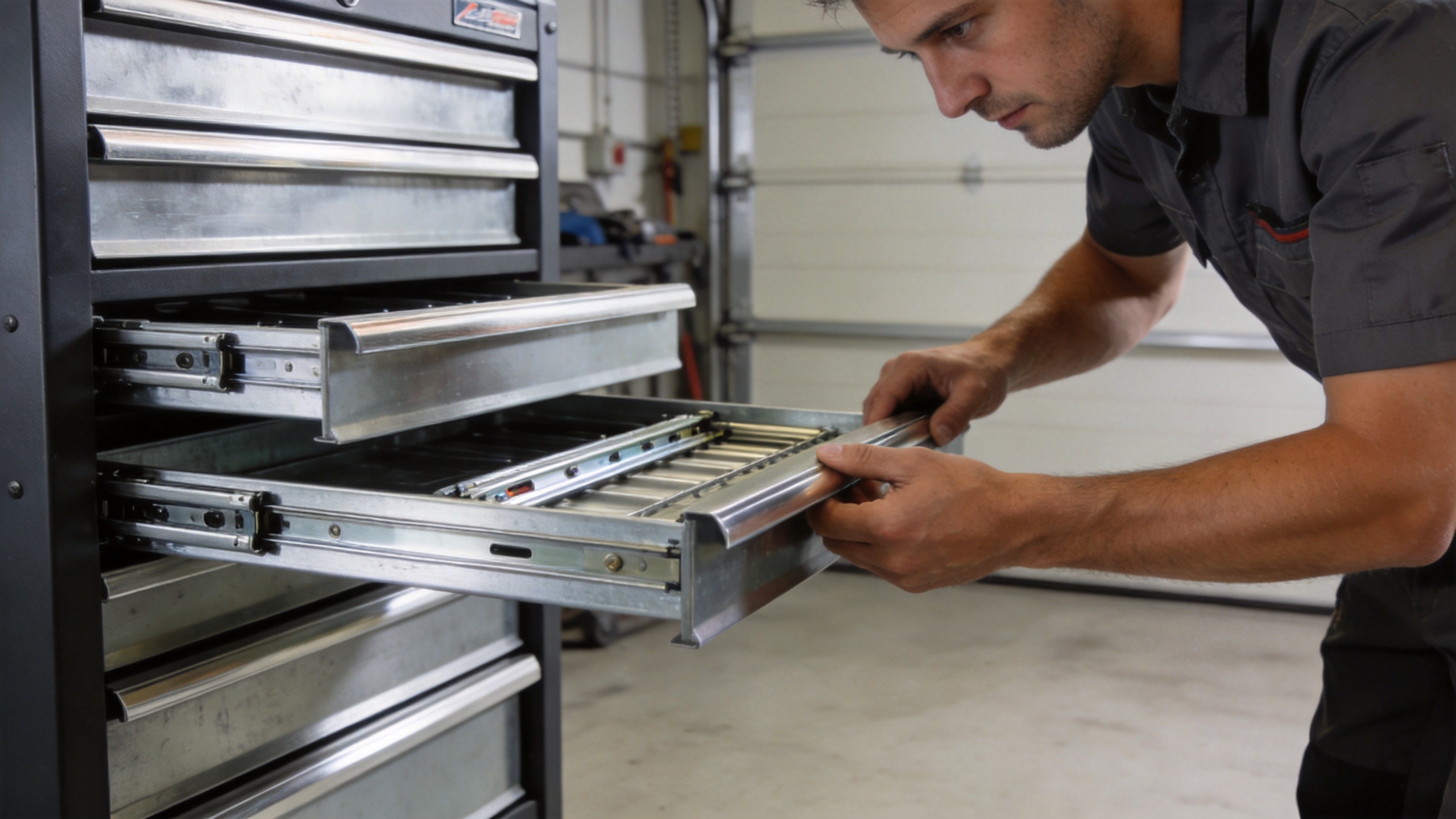
One recurring concern is whether drawer motion will feel consistent through normal use. The phrase smooth glide rails is useful as a discussion point, but it should not be treated as proof of a particular load rating, cycle count, or hardware specification without approved product data. Before relying on a rail claim in a purchasing decision, ask for the applicable drawing, component specification, sample detail, and inspection scope.
For an installed or evaluated unit, a sensible inspection sequence is practical rather than dramatic: remove stored items as needed, look for debris along the travel path, check visible fasteners, and assess whether the drawer remains aligned as it opens and closes. Cleaning and alignment are common review points for drawer-slide movement. If a project requires a particular rail type or motion characteristic, place that requirement in the brief instead of assuming it from a product name. This keeps storage drawers garage discussions tied to evidence.
How CNC stamping fits into a metal drawer conversation
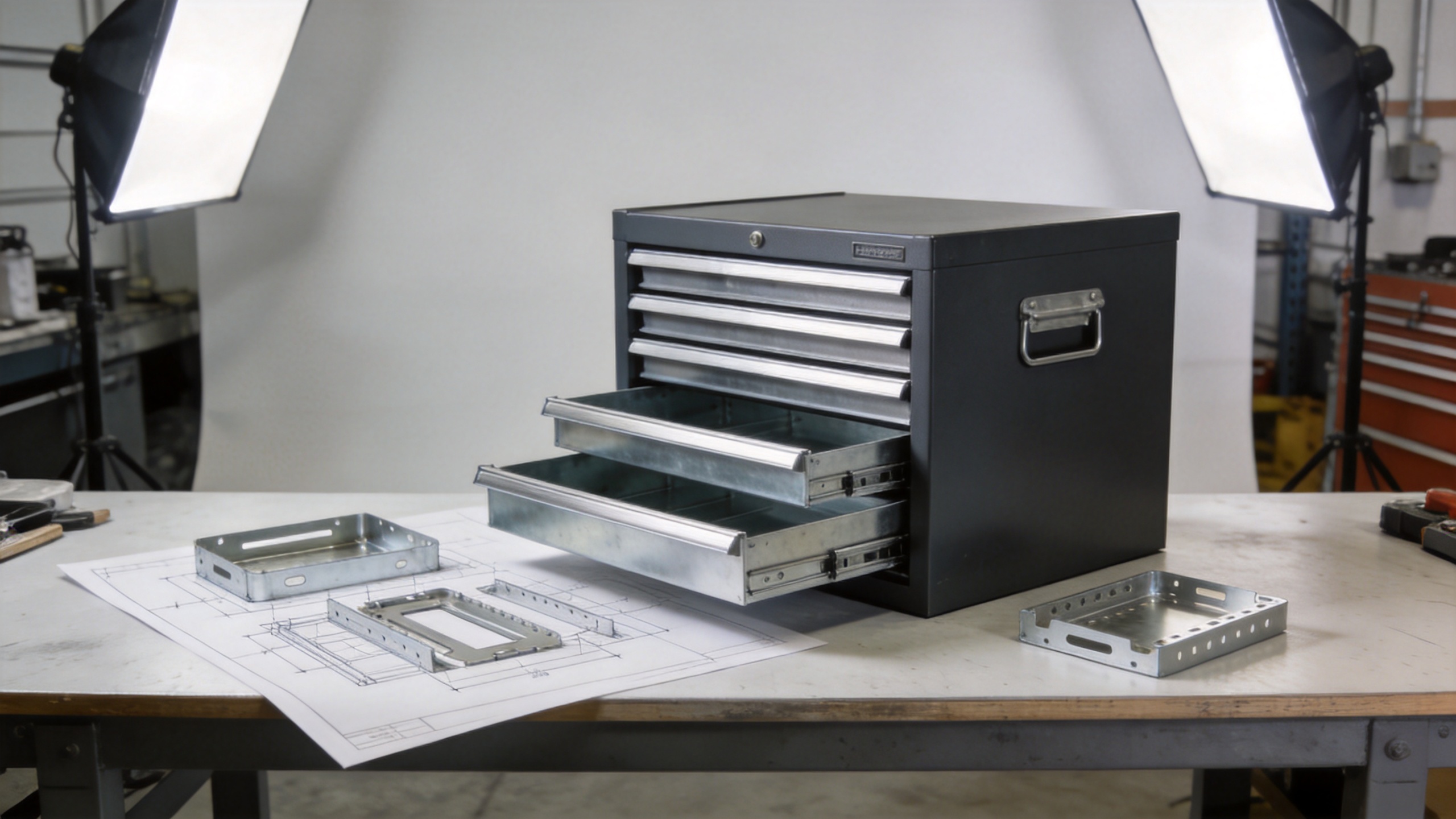
CNC stamping belongs in the manufacturing discussion when formed sheet-metal components, repeatability, and drawing-controlled features are relevant. Haiyang Libenli Metal & Technology Co., Ltd. describes sheet-metal processing, metal stamping parts, metal furniture, and customized solutions in its approved profile. That context supports a component-level conversation, but it does not establish unapproved dimensions, materials, capacities, or product performance for a particular drawer unit.
In any sheet-metal drawer project, the manufacturing brief should identify the features that affect assembly and use: formed edges, hole locations, interfaces, finish expectations, and any components that need a defined relationship to the drawer body. Material behavior, bend sequence, feature placement, and tooling all influence what must be confirmed during design review. For that reason, a storage drawers garage article should point readers toward approved drawings and samples rather than broad quality language.
Turn insights into a reviewable line brief
For brands sourcing or developing a storage drawers garage collection, a useful early brief does not need to answer every detail. It does need to distinguish confirmed facts from open decisions. Begin with the intended garage workflow and tool groups. Add the available footprint and access constraints. Then list the drawer arrangement, rail expectations, finish direction, labeling, branding, packaging, and any documents needed for approval.
- Inventory the tools and separate frequent-use items from reserve items.
- Map the pickup, use, and return path in the intended garage zone.
- Define the drawer groups before requesting a count or a visual style.
- Specify what should be confirmed for rails, sheet-metal parts, finish, and assembly.
- Review the drawing or sample against the actual access sequence before finalizing the brief.
That sequence gives supplier comparisons a clearer basis. Instead of comparing vague promises, teams can compare like-for-like scope. For example, CNC stamping may be relevant to a formed component, while smooth glide rails may be an approval point for a drawer system. Neither phrase should replace the underlying requirements.
Questions worth carrying into the next review
Which tools need to be reached without interrupting the task in front of you? Is the drawer layout designed around a real tool inventory? Are rail details documented at the level the project requires? Which customization requests solve a workflow or brand need, and which remain open? These questions give a storage drawers garage project a clearer path from concept to confirmed scope.
Haiyang Libenli can use its sheet-metal, stamping-parts, metal-furniture, and customized-solutions context to support a structured conversation with storage brands. The appropriate next step is to bring the intended use, dimensions, drawings, finish expectations, and sample-review needs into one reviewable request. When the tool mix changes later, revisit the layout rather than adding storage without checking the access pattern first.
 Hot News
