 EN

Why Factories Install Multi Door Tool Box Lockers?
A factory usually adds tool box lockers when a shared cabinet no longer matches the way people borrow, use, and return tools. The issue is not simply storage volume. In a busy maintenance area, fabrication cell, or assembly department, several people may need different tool groups at different times. Multi-door tool box lockers create smaller, assigned spaces that make those daily handoffs easier to see and manage.
From an OEM procurement viewpoint, a locker should be assessed as part of a workflow. A larger cabinet can hold many items, but it may still leave teams asking who has a tool, where it belongs after a shift, and whether the access arrangement fits the site. The practical value of tool box lockers is the ability to give a tool kit, role, or work zone a defined home without turning every storage decision into a shared-key discussion.
The factory problem is often shared access, not a lack of cabinets
At shift change, a common friction point is not that tools are missing from the building; it is that their location and current user are unclear. A general cabinet may work for supplies that anyone can take. It is less helpful when calibrated items, maintenance kits, changeover tools, or personal issue sets need a clear return point. Multi-door tool box lockers divide that broad storage space into accountable zones.
That division can support several operating patterns:
- one compartment per technician or shift team;
- one compartment per machine, cell, or maintenance route;
- separate spaces for personal tools, shared tools, and items awaiting inspection;
- a controlled handover point for temporary issue kits.
The exact assignment model should come from the site’s tool list and handover routine. Tool box lockers do not prove that a process is controlled on their own; labels, ownership rules, and periodic review still matter. They can, however, give those rules a physical place to operate.
Why individual cubbies change the daily routine
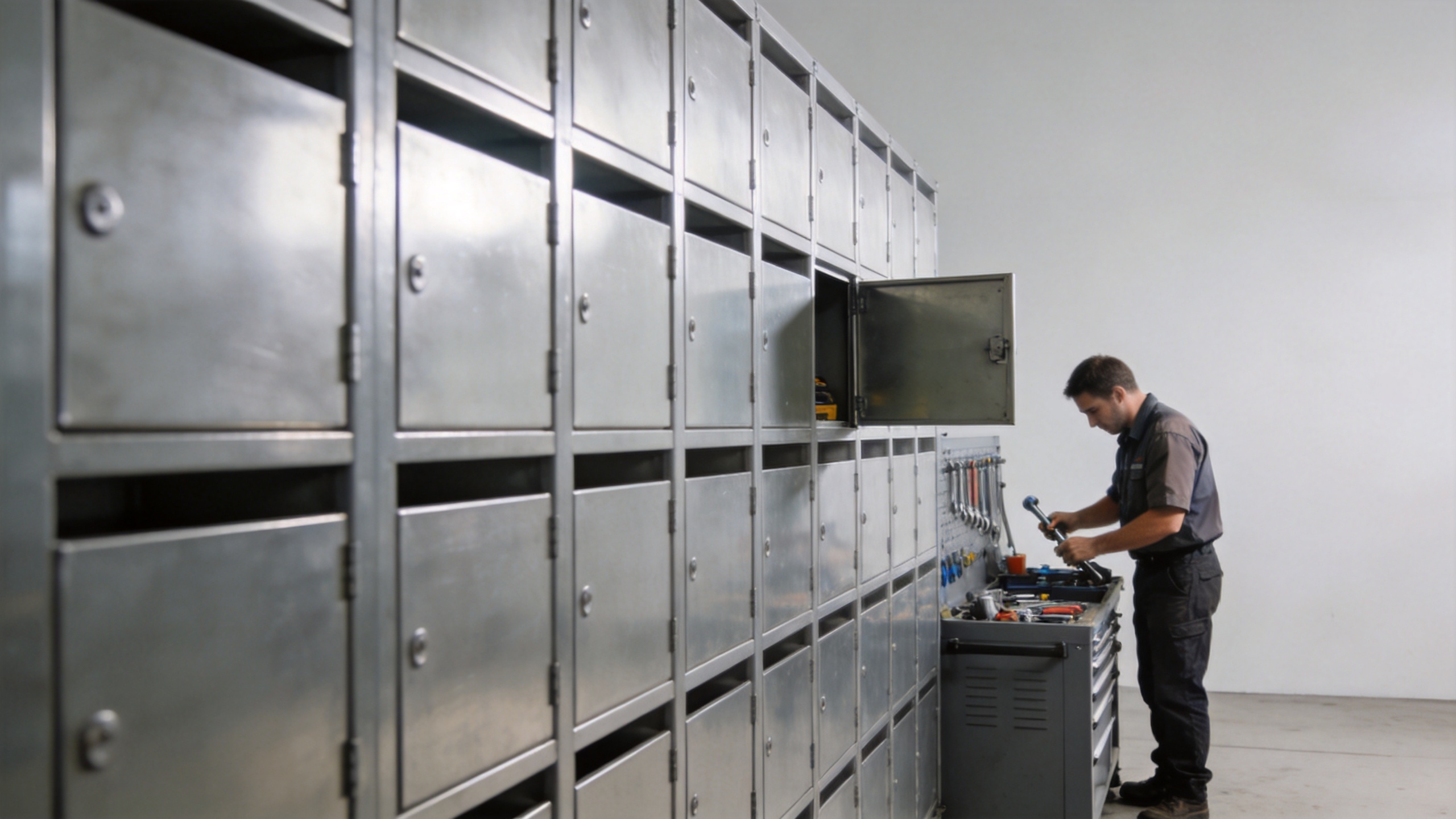
Individual cubbies are useful because they turn one large, ambiguous storage area into visible destinations. A technician can open the assigned door, take the relevant set, and return it to the same location. Supervisors can structure checks around compartments rather than searching a mixed cabinet. For a factory with different tasks on each line, tool box lockers can also separate tool categories without requiring a dedicated room for every group.
This does not mean every cubby should be identical. Small hand-tool sets, battery equipment, inspection gauges, manuals, and consumables may need different internal arrangements. Before specifying tool box lockers, map the actual contents of each compartment. Ask what must be stored, who opens the door, how often access happens, whether a kit is taken elsewhere, and what must be visible during a routine check. A shallow personal compartment and a deeper maintenance-kit compartment may serve different jobs even when they sit in the same bank.
Padlock hasps allow site-specific access rules
Many factories select padlock hasps when they want access control that follows their own key, tag, or lock-management practice. A hasp is not a claim about a particular security level; its usefulness depends on the installed hardware, cabinet construction, use conditions, and local procedures. Still, it gives buyers a straightforward question to resolve: should access be assigned by person, by shift, by department, or by maintenance responsibility?
For example, tool box lockers with padlock hasps may suit a program in which each authorized user supplies or receives an approved lock. Another site may need a different locking arrangement because managers require controlled access or a defined emergency-opening procedure. The sourcing brief should state the preferred access method rather than assuming every multi-door cabinet uses the same one.
Layout and housekeeping still come first
Storage does not belong in an aisle merely because it has doors. In the United States, OSHA 29 CFR 1910.176(a) says aisles and passageways must be kept clear and in good repair. That is a regulatory example, not a universal approval for a locker layout. Each facility should assess applicable rules, evacuation routes, material-handling traffic, door swing, and working clearance before placing tool box lockers.
This is where the “multi-door” part can be more important than the total cabinet count. If several users need access at once, the position of doors and the space in front of them can affect the practical flow of a work area. A planning review should include the open-door envelope, adjacent benches, carts, pedestrian routes, and the point at which a user sets down a kit. Tool box lockers should support an orderly return path without creating a new obstruction.
What to confirm before ordering tool box lockers
Product names alone do not establish a workable configuration. A factory buyer can make supplier comparisons clearer by documenting the following points before requesting quotations for tool box lockers:
- User and ownership plan: State whether each door is assigned to a person, team, machine, or tool category.
- Compartment contents: List the largest and heaviest intended items, plus any internal dividers or identification requirements.
- Access approach: Specify whether padlock hasps, keyed locks, managed access, or another method is required.
- Installation space: Confirm wall position, floor conditions, door clearance, aisle requirements, and delivery route.
- Construction evidence: Request the current drawing, material description, finish scope, hardware details, and any test or compliance documents relevant to the destination market.
- Change control: Record which features are standard and which remain subject to configuration review.
This brief avoids a common purchasing gap: comparing cabinets by appearance or door count while leaving the actual tool workflow undefined. It also helps a supplier distinguish confirmed requirements from open decisions.
A short configuration check before installation
Use this short review to keep the request specific. For tool box lockers, identify the assigned user or work zone. For tool box lockers, identify the tool set that must return after each task. For individual cubbies, identify the largest item and the needed visibility. For padlock hasps, identify who controls the lock and how exceptions are handled. Then confirm that the selected tool box lockers fit the opening clearance and route plan.
These questions also help separate a broad storage request from a workable brief. The required number of tool box lockers follows the assignment plan, while the layout of individual cubbies follows the contents. The choice of padlock hasps follows the site access policy. Put another way, tool box lockers should be reviewed as a system of users, contents, access, and return points rather than as door count alone.
Multi-door lockers work as part of a return system
The strongest reason to install tool box lockers is usually operational clarity. A door number, user label, tool list, or check sheet can connect a physical compartment to a repeated return routine. The cabinet is only one layer: teams also need clear assignment, a practical escalation path for missing or damaged tools, and a review when staffing or tool mix changes.
For metal-storage brands planning an OEM range, tool box lockers can therefore be framed as a configurable shared-work solution rather than a generic box with doors. Start with the users and their tools, then confirm cubby sizes, padlock hasps or other access hardware, layout constraints, finish expectations, and approval documents. That sequence gives factories a more grounded basis for deciding whether multi-door storage belongs in the workflow.
Frequently asked questions
Are tool box lockers only for high-value tools?
No. Factories may use tool box lockers for personal issue sets, line-specific kits, shared maintenance tools, documents, or supplies that need a defined return location. The right use depends on the work process and access plan.
How many individual cubbies should a factory specify?
Start with the number of users, shifts, tool groups, and future changes the layout must accommodate. Then confirm the contents and access frequency for each group. Door count without a use plan is not a complete specification.
Do padlock hasps fit every factory access policy?
Not necessarily. Padlock hasps can support user-assigned locks, but sites with managed access, emergency-opening needs, or particular control procedures may require another hardware approach. Confirm the policy and the hardware details together.
 Hot News
