 EN

Industry Trends Shaping the Modern Garage Tool Box
For a garage storage brand, a modern garage tool box is no longer a single, isolated metal box. Buyers compare storage as part of a work area: where tools are used, how often they move, who returns them, and how the finished unit supports a recognizable product line. That shift is changing what a garage tool box brief needs to cover.
Search results for this category now place chests, rolling carts, cabinets, and modular systems side by side. That does not make every format interchangeable. It does show that a garage tool box is being evaluated through a wider set of choices: access, footprint, mobility, finish, and the ability to add or revise components over time.
1. Storage is becoming a connected system
One clear trend is the move from a stand-alone garage tool box to a coordinated storage plan. A compact chest may keep daily hand tools near a bench, while a drawer cabinet handles grouped tools and a rolling unit supports tasks that shift across the space. The useful question is not simply how many drawers a garage tool box has. It is which tool groups need immediate reach, which can stay in reserve, and which items travel with the work.
For brands, modular thinking changes early product decisions. A garage tool box range can be planned around shared visual cues, compatible dimensions where confirmed, and clear roles for fixed and mobile pieces. Compatibility should be confirmed through approved drawings or product documentation; a range can still help customers understand the difference between a base unit, an add-on drawer module, and a cart.
2. Mobility is judged by workflow, not by wheels alone
Rolling storage remains visible across category results because movement matters in many garages and workshops. Yet casters alone do not define a suitable garage tool box. A useful mobile-storage brief identifies the travel route, turning space, parking position, floor condition, and whether the top surface is intended for temporary work. Those details help distinguish a unit that moves occasionally from one that must follow a technician through repeated tasks.
When a garage tool box is intended to stay near a single bench, stability, drawer grouping, and clearance may matter more than mobility. When it is expected to serve several zones, teams should document route and load expectations before finalizing a layout. This workflow-first view is more helpful than presenting fixed cabinets and carts as universal alternatives.
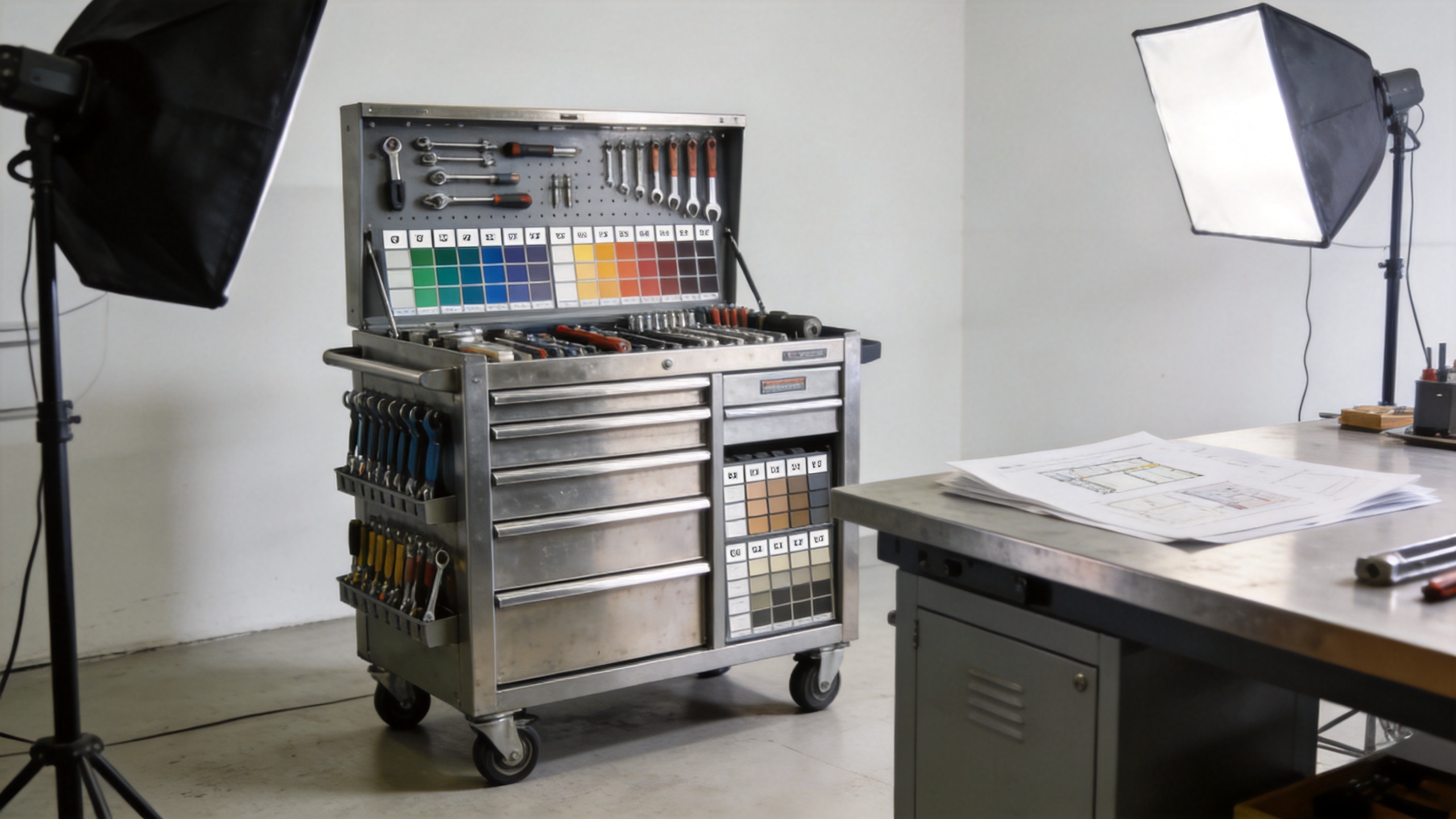
3. Custom color matching is moving into the specification stage
Color has become part of range identity, but custom color matching is not only a visual request. For a garage tool box program, it should be treated as a controlled specification item. A productive brief identifies the target color reference, surface finish, gloss expectations if relevant, parts that require the color, and the sample or approval method. It should also separate color requirements from functional requirements such as storage format, access arrangement, and packaging.
This approach helps a brand discuss custom color matching without turning an early concept into an unsupported promise. A swatch, approved sample, and documented finish scope provide a stronger basis for review than a screen image alone. If different components use different finishes, the brief should identify each component rather than assuming one color instruction applies across the full garage tool box.
4. OEM sheet metal discussions are getting more specific
As private-label and configurable storage programs expand, OEM sheet metal is increasingly a discussion about requirements alignment rather than a generic manufacturing label. A garage tool box inquiry becomes easier to assess when it states dimensions, drawer or door layout, intended tool groups, finish scope, logo treatment, packaging requirements, and the documents needed for approval.
Haiyang Libenli Metal & Technology Co., Ltd. describes sheet-metal processing, stamping parts, metal furniture, and customized solutions in its approved company profile. That manufacturing context can support an OEM sheet metal conversation, but it does not substitute for product-level evidence. Before a brand publishes a material, load, finish, or compatibility claim for a particular garage tool box, it should confirm the detail through approved drawings, specifications, samples, or test records.
For procurement teams, this distinction is practical. Two garage tool box quotations may appear similar until the review compares configuration, finish approval, packaging, documentation, and change-control assumptions. A shared brief makes those comparisons more meaningful and gives design, sourcing, and end-use teams a common version to review.
5. Organization is being designed around retrieval and return
A growing focus on organization is shifting attention from total capacity to tool behavior. A garage tool box works with a routine: pick up, use, return, and occasionally replenish. Frequently used tools need a predictable location; less-frequent tools may need protected or less prominent space; shared tools benefit from an agreed return point. This is why drawer count alone says little about whether a layout fits the work.
Brands can turn this trend into clearer product education. Instead of promising that a garage tool box will improve every workspace, explain the conditions a buyer should review: tool inventory, use frequency, available wall and floor space, door or drawer clearance, movement paths, and future additions. The outcome depends on the configuration and the habits around it.
6. What a current garage tool box brief should include
The modern garage tool box conversation combines product planning with evidence control. Before requesting a quotation or approving content, collect the items below.
- Tool groups, access frequency, and whether users share the storage.
- Required format: chest, cabinet, drawer unit, rolling cart, or a defined combination.
- Footprint, height, opening clearance, routes, and parking position.
- Custom color matching reference, finish scope, and sample-approval process.
- OEM sheet metal requirements, including drawings, configuration details, branding, packaging, and revision control.
- Claims that require product-specific confirmation before they appear in sales or technical content.
Conclusion: turn trend signals into a reviewable plan
The most useful trend is not a single feature. It is the movement toward a garage tool box that fits a broader workflow and a clearer product brief. Modularity, mobility, color, and OEM manufacturing can each add value when they are tied to real use conditions and approved requirements. By documenting those conditions early, brands can discuss a garage tool box range with more clarity and leave product-specific claims for the drawings, samples, and evidence that support them.


 Hot News
