 EN

Key Structural Features of Our Welded Metal Tool Cabinet
A metal tool cabinet is easy to describe in a catalog, but its usefulness is decided by details that are less visible: how panels meet, how doors stay aligned, how shelves carry a real tool mix, and whether the finish fits the intended environment. From a sheet-metal planning perspective, the right review starts with part layout and assembly logic rather than a generic “heavy-duty” label.
That sounds straightforward, but the next question is how tools actually move through the workspace. Capacity is not the only question; the more useful question is whether frequently used tools can be retrieved, returned, and protected without turning the cabinet into a bottleneck. This article explains the structural checks we use when discussing a welded metal tool cabinet with brands and procurement teams.
1. Start with the welded cabinet shell
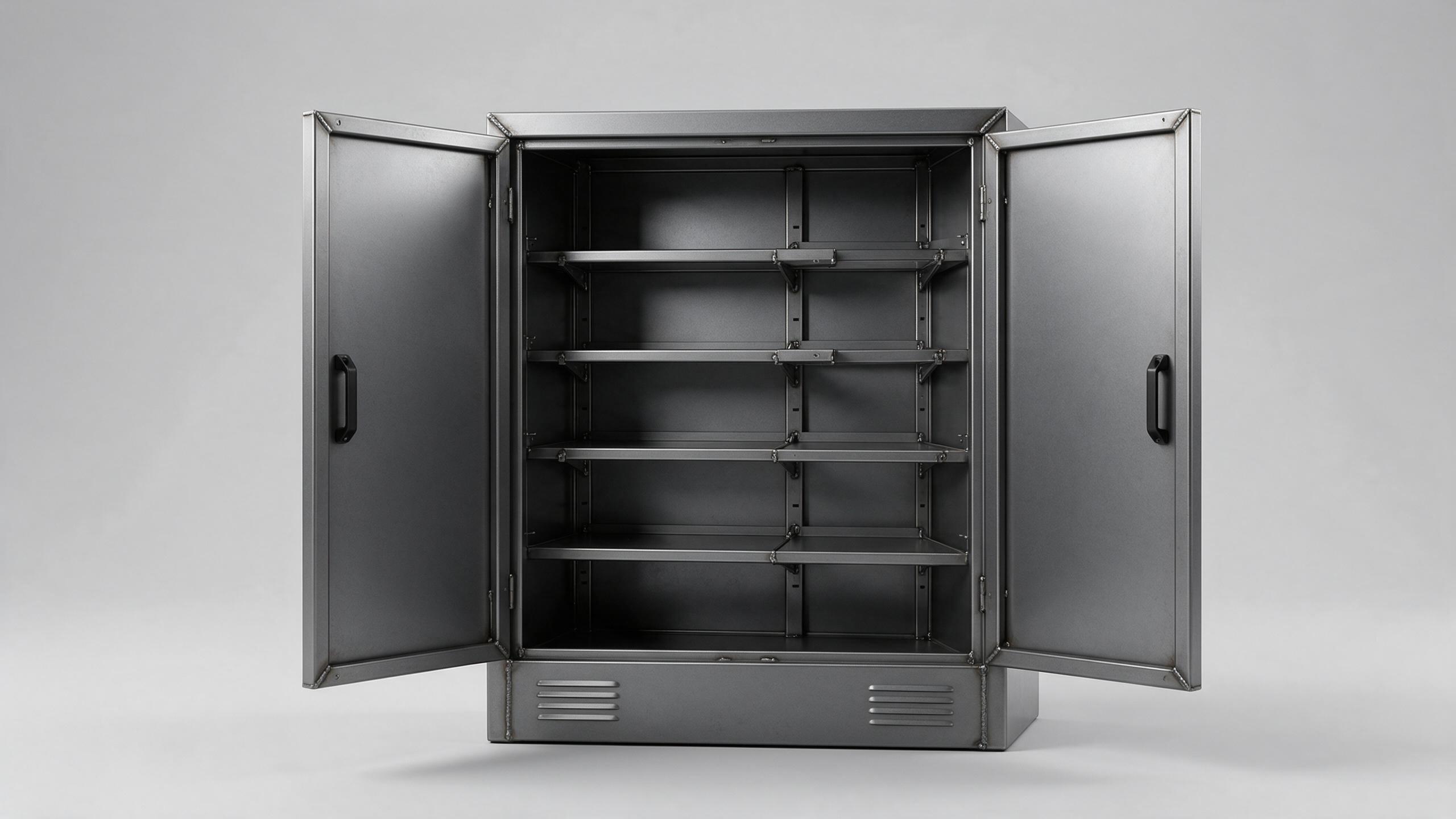
The cabinet shell is the foundation of a metal tool cabinet. In a welded construction, the relationship between side panels, top, base, back panel, and any internal reinforcement deserves attention before accessories are selected. Welded joints can create a fixed structural frame, but their value depends on the approved panel layout, weld locations, and the loads the final configuration is intended to handle.
During a review, ask to see where the shell is joined and which areas are reinforced. Door openings, shelf-support zones, and the base are practical focus points because these areas see repeated use or concentrated loads. It is not really a question of choosing the heaviest-looking cabinet; more accurately, it is a question of confirming a construction that fits the tool inventory, installation surface, and access routine.
- Confirm the steel grade and sheet thickness from the approved specification rather than assuming them from product photos.
- Review the cabinet’s squareness and door-opening geometry in the sample or inspection process.
- Ask how any internal stiffeners, shelf rails, or mounting points are incorporated into the welded shell.
- Separate fixed construction details from options that may change with cabinet size or configuration.
2. Check doors, hinges, and locking points as one system
Doors are the main moving contact point on a metal tool cabinet, so panel alignment alone is not enough. Review the hinge arrangement, opening clearance, handle position, lock type, and the way the doors meet the frame when closed. A cabinet that looks aligned when empty should also be assessed for the use pattern it is expected to support.
For a workshop with frequent access, smooth opening and consistent closing may matter more than a feature list. For shared storage or controlled inventory, the lock and closing arrangement may deserve extra attention. The better fit depends on the workflow, not on a blanket ranking of one cabinet style over another. Where a multi-point lock, adjustable hinge, or door stop is requested, treat it as a confirmation item in the drawing and sample review.
3. Match shelf support to the actual tool mix
Interior shelves can make a metal tool cabinet flexible, but adjustability does not remove the need for a clear load plan. Ask how shelves are supported, what adjustment positions are available, and whether the intended contents concentrate weight in one area. Hand tools, boxed parts, power-tool cases, and maintenance supplies can create very different loading patterns.
We first looked at cabinet appearance, then shifted to how frequently used hand tools move through the work sequence. That change in view often clarifies whether open shelf space, a mixed shelf-and-drawer arrangement, or a different storage format is more suitable. If a buyer needs a stated load rating, that figure should come from the specific approved product document or test record for the proposed configuration; it should not be inferred from a similar cabinet.
4. Use adjustable louvers only when ventilation is part of the brief
Adjustable louvers can be a useful option when the cabinet’s contents or environment call for controlled airflow. They are not automatically necessary on every metal tool cabinet. For example, a cabinet used to store dry, clean hand tools in a stable indoor area may have different priorities from one that holds damp gear, cleaning items, or materials returning from a humid work area.
When adjustable louvers are under consideration, review airflow together with security, dust exposure, privacy, and the position of the cabinet in the room. The louver design should be defined in the product brief: location, opening pattern, adjustment method if applicable, and the conditions it is intended to address. This avoids treating ventilation as a decorative detail or making an unsupported promise about moisture control.
5. Define the powder coated steel finish by conditions
Powder coated steel is commonly chosen for metal storage because a specified coating system can support a consistent, maintainable surface. Still, a finish should be discussed as a system rather than a color name. Surface preparation, coating type, coverage, baking process, handling, and the actual service environment all affect the final result.
For this configuration, confirm the finish specification because it affects cleaning expectations, appearance consistency, and suitability for the installation conditions. A powder coated steel surface may be appropriate for many indoor tool-storage applications, but it is not a substitute for clarifying exposure to moisture, chemicals, abrasion, or outdoor conditions. A sample panel or approved color reference is often more useful than relying on a screen image.
6. Inspect practical fabrication details before release
Small fabrication choices have a large effect on day-to-day use. Check that exposed edges are safely finished, corners are consistent, hardware is accessible for service where required, and any cable holes, mounting holes, or base provisions match the installation plan. If the metal tool cabinet will be secured to a wall or floor, confirm the mounting method, site surface, and responsibility for installation before release.
Rather than start with a standard item name, turn the brand brief into confirmable cabinet dimensions, door layout, shelf positions, finish, lock requirements, packaging, and labeling details. Haiyang Libenli Metal & Technology Co., Ltd. works in sheet-metal processing and customized metal-fabrication contexts; for a project-specific cabinet, the responsible approach is to review the applicable drawings and approved requirements rather than imply that every feature is standard.
7. A practical review checklist for a metal tool cabinet
- Define the contents: List the tool groups, cases, parts, and access frequency the cabinet must support.
- Confirm the shell: Review panel construction, weld locations, reinforcement, dimensions, and any mounting provisions on the approved drawing.
- Review the moving parts: Check doors, hinges, handles, locks, clearance, and closing alignment in the relevant sample or inspection stage.
- Verify storage layout: Confirm shelf positions, shelf support, drawer needs, and any load requirements with configuration-specific documentation.
- Set environmental needs: Decide whether adjustable louvers are required and document the airflow, dust, and security trade-offs.
- Specify the finish: Record the powder coated steel color, finish expectations, applicable exposure conditions, and approval method.
- Close the brief: Include packaging, branding, labeling, and change-control points so quotations can be compared on the same scope.
Bring structural questions into the specification
A well-planned metal tool cabinet is not defined by one feature. The welded shell, door system, storage layout, adjustable louvers, and powder coated steel finish should support the same use case. If a requirement is unresolved, place it in the technical brief and verify it against the proposed configuration. That approach gives a sourcing team clearer questions for drawing review, sample approval, and supplier comparison.
For an OEM brief, translate the brand requirement into confirmable product detail. The result is a more useful conversation than a broad claim about durability: it identifies what needs to be built, checked, and approved for the cabinet’s actual working environment.

 Hot News
