 EN

Product Guide to Complete Metal Garage Tool Storage
Good garage tool storage begins with the work, not a catalog. A garage used for repairs, fabrication, woodworking, or weekend maintenance needs a place for tools to arrive, be used, and return without blocking the next job. From a metal storage design advisor’s view, the practical question is how drawers, cabinets, and mobile pieces support that flow. This guide turns that question into a usable plan for metal garage tool storage.
Start with access flow before choosing garage tool storage
It is tempting to begin with cabinet appearance or wall length. Start instead with the tools you reach for in a normal task. Put daily hand tools near the bench, heavier power tools where they can be lifted safely, and seasonal equipment beyond the immediate work zone. That simple map prevents a garage tool storage layout from becoming a row of attractive but inconvenient boxes.
Make three lists: tools used every session, tools used a few times a month, and items kept mainly for a particular season or vehicle. The first group deserves the shortest path from work surface to storage. The second can live in deeper drawers or base cabinets. The third can use upper cabinets or a separate bay. This access-first approach makes garage tool storage easier to reset after a project.
Build the layout around distinct storage jobs
A complete metal setup usually combines several formats because each solves a different access problem. Search results for garage tool storage commonly combine workbenches, cabinets, chests, and rolling units; treat them as a system rather than interchangeable purchases.
Drawer cabinets for small and frequently used tools
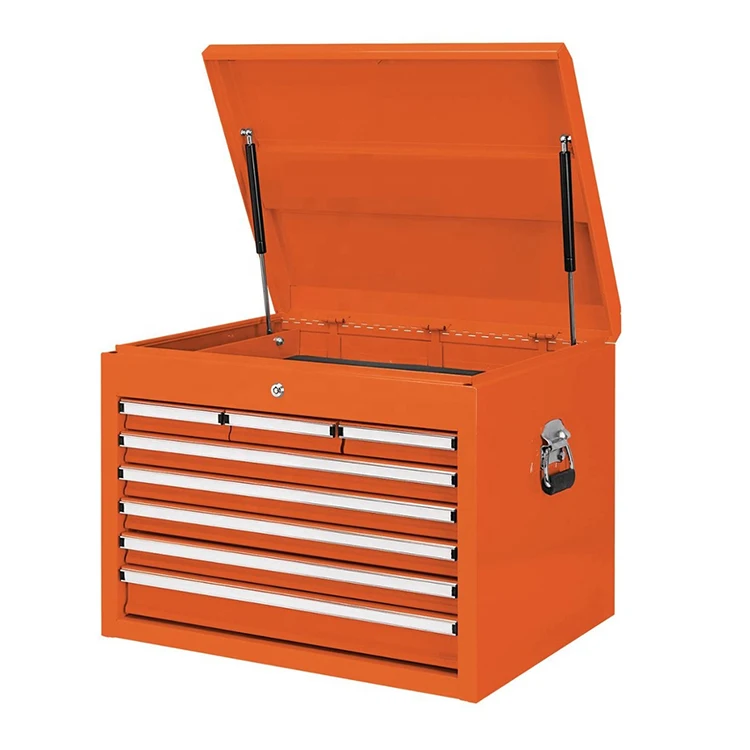
Drawers suit sockets, measuring tools, fasteners, drill accessories, and hand tools that are easier to scan from above. Decide drawer depth by the largest item in each group, then allow room for dividers or foam outlines if those fit your process. In a well-planned garage tool storage area, the top drawers often hold the tools that move between the bench and the vehicle or machine most often.
Base cabinets for heavier or less-visible supplies
Base cabinets work well for cases, fluids that are appropriate for enclosed storage, bulky accessories, and items that do not need a drawer-by-drawer view. Check door swing and aisle clearance before fixing a cabinet in place. If a door opens into a parked vehicle, the location may be wrong even if the cabinet dimensions look suitable on paper.
Wall storage and upper cabinets for vertical capacity
Use the wall zone for long-handled tools, chargers, light accessories, or closed upper storage that keeps dust-sensitive items separate from the bench. Keep the visual field above the main work surface uncluttered enough for task lighting and movement. Vertical storage adds capacity to garage tool storage, but it should not create an overhead retrieval routine for heavy items.
Mobile units for changing work positions
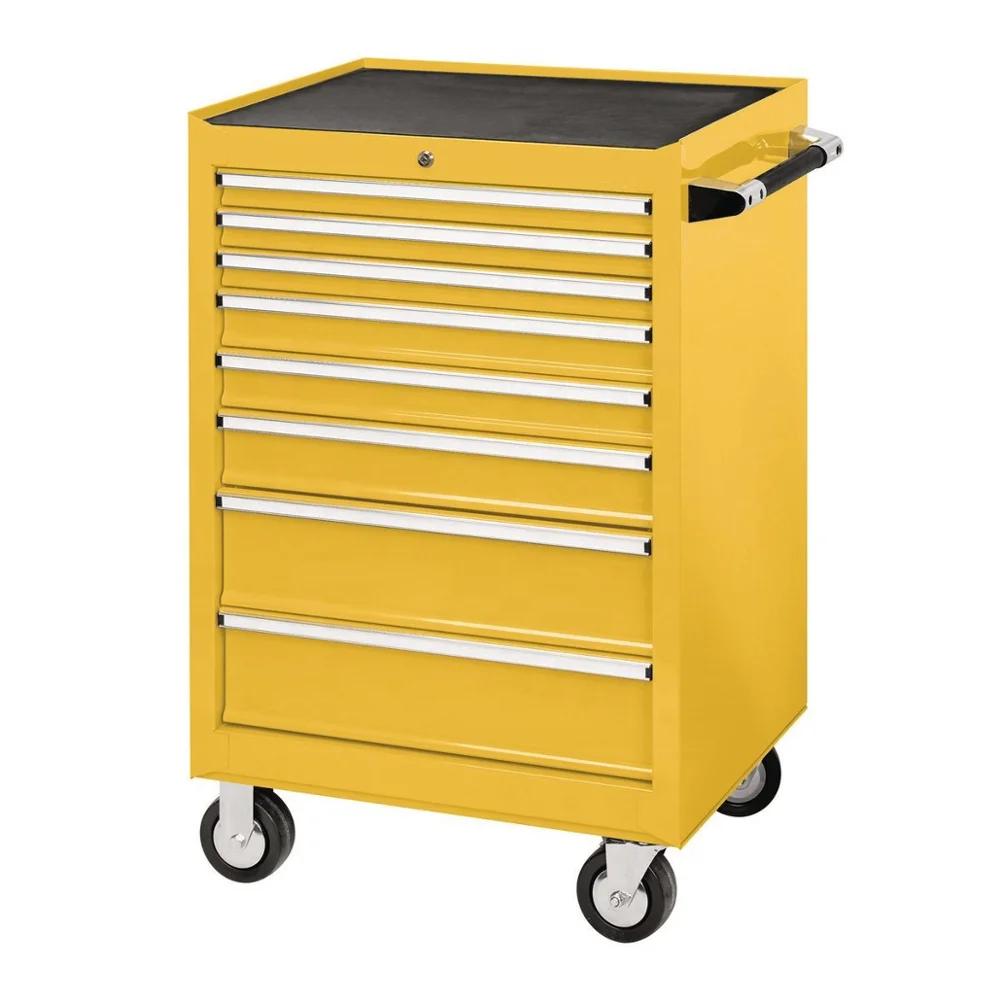
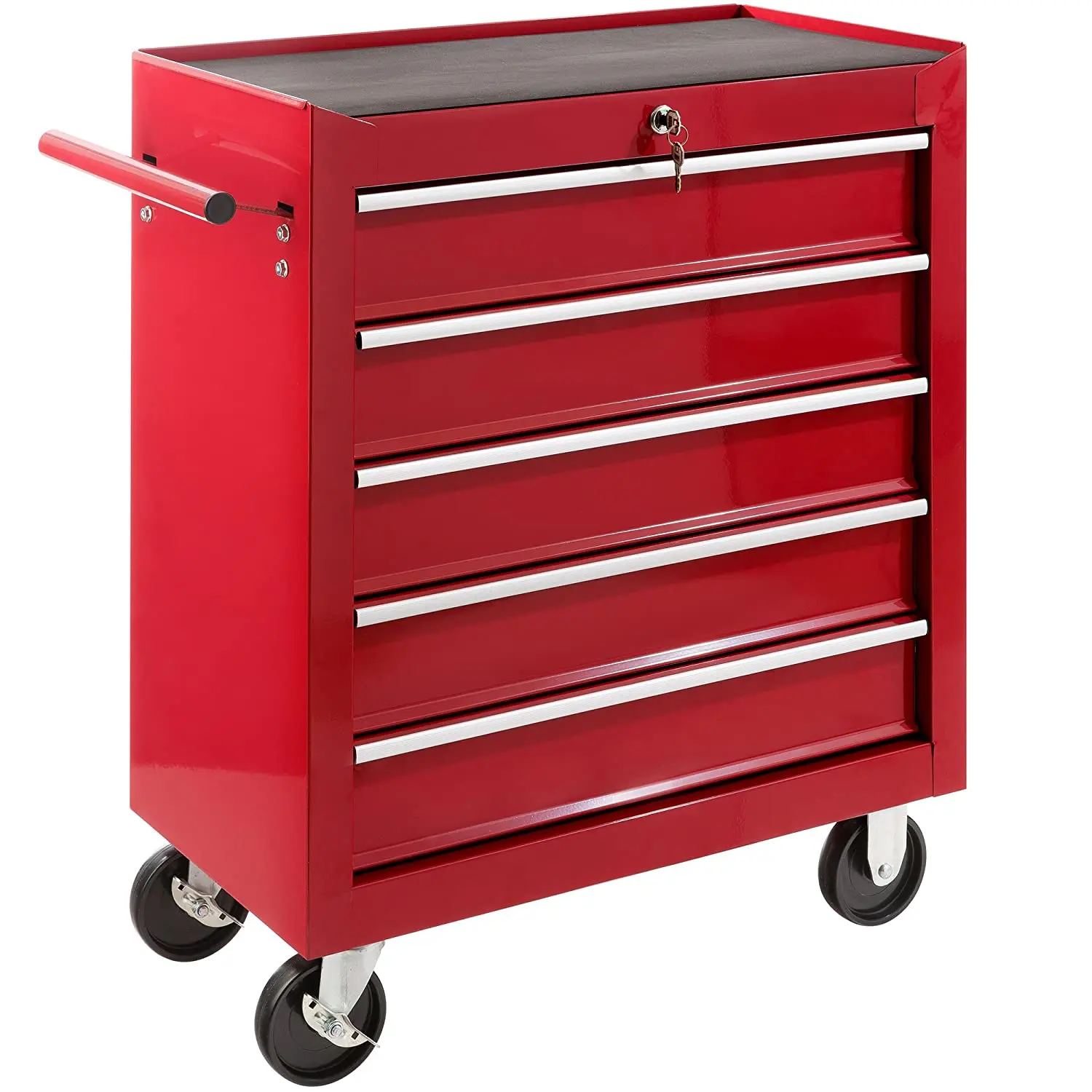
A rolling cabinet or cart can make sense when tools travel between a bench, vehicle, and open floor area. Mobility is useful only when the unit has a defined parking place and the route stays clear. If tools rarely move, a fixed cabinet can offer a simpler workflow and fewer decisions.
Choose metal construction and finishes by use conditions
Metal garage tool storage is not one material decision. Ask the supplier for the construction details that matter to your intended load, including sheet thickness, reinforcement, drawer slide specification, leveling method, and the mounting requirements for tall cabinets. A product name alone does not show whether a configuration fits your tool mix.
Powder coated steel is a common finish consideration for a garage environment because it can provide a uniform coated surface. The useful question is not whether the label sounds durable; it is how the specified coating, edge treatment, and care instructions fit moisture, abrasion, and cleaning practices in your space. Review finish samples or confirmed product information when color consistency or long-term appearance is important.
For a bench-centered layout, a stainless work surface may be worth evaluating where the top will face frequent wiping, metal parts, or messy repair tasks. It is still necessary to confirm the actual top construction, support arrangement, edge profile, and what contact conditions the supplier recommends. A stainless work surface should be selected for the work performed there, not simply as a visual upgrade.
Plan the workbench as the center of garage tool storage
The bench is where storage decisions become visible. Stand at the proposed work position and note the reach to drawers, cabinet doors, power access, waste collection, and the tools that stay out during a job. Keep a landing area clear for a part or instruction sheet. If a bench will carry a vise or other mounted equipment, verify mounting zones and support requirements before finalizing the cabinet arrangement.
Think of the bench as a link between active work and garage tool storage. One side can hold incoming tools and parts, the surface can support the current task, and the other side can provide return drawers or a cart. This directional setup is often clearer than distributing similar cabinets evenly along every wall.
Use a practical buying checklist
- Tool inventory: Record the largest, heaviest, and most frequently used items before selecting drawer and cabinet sizes.
- Access: Open a taped floor outline for doors and drawers, including the space needed when a vehicle is present.
- Work zone: Define the bench location, task lighting, nearby power, and a clear return path for tools.
- Material verification: Request confirmed details for metal construction, finish, hardware, mounting, and care guidance.
- Surface choice: Compare a stainless work surface with other specified tops based on the tasks, cleaning routine, and support structure.
- Future changes: Leave a route for a mobile unit or a spare cabinet bay if the tool collection may grow.
Set up garage tool storage in a useful sequence
- Mark the workbench, vehicle, walking path, and door-swing areas on the floor.
- Assign tool groups to access zones before selecting individual cabinet widths.
- Place fixed base cabinets and tall units first, then check drawer and door movement.
- Add wall storage and upper cabinets only after the active work area is clear.
- Introduce a mobile unit only when it has a real travel route and parking position.
- Label drawers by tool family, then adjust locations after several real projects.
That last step matters. A good garage tool storage plan is allowed to change after use. If a tool repeatedly lands on the bench instead of returning to its assigned place, move its storage closer or revise the category. The goal is a system that supports the way you work, not a display that must be preserved.
Questions to resolve before ordering
Confirm the overall dimensions, delivery and installation constraints, anchoring instructions, cabinet-to-wall clearances, and whether drawers or doors need additional space at the ends of a run. Ask for product-specific information before assuming load capacity, corrosion resistance, or compatibility between a cabinet and a work top. Those verification points turn a concept for garage tool storage into a configuration you can evaluate with confidence.
The better fit depends on your workflow: frequent-access hand tools may favor drawers near the bench, while bulky cases and occasional-use equipment may belong in cabinets farther from the active zone. When the layout follows those distinctions, metal garage tool storage can keep the garage more usable without asking every tool to occupy the same kind of cabinet.
 Hot News
