 EN

What Are the Key Specs of an Industrial Tool Chest?
An industrial tool chest is more than a box with drawers. It shapes the everyday route from storage to the work surface and back. For a workshop manager, procurement team, or private-label brand, the useful question is not “How many drawers does this tool chest have?” It is “Which specifications show whether this tool chest fits the tools, loads, environment, and work routine?”
Start with the actual tool list and the point of use. A compact tool chest may suit a bench-side assortment, while a larger unit may need to support heavier hand tools, measuring equipment, consumables, and a defined return routine. The specifications below turn a general product description into items that can be compared on a drawing, data sheet, or sample review.
1. Overall dimensions and usable storage volume
Record external width, depth, and height first, then ask for the internal dimensions of each drawer or compartment. The outer size of a tool chest affects floor space, aisle clearance, access to nearby equipment, and whether doors or drawers can open fully. Internal dimensions determine whether the intended tool groups actually fit.
Do not treat drawer count as storage capacity. Two tool chest models with the same number of drawers can have very different usable volume because drawer depths, internal obstructions, and slide clearances differ. For each drawer, compare clear internal width, depth, and height against the largest tool, case, or organizer it must hold. Leave room for labels and for a user to retrieve an item without disturbing the next group.
2. Steel construction and sheet thickness
For a steel tool chest, request the material grade and the thickness or gauge for the cabinet body, drawer fronts, drawer bases, back panel, and top. Those parts may not use the same sheet thickness. A single “heavy-duty steel” statement does not show where material is placed or how the tool chest is reinforced.
Also ask how corners, drawer shells, and stiffening features are formed. Sheet metal stamping may be used to form repeatable panels, ribs, or other components, but the relevant procurement question is how the selected process, material, and formed geometry appear in the approved product specification. Weld locations, hems, fasteners, and edges should be reviewed for the intended load and handling conditions. Manufacturing capability is useful background; it is not proof of the performance of a particular tool chest.
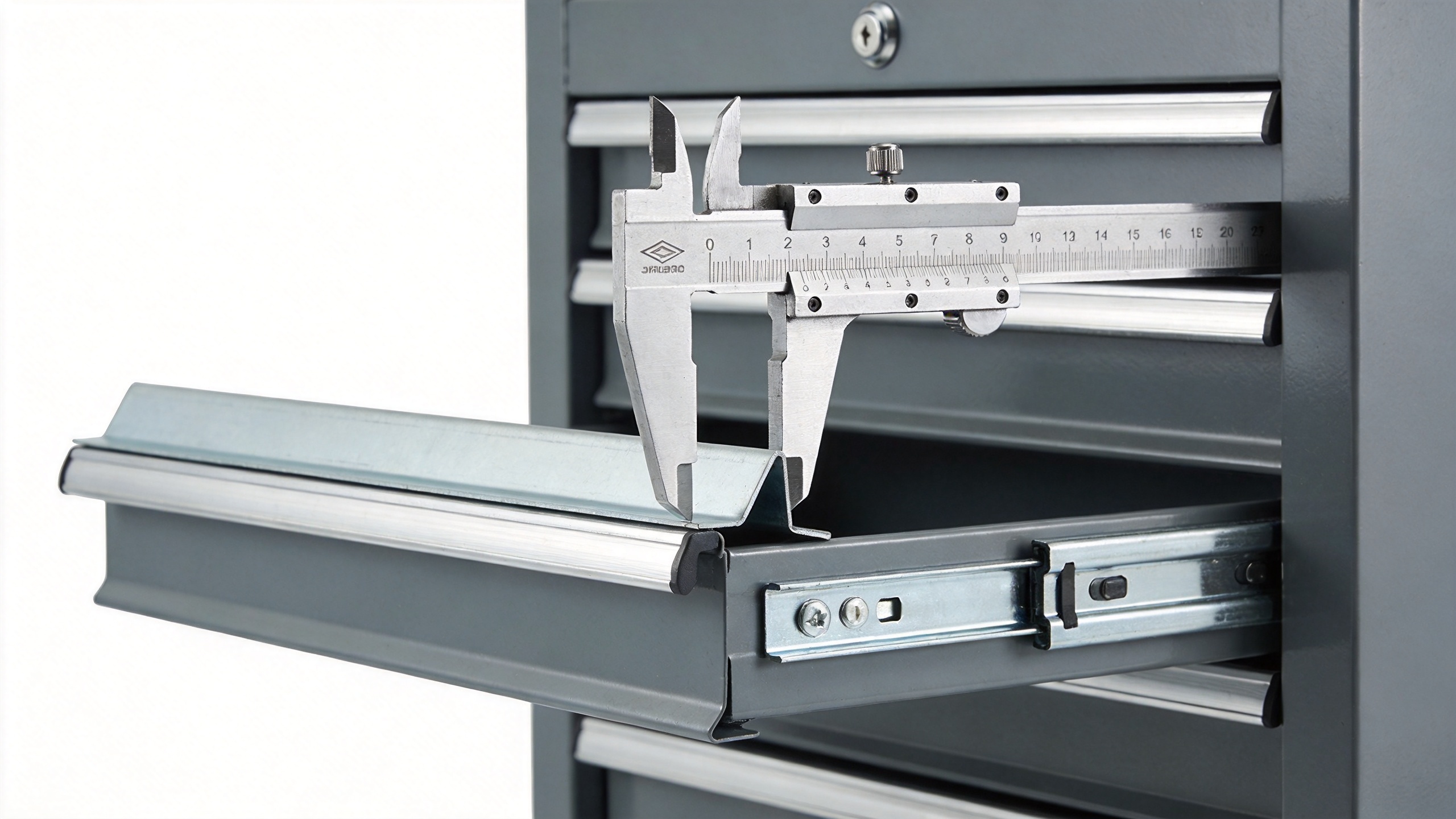
3. Drawer capacity, slide type, and load distribution
A drawer rating only helps when the test conditions are stated. Ask whether the stated load applies to one drawer, the full tool chest, or both. Confirm whether the rating assumes evenly distributed weight, a fully extended drawer, or a particular slide configuration. A specification sheet should identify the slide type, extension length, mounting arrangement, and any limit on loading heavy tools in upper drawers.
As a practical check, map the actual tool inventory by weight and frequency of use. Place dense items low in the tool chest unless the approved documentation says otherwise. Repeatedly opening a loaded drawer is a different condition from storing the same total mass in a closed cabinet. Ask for the test basis or approved verification record if drawer capacity is central to the purchase decision.
4. Frame, top, base, and stability details
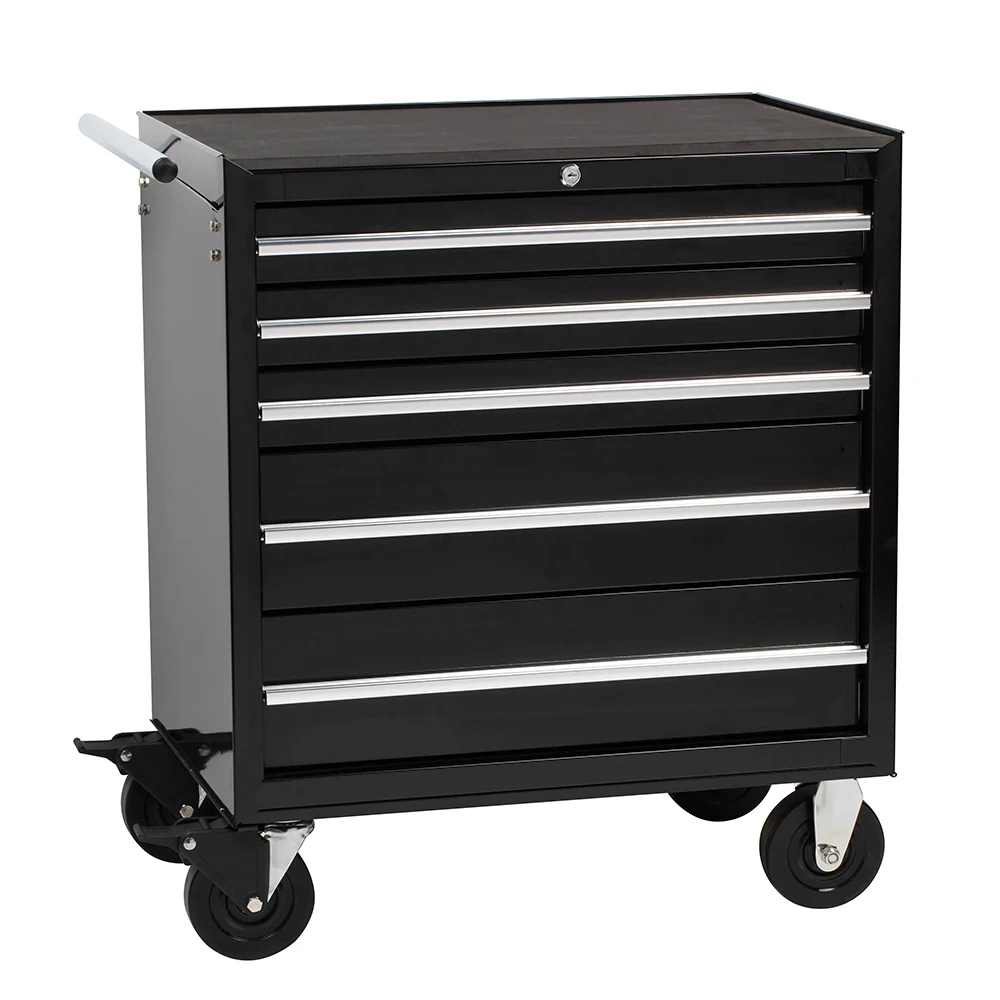
The body of a tool chest needs to be assessed as a connected system. Review the top construction if it will support temporary layout work, the base design if the unit will be moved, and the proposed floor condition if the unit is fixed. For a rolling tool chest, verify caster quantity, wheel material, brake arrangement, wheel load rating, and the travel surface. For a stationary unit, verify leveling provisions, anchoring points where applicable, and the clearance required to open drawers safely.
Stability is not established by dimensions alone. It depends on load placement, drawer extension, unit location, and use routine. Request instructions that address anti-tip behavior or permitted drawer operation if those features are offered. A large tool chest can be appropriate for a busy area only after its loaded configuration and access zone have been checked.
5. Locks, access control, and drawer retention
Locking is commonly listed for a tool chest, yet the details matter. Determine whether a central lock secures all drawers, whether individual drawers can be controlled, how many keys or access methods are included, and what happens when the unit is moved. If several users share a tool chest, define who owns keys, who returns tools, and how exceptions are handled.
Also inspect drawer retention, latches, and the sequence required to open or close drawers. These parts affect daily use and transport, but they should be described from the actual configuration rather than assumed from a catalog image. For custom projects, record them in the configuration sheet alongside the desired lock arrangement.
6. Surface finish and electrophoretic coating
A finish specification needs more detail than a color description. Ask for the surface-preparation route, finish type, color standard if relevant, coverage requirements, and any approved corrosion-test information that applies to the intended environment. Electrophoretic coating is a finish process used on metal components where paint adhesion, appearance, and corrosion considerations may matter. Whether electrophoretic coating is suitable for a given tool chest depends on the substrate, pretreatment, coating system, exposure conditions, and acceptance criteria.
Request a finish sample or documented approval target for an OEM tool chest. The review should cover visible surfaces, edges, internal areas, color tolerance, and marks that could arise from assembly or shipping. Do not convert a process name into a corrosion-life promise unless the relevant test method, duration, and product configuration have been confirmed.
7. Configuration, packaging, and documentation
An industrial tool chest is often specified alongside branding, drawer liners, dividers, handles, casters, or packaging. Keep functional choices separate from appearance choices so a quotation can be compared fairly. The brief should identify standard items, requested options, and open questions. It should also state whether packaging must protect a finished tool chest during warehouse handling, pallet movement, or export transit.
Before approval, ask for the current drawing, bill of materials where appropriate, finish reference, load statement, packaging outline, and sample-review points. That approach makes the tool chest review more useful than comparing broad catalog labels.
A practical specification checklist
- External dimensions, internal drawer dimensions, and required access clearances.
- Material and thickness by component, plus formed and reinforcement details.
- Drawer, slide, and total-unit load ratings with their stated conditions.
- Base, caster, brake, leveling, anchoring, and loaded-stability requirements.
- Locking arrangement, key or access-control needs, and drawer retention details.
- Finish process, including whether electrophoretic coating is requested, and acceptance evidence.
- Configuration, branding, packaging, drawings, samples, and revision control.
Conclusion
The right tool chest specification is a set of connected decisions: tool inventory, access pattern, construction, load path, finish, and approval evidence. A concise inquiry that lists these points gives suppliers a clearer basis for reviewing an industrial tool chest and gives buyers a clearer basis for comparing responses. Where a product detail is not documented, keep it open for confirmation rather than filling the gap with a general claim.

 Hot News
