 EN

When Do Service Crews Benefit From a Modular Tool Box?
A service crew does not need a modular tool box simply because the system looks organized. It needs one when the crew repeatedly carries the same tools through different spaces, shares equipment across technicians, or loses time opening several unrelated cases. For field supervisors, the useful question is not “How many boxes can we stack?” It is “Can this setup reduce handling between the vehicle, the jobsite, and the next call?”
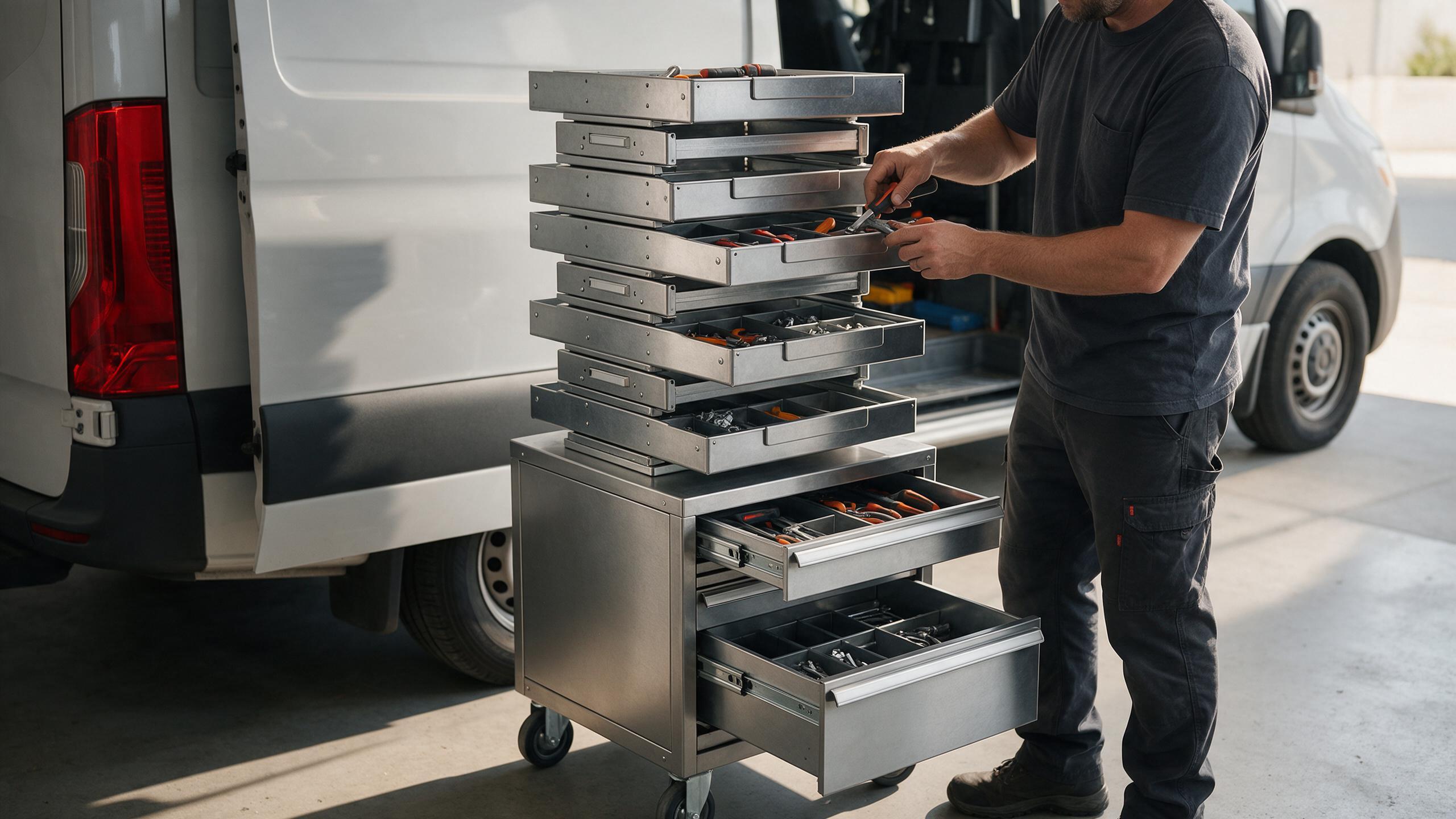
A well-planned modular tool box separates a mobile kit into layers: a rolling base unit for heavy equipment, a middle section for frequently used tools, and smaller organizers for fittings, fasteners, or test accessories. That layout is useful only when those layers match the work sequence. Otherwise, a single larger chest may be simpler.
Start with the crew’s daily movement pattern
Watch a typical arrival rather than relying on a catalog description. If a technician wheels equipment from a van, walks it across a site, opens a top box several times, and returns unused gear at the end of the day, a modular tool box can make the route more deliberate. The system earns its space when it reduces separate trips or limits the need to unload everything just to reach one item.
Mobile repair, installation, maintenance, electrical, HVAC, plumbing, and facilities crews often face that pattern. Their kits change by task, yet a core set of hand tools and consumables travels every day. A modular tool box lets the supervisor prepare a base configuration and add task-specific modules before departure.
Five signs a modular tool box is likely to help
1. The crew carries a mix of heavy tools and small parts
Weight and item size are a practical dividing line. Put dense, awkward equipment in the rolling base unit and reserve upper modules for tools that must be reached quickly. Small parts belong in shallow organizers rather than loose bags placed on top. This approach can keep a technician from digging through heavy equipment to find a connector or bit.
2. Different jobs require different kit combinations
When technicians perform several service types, a fixed chest can encourage overpacking. With a modular tool box, the crew can leave with a common base and attach only the modules required for the work order. For example, a maintenance visit may need meters, hand tools, and a parts organizer, while a longer installation may call for a larger tool module and a second organizer.
3. Loading and unloading creates repeated delays
Repeated handling is often more revealing than total travel distance. If two people routinely carry separate cases from the vehicle because a loaded case is awkward, or if a technician makes several return trips for forgotten supplies, modular storage deserves a closer look. A rolling base unit can consolidate the heaviest load, while detachable upper sections can be carried inside when stairs, tight rooms, or a short task make the full stack impractical.
4. Crews lose track of shared inventory
A modular tool box is also an inventory discipline. Assign a purpose to each module, label the outside, and define a refill point. A technician should be able to see whether the fastener organizer or specialty-tool case is missing before the vehicle leaves. The physical system does not replace stock control, but it gives a clear home to items that otherwise migrate between bags and trucks.
5. The workspace changes from job to job
Some calls offer a clear floor beside the work area; others involve crowded rooms, long corridors, or unfinished sites. A stack that stays on its rolling base unit works well on smooth routes. In constrained spaces, the crew may detach one upper module and bring only what the task needs. That flexibility is the central case for a modular tool box, not stacking for its own sake.
What to evaluate before standardizing a system
Compare options against the crew’s actual workflow. A modular tool box should be inspected as a connected system, not as a collection of individual containers.
- Connection method: Check whether stackable latches are easy to engage with gloves or tired hands, and whether they remain accessible when the boxes are loaded. The latch arrangement should be understandable to every crew member.
- Base mobility: Test the rolling base unit with a realistic load on the surfaces crews use most. Consider doorway thresholds, ramps, vehicle loading, and short outdoor routes.
- Access order: Place daily-use tools where they can be reached without removing several modules. A system that requires a full unstacking routine for a common item adds friction.
- Module sizing: Choose sizes that suit the team’s common tools rather than trying to force every item into one format. A few purposeful modules are easier to maintain than an oversized stack.
- Vehicle fit: Confirm that the configured stack fits the storage zone, can be restrained during transport, and still leaves access for other equipment.
- Repair and replacement planning: Ask how damaged latches, wheels, handles, and individual modules can be replaced. A fleet standard works better when one worn component does not disrupt the whole setup.
When a conventional box may be the better choice
Not every crew benefits from a modular tool box. A technician who performs a narrow, repeatable task from a fixed workbench may gain little from detachable layers. The same is true when most work happens on upper floors without lift access, where carrying a full stack is impractical and the crew normally uses a lightweight bag. In those cases, a compact dedicated case or a conventional box may be easier to manage.
Modular storage can also become inefficient when too many modules are created without a clear role. If a crew spends time deciding which box contains a tool, the system needs consolidation and labeling—not another container.
A short field trial prevents an expensive mismatch
Before issuing a modular tool box to every vehicle, test one configuration with a representative crew. Define what goes in the rolling base unit, which items are in the top-access module, and which consumables go into organizers. Record the number of trips from vehicle to work area, the time needed to set up, and the frequency of missing items over several normal jobs.
During the trial, ask technicians whether the stackable latches are workable in the conditions they face and whether the rolling base unit helps or hinders their route. The answer may differ between a service van, a maintenance cart, and a workshop support team. Keep the configuration only if it improves access without making loading, carrying, or replenishment more complicated.
Make modular storage part of the operating routine
The lasting value of a modular tool box comes from repeatable use. Create a simple packing map, establish a refill check at the end of the shift, and keep task-specific modules together. Supervisors can review the layout after several weeks: frequently borrowed tools may need a more accessible location, while rarely used equipment may belong in a shared reserve kit.
For crews that move through variable jobs with shared tools and consumables, a modular tool box can support faster preparation and clearer ownership of equipment. Choose it when its layers reflect the team’s real work sequence, and treat the rolling base unit and stackable latches as workflow features rather than isolated selling points.

 Hot News
