 EN

When Is a Hand Carry Portable Tool Box the Right Choice?
A hand-carry portable tool box earns its place when the job calls for a compact, repeatable kit that moves with the person doing the work. The question is not whether a smaller box holds every tool in the shop. It is whether it keeps the tools for the next task together, visible, and manageable from pickup to return.
From a metal storage design advisor’s view, selection starts with workflow rather than appearance. If an electrician, maintenance technician, installer, or home user repeatedly takes the same hand tools to a nearby work area, a portable tool box can be a sensible format. If the load changes constantly or the route is long, a rolling unit, cart, or fixed cabinet may be more practical.
Start with the trip, not the empty box
Picture the actual trip: where the kit is stored, how far it travels, whether stairs or ladders are involved, and where it is set down. A portable tool box works particularly well for short, frequent trips between a bench, vehicle, machine, or room. It keeps a defined kit intact without the setup time of pulling items from a larger chest.
Manual-handling guidance from NIOSH emphasizes keeping a load close to the body and minimizing how far it is moved. That is a useful planning principle, not a universal weight limit for a toolbox. A packed portable tool box should still feel controlled at the handle, stay balanced when carried, and suit the person, distance, and route involved. If it must be carried for long stretches, repeatedly lifted from the floor, or loaded with dense power tools, hand carry may no longer be the right method.
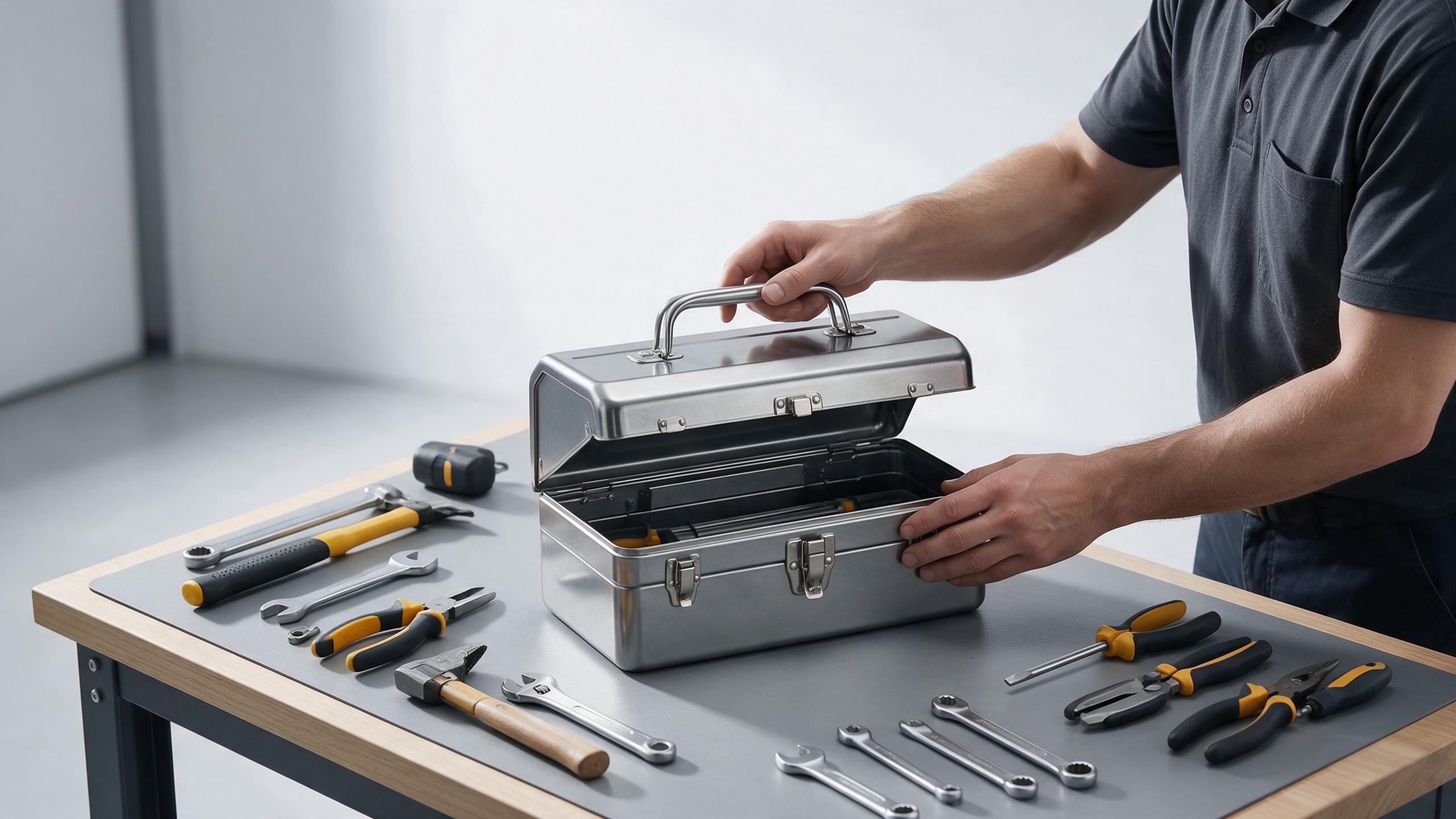
Five situations where hand carry makes sense
- Task-specific service kits: A portable tool box is useful when the same drivers, pliers, meters, fasteners, and small accessories support a routine service call.
- Short routes with frequent stops: For nearby work zones, a compact portable tool box can be quicker to pick up and set down than a larger rolling system.
- Limited storage space: When a vehicle shelf, cabinet, or workbench has modest clearance, a hand-carry format can keep a core kit accessible.
- Small teams sharing common tools: A clearly arranged portable tool box makes it easier to issue, return, and inspect a defined set of tools.
- Variable work surfaces: On jobs where there is no permanent workstation, a box that can sit near the task helps reduce repeated walks back to storage.
Instead of listing mobility as a feature, connect it to the next move in the work sequence. The value of a portable tool box is not maximum storage in theory; it is useful access where the work happens.
Pack for access before capacity
A common mistake is to choose a portable tool box by its outside dimensions alone. First group tools by the sequence in which they are used. Keep frequently reached items near the top; place heavier items low and close to the center; separate loose fasteners from hand tools. Observe not only where each tool is taken from, but where it tends to be returned after use. That return path often reveals whether the layout will stay orderly.
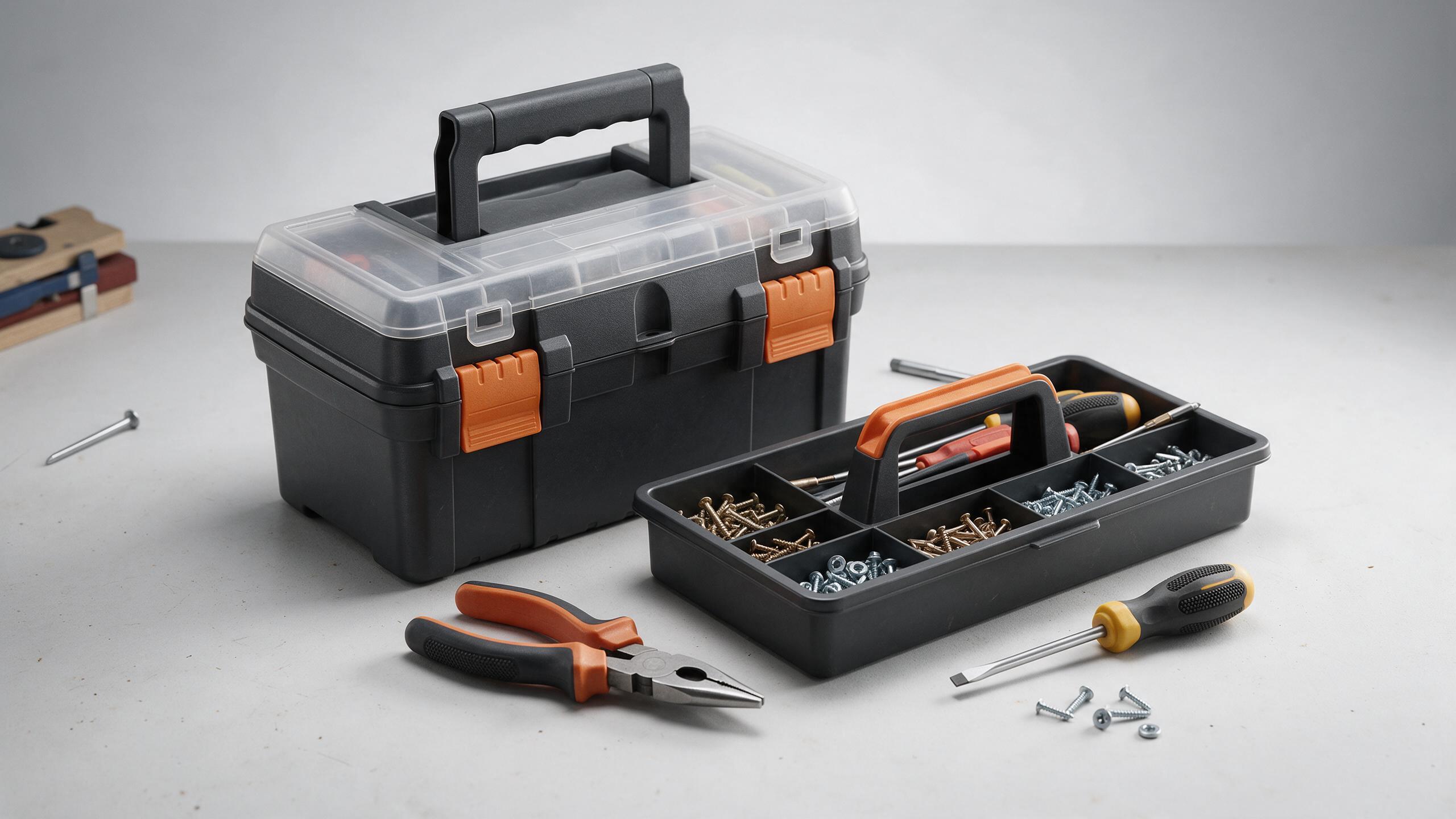
A lift out tote tray can be useful when small, often-used items need to move from the box to the immediate work surface. It is less useful when the tray becomes a catch-all that hides the tools underneath. Similarly, a quick grab handle helps only when its mounting, grip, and balance feel secure with the kit loaded. Check the handle, hinges, latches, and stress points in the condition in which the box will actually be carried.
More compartments do not automatically improve organization. A portable tool box with a simple grouping logic can be easier to maintain than one with many shallow spaces that do not fit the real tool mix.
Choose materials and closures for the environment
Material choice depends on the job rather than a blanket ranking. A metal portable tool box may suit users who want a rigid enclosure and a format that fits into a broader metal-storage program. A molded enclosure may be worth considering where low empty weight or exposure conditions are important. In either case, review how the lid aligns, how latches close, and whether the handle attachments look appropriate for the intended load.
For an OEM or procurement brief, describe the operating conditions instead of relying on a product name: tool list, packed load, carry distance, vehicle storage, moisture or dust exposure, preferred internal organization, and any lock or label requirement. That information gives a manufacturer a clearer basis for discussing configuration.
When to step up to another storage format
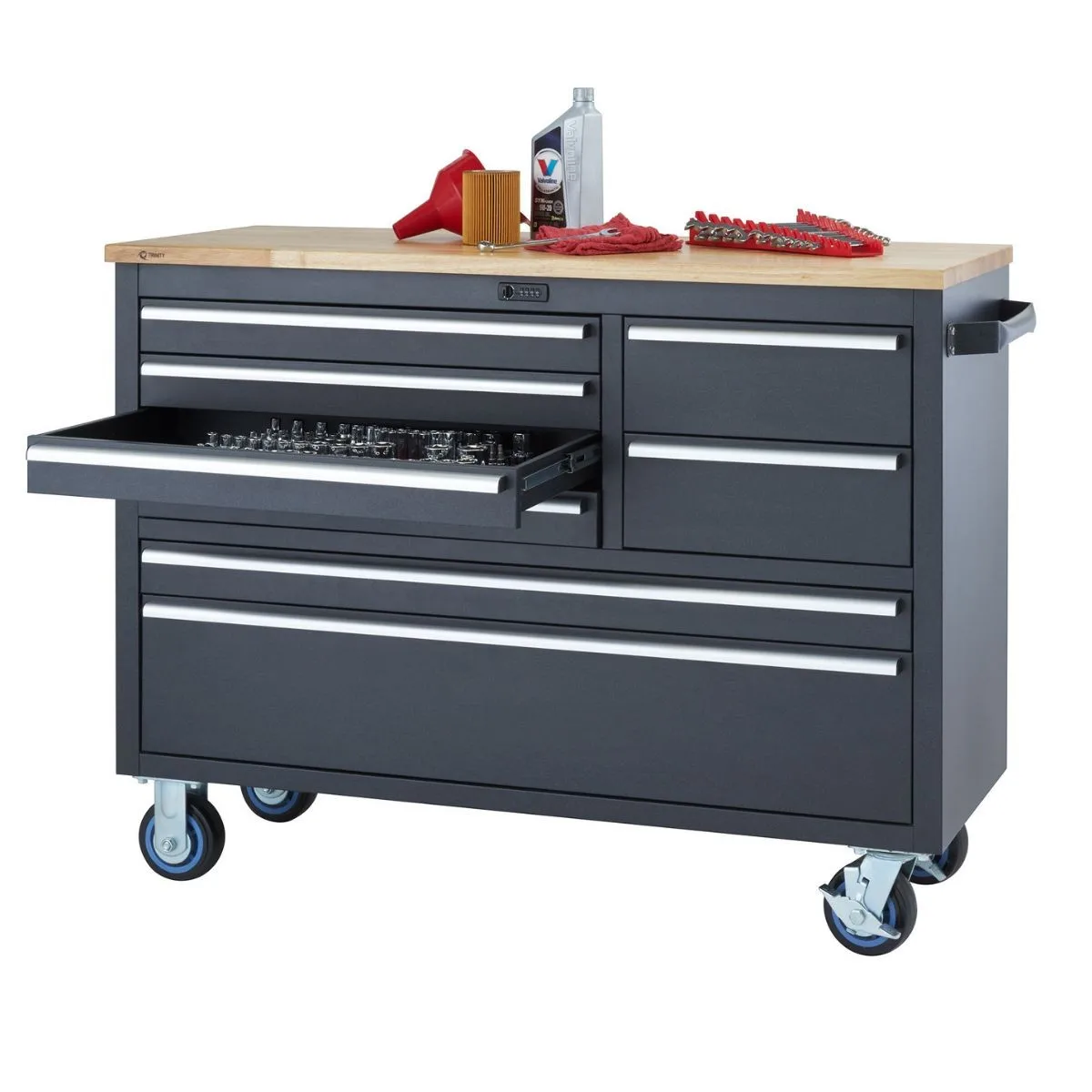
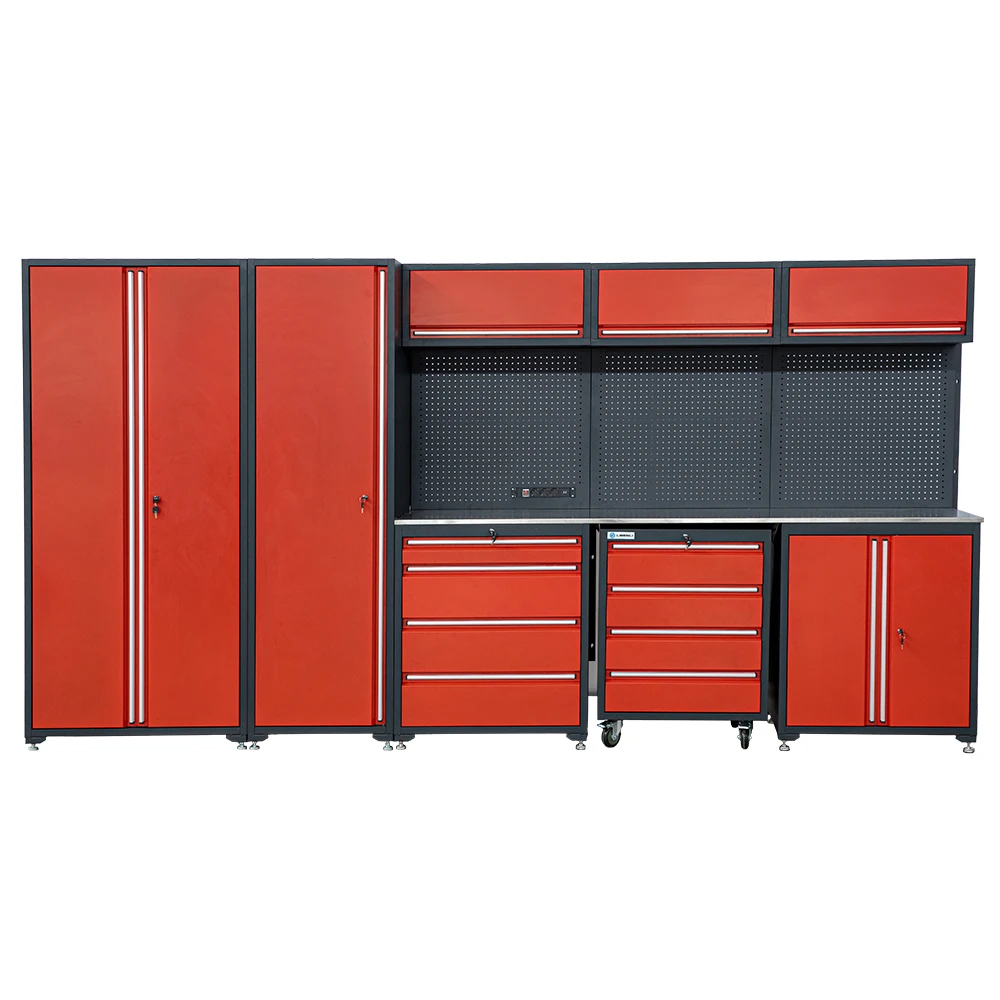
A portable tool box is not the automatic answer when tools are heavy, numerous, or frequently rearranged. Consider a rolling box or cart when the kit travels farther than a comfortable carry route. Consider a drawer cabinet or fixed chest when tool groups need stable, visible locations and inventory control. If several technicians need different kits at once, multiple smaller boxes may create more order than one overloaded hand-carried container.
The better fit depends on the workflow, not on a blanket ranking. If portability comes first, assess the full packed load and travel route before choosing a portable tool box. If capacity and stationary access come first, assess larger storage formats.
A practical selection checklist
- List the tools required for one typical task, not every tool owned.
- Walk the real route with a representative packed load.
- Open and close the lid, latches, and quick grab handle while wearing the gloves used on the job.
- Check whether the lift out tote tray supports the work sequence or simply adds another layer to manage.
- Confirm where the box will be returned and how its contents will be restored after each use.
When those answers point to a compact, consistent kit and a short, controlled carry, a portable tool box can be the right choice. When the kit has outgrown the route, it is time to compare a wheeled or fixed alternative.

 Hot News
